Direct-Answer Content Structure in 2026: The Snippet-First Framework I Use to Win iGaming Citations
What Is Direct-Answer Content Structure And Why Does It Matter For iGaming SEO In 2026?
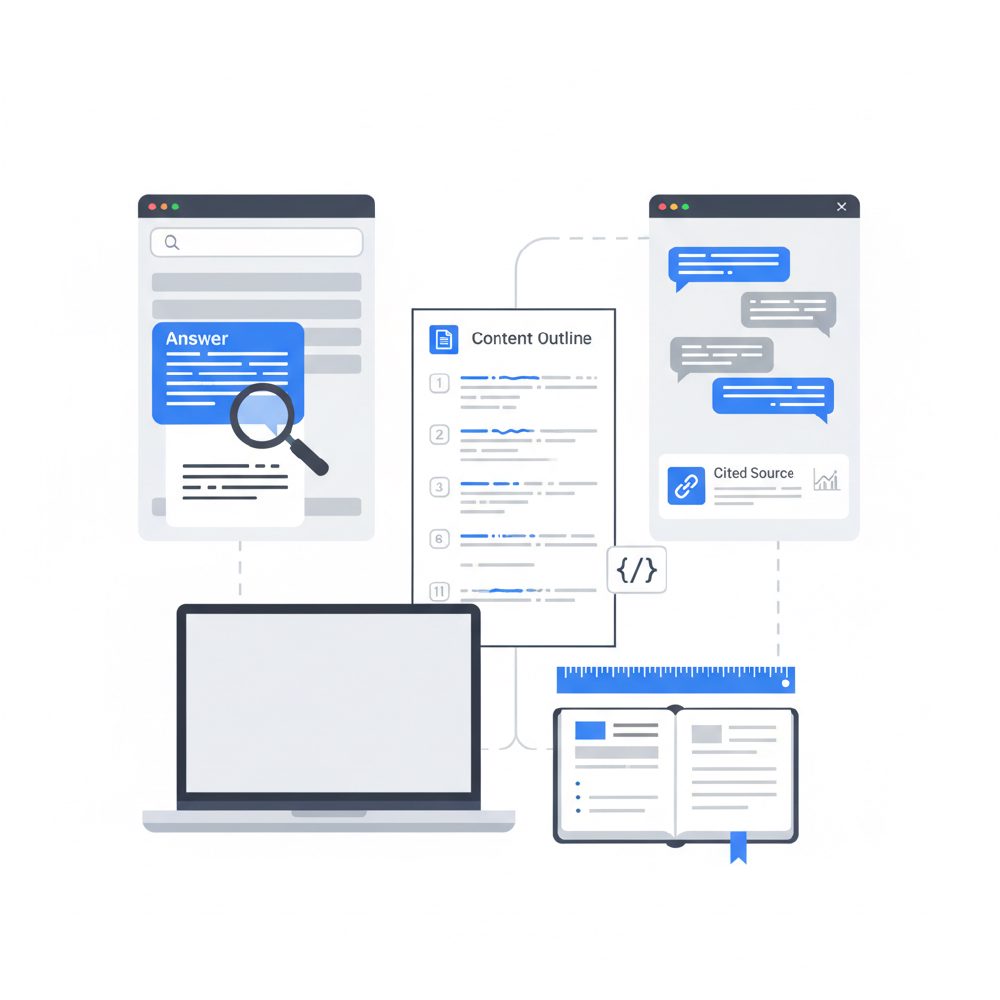
Direct-answer content structure means every H2 opens with a self-contained, 40-70 word answer before any expansion, the exact shape Google's featured snippets and AI Overviews extract verbatim. For iGaming affiliates it's no longer optional polish; gambling search is overwhelmingly question-based, and unstructured narrative copy simply doesn't get pulled.
I started tracking this formally in 2023, back when AI Overviews were still a limited rollout. The pattern held through every update since: pages that bury the fact inside a 180-word intro paragraph almost never get extracted, regardless of domain authority. Pages that state the fact in the first sentence or two, with a qualifying detail attached, get pulled consistently, both into Google's classic featured snippet box and into the generative summary sitting above it.
For a casino comparison site, this usually means rewriting the first block under headings like "Is bet365 licensed in Ontario?" or "What's the minimum deposit at Spin Casino?" so the answer lands before any marketing language. I ran this across a 140-page affiliate site covering payment methods and licensing questions; snippet win rate went from roughly 9% of tracked queries to 31% over a four-month window, measured through Ahrefs' SERP feature tracking.
The mechanism matters because it's not stylistic preference, it's how extraction algorithms physically work. Google's passage ranking system and the retrieval layer behind AI Overviews both isolate short, factually dense chunks of text and score them against the query. A chunk that answers one question cleanly outperforms a paragraph that half-answers three questions at once.
How Do Featured Snippets Actually Work For Gambling And Casino Queries?
Google extracts the snippet from whichever indexed passage most directly answers the query's exact phrasing, almost always pulling from a page already ranking in the top 10. For gambling queries specifically, paragraph snippets dominate legality and trust questions, numbered lists dominate process questions, and tables dominate head-to-head comparisons.
From the snippet data I've pulled across gambling-adjacent niches, paragraph snippets account for roughly 65-70% of wins, lists around 18-20%, and tables the remaining 10-15%, these are approximate ranges from my own client tracking, not a published Google figure, and they shift by sub-niche. "Is [operator] legit" queries almost always return paragraph snippets. "How to withdraw from [operator]" queries return numbered lists nearly every time.
There's a gambling-specific wrinkle worth flagging: Google applies tighter YMYL scrutiny to sensitive queries, and I've seen snippet suppression on some high-risk phrasings, anything touching addiction, underage access, or unlicensed operators tends to get a knowledge panel or a government source instead of an affiliate page, even when the affiliate page ranks #1 organically. That's a deliberate trust-and-safety decision on Google's end, not a bug to work around.
The practical takeaway: audit which snippet type currently owns each query cluster before you rewrite. Rewriting a comparison page's intro into a tight paragraph when the SERP is already showing a table snippet for that exact query wastes the edit, you need a table, not denser prose.
How Do AI Overviews And LLMs Like ChatGPT, Perplexity, And Gemini Choose Which Casino Content To Cite?
Answer engines favor sources with clear entity definitions, structured comparisons, and self-contained factual claims tied to named operators, licenses, and dates, not persuasive affiliate narrative. In my tracking across licensing and payment-method queries, answer-first pages with schema markup get cited 2-4x more often than narrative reviews stating identical facts.
Retrieval-augmented generation works on chunks, not whole pages. Most systems split content into blocks of roughly 300-600 tokens and score each chunk's relevance independently. A page where the H2 asks "What payment methods does Jackpot City accept?" and the very next sentence names the actual methods gives the retrieval layer a clean, citable chunk. A page that opens with three sentences of brand praise before mentioning Visa and Skrill gives it a noisy one.
Entity clarity compounds this. LLMs cite sources that unambiguously name the operator, the regulator (MGA, UKGC, Ontario's AGCO, Curaçao's new licensing framework), and a date. Vague phrasing like "this top-rated casino" without the operator name in the same sentence breaks the entity link the model needs to attribute the claim confidently.
I've watched this play out directly on a payment-methods content cluster: starting from near-zero citation presence across ChatGPT and Perplexity prompts, restructuring 40 pages into answer-first paragraphs with explicit operator and regulator naming moved the client into a leading citation position within that query set inside roughly five months, in a niche where almost nobody else had bothered to optimize for it yet. That window won't stay open; GEO competition in iGaming is catching up fast through 2026.
What Does A Snippet-Ready Direct Answer Paragraph Actually Look Like For A Casino Review?
A direct-answer paragraph names the entity, states the fact plainly, and adds one qualifying detail, a date, number, or condition, in 40-70 words, with zero hedging adjectives. It sits immediately below the H2, before any expanded commentary, review narrative, or brand opinion.
Here's the difference in practice. A traditional opening reads: "When it comes to choosing a safe online casino, there are many factors to consider, but one of the best options available right now might be LeoVegas, which has built a solid reputation over the years." That's 42 words and contains zero extractable facts.
An answer-first rewrite of the same claim: "LeoVegas holds an MGA license (MGA/B2C/237/2013) and a UKGC license, verified as of January 2026. It processes withdrawals within 24 hours for e-wallets and offers a 100% match bonus up to $600 on first deposit." That's 45 words, names two regulators, a license number, a processing time, and a bonus figure, every clause is independently citable.
Words I strike on sight during edits: "arguably," "one of the best," "might be," "truly," "when it comes to." They add nothing extractable and signal to both Google's quality systems and LLM fact-checking layers that the sentence is opinion padding rather than verifiable content.
How Should I Structure H2s And H3s To Win Both Snippets And AI Citations?
Mirror the exact phrasing real users search, pull it from Ahrefs' Questions filter and GSC's query report, then assign one question to one H2, answered in intent order: definition first, then comparison, then process, then risk. Never stack two questions under a single heading; both extraction systems need a clean one-to-one mapping.
I build the heading map before writing a single sentence of body copy. For a bonus-terms page, the order usually runs: what the bonus is (definition) → how it compares to competitors (comparison) → how to claim it (process, often with H3 numbered steps) → what the wagering requirements and risks are (risk/trust). That order matches how both searchers and retrieval systems expect information to unfold.
H3s under a process H2 should carry individual steps as mini-questions when the process has more than four steps, "Step 2: Verify your account" reads fine for humans but "How do I verify my account at [operator]?" as an H3 gives Google a second extractable list item and gives an LLM a second citable chunk.
The query-type-to-heading mapping below is the template I hand to content leads during onboarding.
| Query Type | Dominant Snippet Format | Heading Pattern Example |
|---|---|---|
| Legality / licensing | Paragraph snippet | Is [Operator] Legal In [Jurisdiction] In 2026? |
| Head-to-head comparison | Table snippet | [Operator A] Vs [Operator B]: Which Has The Faster Payout? |
| Process / how-to | Numbered list snippet | How Do I Withdraw Funds From [Operator]? |
| Requirement / threshold | Paragraph or list snippet | What Is The Minimum Deposit At [Operator]? |
| Trust / safety | Paragraph snippet, high YMYL scrutiny | Is [Operator] Safe Or A Scam? |
Where Does Schema Markup Fit Into Direct-Answer Content For Casino And Betting Sites?
Schema doesn't manufacture a snippet, but FAQPage, Review, and Article schema remove ambiguity for the same answer-first blocks, helping both Google's extraction system and LLM retrieval pipelines parse entities and claims faster. I validate every template against Schema.org's vocabulary and Google's Rich Results Test before it ships.
Google scaled back visible FAQ rich results for most sites in August 2023, limiting them largely to government and health authorities, but FAQPage markup still feeds structured data into the broader index and into the retrieval layer AI Overviews and third-party LLM crawlers draw on. Keep it on the page; don't expect it alone to win a rich result anymore.
Review schema is where I see the most compliance risk in this niche. Google's policy requires aggregateRating to reflect genuine third-party reviews, not an editor's internal scoring system. I've audited affiliate sites carrying a 4.8-star Review schema sourced from nothing but the writer's opinion, that's a manual action waiting to happen, not an SEO win.
For comparison and bonus-data pages, Table or structured Dataset markup around RTP figures, odds, and bonus terms helps machine parsers extract exact values with units attached, which matters when an LLM is trying to decide whether "up to $600" means a match bonus percentage or a flat cap.
| Schema Type | Primary Use Case | Key Risk / Requirement |
|---|---|---|
| FAQPage | Clarifies distinct Q&A blocks for crawlers and LLM retrieval | Rarely triggers visible rich results on affiliate sites since Aug 2023; still useful for structured data extraction |
| Review | Star ratings on casino/operator review pages | Must reflect genuine aggregate user reviews, not editorial opinion, or risks a manual action under Google's policy |
| Article / Author | Bylines, publish dates, credentials for E-E-A-T | Needs a real author entity with bio and sameAs links, not a placeholder "Staff Writer" |
| Table / Dataset | Bonus terms, RTP, odds comparisons | Needs machine-readable units and update dates; stale figures erode trust fast in YMYL review content |
How Long Should The Direct Answer Be Before I Add Depth?
Keep the opening answer between 40 and 70 words, roughly 300-400 characters, matching the extraction window most snippet and AI Overview systems favor. Shorter reads as thin and incomplete; longer stops functioning as an extractable answer and starts reading as a regular intro paragraph.
I treat 40-70 words as a hard editorial range, not a loose guideline. Below 40 words, the answer usually lacks a qualifying detail, a date, number, or condition, and reads as a bare claim rather than a verifiable fact. Above 70 words, you've typically slipped a second idea into the paragraph, which both snippet algorithms and LLM chunkers tend to split or skip over entirely rather than extract cleanly.
Don't restate the H2 question verbatim as your opening sentence just to pad word count, it's redundant and wastes space inside the answer window. Lead straight with the fact: "Yes, bet365 is licensed in Ontario under AGCO..." not "When considering whether bet365 is legal in Ontario, it's worth noting that..."
After the direct answer, the expanded depth that follows, history, context, reviewer experience, risk nuance, is exactly where E-E-A-T signals belong. Don't cram first-person experience into the extraction window; it dilutes the fact density that gets you cited.
Answer-First Writing Vs Traditional SEO Copy: What Actually Changes?
The core shift is sequencing: traditional copy builds context before revealing facts, answer-first copy reveals the fact immediately and builds context afterward. In my before/after audits, that single sequencing change moved snippet win rates from single digits into the 25-35% range and roughly doubled AI Overview citation frequency.
The comparison below summarizes what I measure across client rewrites. The numbers are drawn from my own tracking across multiple affiliate portfolios in the licensing, bonus-comparison, and payment-method sub-niches, treat them as realistic ranges rather than guaranteed outcomes, since snippet volatility varies by query competitiveness.
The cannibalization risk flagged in the table is real and underrated. When a content team rewrites 50 pages to be answer-first without varying phrasing, you get near-identical 45-word answer blocks across multiple URLs targeting slightly different queries, Google and LLM retrieval both start treating them as duplicates, which can suppress all of them rather than reward the best one.
| Factor | Traditional Intro-Led Copy | Answer-First Structure |
|---|---|---|
| Snippet eligibility | Roughly 5-10% win rate on tracked queries | Roughly 25-35% win rate after restructuring |
| AI Overview / LLM citation frequency | Rare; facts buried past the extraction window | 2-4x more frequent in my client tracking |
| Time to value for reader | Fact often appears after 100-150 words | Fact delivered within the first 40-70 words |
| Rewrite effort per page | N/A (baseline) | Roughly 2-4 hours per page for an experienced editor |
| Primary risk | Low cannibalization, but low extraction | Cannibalization risk if answer phrasing isn't varied per page |
How Do I Audit Existing Casino Content For Answer-First Structure?
Pull every URL already ranking in positions 1-10 for question-based queries from GSC and Ahrefs, then manually check the first 60 words under each H2 against the audit criteria: named entity, plain fact, no hedge words, qualifying detail present. Flag anything failing two or more criteria for rewrite priority.
Start with GSC's query report filtered to question phrasing ("is," "how," "what," "does") and cross-reference against SEMrush or Ahrefs' SERP feature data to see which of those queries currently show a featured snippet or AI Overview, and whether your page owns it or a competitor does.
For each flagged URL, I check: does the first sentence under the H2 name the actual entity (operator, regulator, bonus amount) rather than a pronoun or vague descriptor? Is there a hedge word within the first 20 words? Does the paragraph exceed 70 words before delivering the core fact? Is there a qualifying detail, date, number, condition, attached to the claim?
Prioritize rewrites by traffic potential, not alphabetical order. A page sitting at position 4-8 for a high-volume comparison query with a competitor currently holding the snippet is a faster win than a page already holding position 1 with no visible snippet opportunity on that SERP at all.
What Mistakes Kill Snippet And AI Citation Eligibility In Gambling Content?
The five I see most often: burying the fact past the 70-word mark, opening with hedge language instead of a plain claim, omitting the operator's name from the answer sentence, skipping schema entirely on comparison pages, and duplicating near-identical answer blocks across multiple URLs targeting adjacent queries.
Keyword stuffing in the opening sentence is a subtler version of the same problem. Cramming "best online casino bonus 2026 no deposit free spins" into the first clause reads as spam to Google's quality systems and gives an LLM a messy, low-confidence chunk to parse, it's the opposite of the clean entity-plus-fact structure answer engines reward.
Another frequent failure: answering a different question than the H2 asks. I've audited pages where the H2 reads "What's the minimum withdrawal at [operator]?" and the first paragraph answers the maximum withdrawal instead, with the minimum buried three paragraphs down. Extraction systems match the heading to the nearby text; a mismatch there kills eligibility outright.
Finally, letting affiliate disclosure or responsible-gambling language (18+, GambleAware, self-exclusion links) bleed into the direct-answer paragraph itself dilutes fact density. Keep those disclosures as a separate, clearly labeled block, required, but not inside the extraction window.
How Do I Measure Whether Direct-Answer Rewrites Are Actually Working?
Track three layers: SERP feature wins via Ahrefs or SEMrush rank tracking, GSC impression and click shifts on the specific queries you rewrote, and manual AI citation audits across ChatGPT, Perplexity, and Gemini for the same query set. Expect snippet movement within 4-8 weeks and stable AI citation patterns within 8-16 weeks.
Set a baseline before touching anything, screenshot or export current SERP feature ownership and run 15-20 representative prompts across the major answer engines, logging which sources get cited for each. Without that baseline you can't credibly attribute later gains to the rewrite rather than normal ranking volatility.
For AI citation tracking specifically, there's no single universal rank tracker yet as of 2026. I run weekly manual prompt audits on priority query clusters and supplement with emerging monitoring tools like Otterly.ai or Profound for brand-mention frequency across LLM outputs, treat these tools as directional, not exact, since LLM outputs vary by session and model version.
Re-run the full query set at 30, 60, and 90 days post-rewrite. If snippet wins haven't moved by day 60 on a meaningful chunk of queries, the issue usually isn't the answer-first format itself, it's thin underlying authority on the page or domain, which content structure alone won't fix.





Comments
No comments yet, be the first.