iGaming SEO & AEO Agency
Built for Affiliates Who Need iGaming SEO That Survives Core Updates
We build topical authority, technical trust and answer-first content that keep casino and betting affiliate sites ranking through Google's core updates and cited by AI engines.
- Affiliate-deep
- AEO & GEO ready
- Compliance-first · never grey-hat
Full-stack organic growth for iGaming
iGaming SEO Agency
What an iGaming SEO agency does, how gambling-adjacent SEO differs from mainstream SEO, and how to evaluate one before hiring.
Explore ›Casino Affiliate SEO
The 2026 playbook for ranking casino affiliate and comparison sites without sacrificing trust for monetization.
Explore ›AEO for iGaming
How iGaming brands earn citations from ChatGPT, Perplexity, Gemini and Google AI Overviews in 2026.
Explore ›Content Strategy
A framework for planning, writing and structuring compliant, human-led iGaming content that ranks and gets cited.
Explore ›Programmatic SEO
How to scale iGaming SEO with programmatic regional pages and international expansion without going thin.
Explore ›Technical SEO
Technical SEO strategy for casino and betting affiliate sites: architecture, Core Web Vitals, crawl budget, and structured data at scale.
Explore ›E-E-A-T & Compliance
E-E-A-T and YMYL trust strategy for gambling-adjacent sites, from author signals to editorial transparency to core-update recovery.
Explore ›SEO by Market
Market-specific iGaming SEO for Brazil, Ontario, US states, and Africa, built around each market's licensing and regulatory reality.
Explore ›SEO vs PPC
Where organic SEO and AEO carry iGaming acquisition because Google and Meta restrict gambling ads, and where paid channels still fit.
Explore ›Pricing & ROI
What iGaming SEO costs in 2026, how to vet an agency's claims, and the FTD and revenue-share math behind real affiliate ROI.
Explore ›A deliberate path to durable authority
-
01
Authority audit
A forensic read of your rankings, E-E-A-T signals, link profile and AI-citation footprint, and where trust leaks.
-
02
Strategy & topical map
A prioritised plan and hub-and-spoke topical map scoped to your market, licence and risk tolerance.
-
03
Build & earn
Human-written, compliant content, clean link authority and technical fixes shipped by iGaming specialists.
-
04
Compound
Measure rankings, AI share-of-voice and deposits, then double down on the assets that keep paying off.
Why compliance-first wins in iGaming
Straight answers on iGaming SEO & AEO
How is iGaming SEO different from mainstream SEO?
iGaming sits in Google's YMYL category, so content faces heavier scrutiny on accuracy, sourcing and author expertise than most niches. Ad platforms restrict gambling terms, link-building options are narrower because fewer sites accept gambling links, and rankings hinge on signals like licensing transparency, responsible-gambling disclosures and verifiable author credentials that generic SEO playbooks rarely address.
Google treats gambling content as Your Money or Your Life territory, which means the algorithmic and human review bar sits closer to medical or financial content than to your average product review blog. Search quality raters are explicitly instructed to weigh page and site reputation, author expertise and transparency about licensing and terms, a review comparing three sportsbooks gets evaluated the way a page about loan APRs would, not the way a review of headphones does. That changes what “good content” means: a 600-word listicle with affiliate links and no named author, no editorial policy and no verifiable claims is a liability, not an asset.
The link graph is also structurally different. Most publishers avoid linking to gambling sites for brand-safety reasons, so the addressable pool of contextually relevant, high-authority link opportunities is smaller and more expensive than in most verticals. That pushes strategy toward digital PR, data-driven studies, licensing-body citations and genuine media placements rather than the guest-post volume plays that work in softer niches. Anchor-text patterns also get scrutinized more closely, over-optimized commercial anchors are one of the more common triggers we see in manual and algorithmic link devaluations on gambling-adjacent domains.
Finally, the commercial layer is unusual: affiliates monetize through operator deals with geo-specific licensing rules, so the same page might need different disclaimers, different operators shown and different compliance language depending on the visitor's jurisdiction. A mainstream SEO agency optimizing purely for search volume will happily target keywords the site legally cannot monetize in that market, which wastes budget and creates compliance risk the client, not the agency, has to answer for.
What does AEO actually mean, and how do you get an affiliate site cited by ChatGPT or Perplexity?
Answer Engine Optimization means structuring content so large language models can extract, trust and cite it as a source: clear direct answers near the top, explicit entities and comparisons, schema markup, and enough demonstrated authority that a model's retrieval and ranking layers select the page over competitors when generating an answer about, say, the best crypto casinos.
Answer engines like ChatGPT, Perplexity, Gemini and Google's AI Overviews don't read a page the way a person does. Most run some form of retrieval, pulling candidate pages, extracting passages, then generating a synthesized answer with citations. Pages that get selected tend to share traits: a direct, unambiguous answer stated early rather than buried under three paragraphs of preamble, explicit comparison structures (tables, ranked lists, named entities), and schema markup, FAQPage, Article, Review, that gives the model machine-readable confirmation of what the content actually is and who wrote it.
Authority still matters, arguably more than in classic SEO, because these systems weight source credibility heavily when multiple pages make similar claims. A comparison site with named, credentialed authors, a visible editorial policy, cited primary sources (licensing registries, RTP data, operator terms) and a consistent publishing history reads as more citable than an anonymous aggregator, and we've watched that difference show up directly in which domains get pulled into AI Overviews for competitive betting and casino queries.
Practically, our AEO work runs alongside SEO rather than as a separate discipline: restructuring existing pillar content so the direct answer sits in the first hundred words, adding structured comparison tables with explicit criteria, implementing FAQPage and Organization schema, and building the kind of citation-worthy primary research, original data, surveys, licensing trackers, that both Google and LLMs have fewer reasons not to trust.
What does an iGaming SEO retainer actually cost, and how fast will I see results?
Serious iGaming SEO retainers typically run from roughly $3,500 to $15,000+ per month depending on site size, competitiveness of target markets and existing technical or content debt. Expect early indexation and crawl-health movement within four to six weeks, meaningful ranking and traffic shifts around month three or four, and compounding growth from month six onward.
Pricing scales with three variables: how competitive the target markets are (US sports betting and UK casino keywords cost more to move than, say, Canadian or LatAm crypto-casino terms), how much technical and content debt the site is carrying, and how many languages or regions are in scope. A single-market comparison site cleaning up existing content might sit at the lower end; a multi-region affiliate network expanding into three new geos with programmatic content needs is a different scope entirely, and we quote accordingly rather than using a flat card rate.
Timeline expectations we set honestly, upfront: technical fixes (indexation, crawl budget, Core Web Vitals, schema) show measurable movement in Search Console within four to six weeks. Content and topical authority work, the part that actually drives ranking gains in a YMYL vertical, takes longer to compound, because Google needs repeated positive signals over time before it trusts a previously thin or penalized domain with more visibility. Most clients see the first real traffic and ranking shifts around month three or four, with the growth curve steepening from month six as the topical map fills out and backlink equity accrues.
We flag one thing every prospective client should hear before signing: anyone promising page-one rankings in 30 days on competitive gambling terms is either inexperienced or planning to use tactics that won't survive the next core update. We'd rather lose the pitch than set a timeline we know is fiction.
| Site stage | Monthly budget range | First ranking movement | Traffic recovery / growth |
|---|---|---|---|
| New or under 50 indexed pages | $3,500 - $7,000 | 6-10 weeks | 4-6 months |
| Established, post-core-update hit | $5,000 - $12,000 | 8-14 weeks | 3-6 months |
| Multi-market / multi-language brand | $12,000+ | 6-10 weeks per market | 4-8 months |
How do you build E-E-A-T for a YMYL gambling-adjacent site?
We install verifiable author bylines with real credentials, publish an editorial and fact-checking policy, cite primary sources like licensing registries and payout data, add author and organization schema, and build topical depth through hub-and-spoke content clusters, the concrete signals Google's quality raters and algorithms both look for on Your Money or Your Life pages.
Experience, Expertise, Authoritativeness and Trust aren't a single toggle, they're a bundle of concrete, checkable signals, and on a gambling-adjacent site the bar is higher because the topic sits in YMYL territory. We start with authorship: real names, real bios, verifiable experience (a former bookmaker trader writing about betting markets is worth more than an unnamed “editorial team”), and author schema that ties each byline to a consistent identity across the site and, ideally, external profiles like LinkedIn.
Trust signals come next: a published editorial policy explaining how odds and bonus terms get verified and how often they're updated, visible responsible-gambling messaging, clear disclosure of affiliate relationships, and, critically for licensing-sensitive markets, accurate, current information about which operators hold which licenses in which jurisdictions. Stale licensing or bonus-term data is one of the fastest ways to erode trust with both users and reviewers, and we've seen it directly correlate with ranking volatility during core updates.
Underneath all of it sits topical architecture: a hub-and-spoke structure where pillar pages (best online casinos, sports betting guides, payment method explainers) interlink with supporting cluster content, so the site demonstrates comprehensive coverage of a subject rather than a scattered set of disconnected pages. That structure is also what makes internal linking, crawl budget and link equity distribution actually work in the site's favor instead of against it.
- Author bylines, real names, credentials and a linked author page, not “Editorial Team”.
- Editorial policy, a public page explaining how reviews are researched, scored and updated.
- First-hand testing signals, screenshots, timestamps, deposit and withdrawal proof, not rewritten operator copy.
- Citations and sourcing, links out to regulators, RTP databases and primary sources, not just internal pages.
- Update cadence, visible “last updated” dates on anything with odds, bonus terms or licensing info.
- Structured data, Review, FAQPage and Organization schema that matches what's actually on the page.
How do you help a site survive, or recover from, a Google core update?
We diagnose whether a hit was quality-related, link-related or technical, benchmark affected pages against what's now ranking, and rebuild the weakest signals first, usually thin or outdated content, missing E-E-A-T markers and cannibalizing pages, rather than waiting passively for the next update, because recovery timelines are largely tied to how quickly real quality gaps get closed.
The first step after a drop is diagnosis, not panic: we pull the affected query and page set from Search Console, cross-reference the drop date against confirmed update rollout windows, and compare what's now ranking above the client versus what dropped. That comparison usually reveals a pattern, competitors with more recent content, named authors, better structured comparison data, or simply more comprehensive coverage of the topic. Core updates are broad relevance re-evaluations, not manual penalties, so recovery isn't about “fixing a violation,” it's about closing a real quality gap relative to what Google now considers the better answer.
From there we prioritize by impact: pages losing the most traffic and revenue first, then look for the fastest legitimate wins, updating stale odds, bonus terms and licensing data, consolidating cannibalizing pages that were splitting relevance signals, adding missing author and organization schema, and strengthening thin sections with genuinely useful detail instead of padding word count.
We're direct about the timeline here too: Google doesn't reprocess quality signals instantly, so meaningful recovery typically shows up over the following one to two update cycles, not the same week the fixes ship. Sites that treat a core update hit as a one-time fire drill and then coast tend to get hit again; the ones that build the update response into an ongoing content and technical maintenance cadence are the ones that compound instead of yo-yo.
| Signal | Rewarded | Penalized |
|---|---|---|
| Author expertise | Named experts, visible credentials | Anonymous or generic bylines |
| Content depth | Original testing, data, comparisons | Rewritten competitor summaries |
| Monetization balance | Editorial content with clear disclosure | Affiliate links crowding out substance |
| Site-wide quality | Consistent depth across the site | Thin pages propping up a few strong ones |
What makes SEOiGaming.agency different from a generic SEO agency or freelancer?
We work exclusively on the affiliate and media side of iGaming, never operators, so there's no channel conflict and no generic playbook borrowed from ecommerce or SaaS. Every recommendation accounts for licensing-driven geo restrictions, YMYL review standards and the AI-answer-engine layer most agencies still ignore.
Specialization changes what an agency can actually see. Because we only work with affiliates, comparison sites and media brands, never sportsbooks or casino operators directly, there's no conflict of interest in how we advise on operator relationships, no incentive to push traffic toward a paying operator client at the expense of what's genuinely best for the affiliate's readers, and no confusion about whose search intent we're optimizing for. That focus also means we've built pattern recognition specific to this vertical: which link sources actually move the needle for gambling-adjacent domains, which content structures survive YMYL scrutiny, which schema implementations LLM answer engines seem to weight.
Most general SEO agencies treat gambling as “just another niche with restricted keywords,” which misses the structural realities, the licensing-driven geo-targeting, the narrower link landscape, the heavier E-E-A-T bar, and misses AEO almost entirely, because answer-engine optimization is still new enough that few agencies outside a handful of specialists have built a real methodology for it rather than a marketing slide.
We also refuse tactics that create long-term liability for a durability-over-shortcuts reason, not a compliance-theater one: no cloaking, no PBN link schemes, no fabricated author bios, no scraped or spun content. Those approaches can produce a short-term spike, but on a YMYL site they're also the fastest way to invite a manual action or get wiped in the next core update, and we'd rather build something the client still owns in three years.
What does the first 90 days of working together actually look like?
Weeks one to three cover a full technical, content and backlink audit plus competitor and SERP-feature analysis. Weeks four to eight fix crawl and indexation issues, implement schema, and rebuild or launch priority pillar content. Weeks nine to twelve expand the topical cluster, begin structured link outreach, and set up Search Console and AI-citation tracking.
The first two to three weeks are diagnostic, deliberately. We run a full technical crawl (indexation, Core Web Vitals, redirect chains, duplicate content), a content audit mapped against the site's existing topical coverage and gaps, a backlink profile review flagging anything toxic or over-optimized, and a competitive analysis of who currently owns the SERP features and AI Overview citations for the target keyword set. That audit becomes the prioritized roadmap, not a generic checklist, but a ranked list specific to what's actually holding this site back.
Weeks four through eight are execution on the highest-leverage items: fixing crawl and indexation blockers, implementing or repairing schema markup, and rebuilding or launching the pillar pages that anchor the topical map, because pillar content is what both search engines and answer engines use to establish what the site is authoritative about. We're also correcting any E-E-A-T gaps in that window: author bylines, editorial policy, disclosure language.
By weeks nine through twelve we're expanding the supporting cluster content around each pillar, starting structured outreach for the link opportunities identified in the audit, and, critically, instrumenting measurement: Search Console segmentation by query cluster, rank tracking, and citation tracking across ChatGPT, Perplexity and AI Overviews so we have a real baseline for quarter two rather than a guess.
Named specialists, not account managers





What clients say
They rebuilt our review methodology and E-E-A-T after a core update wiped 40% of our traffic. Within two updates we were back above our previous peak, and this time it's holding.

The AEO work is unlike anything other agencies offered. We went from invisible in AI answers to being cited by ChatGPT and Perplexity on our core commercial queries.

Finally an SEO partner that understands gambling compliance instead of applying generic tactics. Organic is now our main acquisition channel and it compounds every month.

They moved dozens of our commercial keywords into the top three and built genuine topical authority. The ROI reporting is transparent, payback and player value, not vanity metrics.

Frequently asked questions
How much does an iGaming SEO retainer cost?
How long until we see results?
Do you work with unlicensed or offshore affiliate sites?
What types of sites do you work with?
How do you actually get a site cited by ChatGPT, Perplexity or Google AI Overviews?
Can you guarantee first-page rankings?
What happens if our site gets hit by a core update mid-contract?
Do you write the content yourselves, or just deliver strategy?
What's the minimum contract length?
Latest articles
 guide
guide
Brand-SERP & Entity SEO for Casinos: Knowledge Panel, Wikidata & AI Citation
Drawing on volatility tracking across 60+ casino brand SERPs through the 2026 core updates, I break down how knowledge panels, Wikidata records and schema markup determine whether a casino brand survives algorithm shifts and gets cited by AI engines.
 guide
guide
Casino Site Architecture & Siloing: Structure for Scale
Ingrid Voss walks through the silo and hub-and-spoke structures her data lab tracked across 2026 core updates, showing which casino site architectures held rankings and which ones fed volatility.
 guide
guide
Ontario iGaming SEO 2027: The Casino-Led Boom (Sportsbook → Slots)
Ontario's iGaming market is flipping from sportsbook-led to casino-led revenue, and affiliate sites still built around 2022 sportsbook architecture are bleeding relevance. Here's the topical, technical and compliance playbook for winning Ontario igaming SEO through the slots pivot.
 checklist
Casino Technical SEO Audit: The 2027 Checklist
Our data lab crawled 340 casino affiliate and operator domains through the 2026 core updates. This checklist turns what actually moved rankings and AI citations into a repeatable technical audit process.
 guide
guide
Get Your iGaming Brand Cited in LLM Answers (ChatGPT · Gemini · Perplexity · Grok)
Elena Ricci breaks down how ChatGPT, Gemini, Perplexity and Grok actually select gambling sources to cite, and the specific llm seo igaming moves, entity cleanup, bylines, structured comparison content, that turn near-zero AI visibility into measurable share of voice.
 comparison
AI Overviews for Gambling Queries: How to Win the Citation (Commercial vs Informational)
A compliance-first breakdown of how Google AI Overviews, Perplexity, ChatGPT and Gemini select and cite gambling sources, and the distinct content, schema and E-E-A-T playbook needed to win the citation on commercial versus informational queries in 2026.
 case-study
DATA STUDY: iGaming SERP Volatility Report, Who Won & Lost the 2026 Core Updates
A data-led breakdown of iGaming SERP volatility during the 2026 Google core updates, showing which affiliate and operator sites gained ground and which lost it, and the E-E-A-T signals that decided the outcome.
 listicle
Best iGaming Markets by Keyword Difficulty: Where to Enter in 2027
I rank the best igaming markets 2027 by traditional keyword difficulty and the variable that actually determines durable traffic now: whether AI Overviews, ChatGPT and Perplexity are already citing anyone in that market.
 landing
iGaming Content Writing: Human-Written, Compliant, AEO-Ready
Elena Ricci breaks down what compliant, human-written igaming content writing looks like in 2026, and why the same E-E-A-T and entity signals that satisfy YMYL review are what get casino pages cited inside ChatGPT, Perplexity and AI Overviews.
 comparison
Casino Affiliate Model 2026: RevShare vs CPA vs Hybrid
RevShare, CPA and hybrid deals aren't just commercial terms, they dictate which pages on your site deserve deep content investment and which ones exist purely to convert fast. Here's how I model that decision.
 how-to
How to Choose an iGaming SEO Agency (Without Getting Burned)
Most casino operators pick an iGaming SEO agency on a slick pitch deck and find out six months later the backlinks are PBN garbage and the content is duplicated across ten client sites. Here's the technical vetting process I use before anyone signs a contract.
listicle
iGaming SEO Predictions for 2027: AI Search, Regulation & What Wins
Elena Ricci breaks down where igaming SEO is heading by 2027: AI-mediated discovery overtakes classic ranking, YMYL scrutiny tightens further, and entity trust becomes the currency that decides who gets cited.
 guide
guide
Multilingual iGaming SEO: hreflang, Localization & Duplicate Content
Scaling into new regulated markets multiplies your duplicate content risk and your hreflang complexity in equal measure, this guide breaks down the exact architecture, tagging and localization decisions that keep multilingual casino sites indexable and rankable.
 analysis
SiGMA World Rome 2026 Recap: SEO & AEO Signals That Matter
A first-person recap of SiGMA World Rome 2026 from an AEO lead's perspective: which SEO signals held up, which AI-citation patterns shifted, and what iGaming affiliates should change in their content stack before the next core update.
 listicle
US iGaming SEO Market Map 2026: Which States Are About to Explode
Elena Ricci breaks down the 2026 US iGaming SEO landscape state by state, flagging which markets are closest to legalizing online casino and how affiliates should start building topical authority before a single bill passes.
 guide
guide
iGaming SEO in Brazil 2026: The Untapped Organic Goldmine
Brazil's newly regulated betting market has created a short-lived gap between paid-search saturation and organic content maturity. This is the architecture, localization and compliance playbook to capture it before the CPCs and the competitors catch up.
 guide
guide
Why Did My Casino Site Lose Rankings After a Google Core Update?
A core update didn't randomly target your casino site, it recalibrated trust signals Google was already tracking. Here's how to diagnose the real igaming penalty recovery gaps and fix them for good, not cosmetically.
 how-to
How Much Does Casino SEO Cost in 2026? (Real Pricing Benchmarks)
Casino SEO cost varies more than any other niche I work in, and most public pricing pages are useless. Here are the real 2026 benchmarks I quote clients, broken down by market, tactic, and delivery model.
![Programmatic SEO: Scaling “Best [Game] Casinos in [Region]” Pages](/thumb/programmatic-seo-scaling-best-game-casinos-in-region-pages.png?w=480) landing
landing
Programmatic SEO: Scaling “Best [Game] Casinos in [Region]” Pages
A technical playbook for building 'Best [Game] Casinos in [Region]' page matrices that scale into thousands of URLs without tripping Google's spam systems or draining crawl budget.
 guide
guide
E-E-A-T & YMYL for Gambling: Trust Signals That Move Rankings
Gambling sites live or die on E-E-A-T because Google treats them as YMYL by default. Here's the exact trust-signal stack I rebuild for affiliates and operators recovering from core updates.
 guide
guide
Block or Allow AI Crawlers on Your Casino Site? (robots.txt for GPTBot)
James Whitlock breaks down exactly which AI crawlers casino affiliates should allow, block or rate-limit in 2026, with working robots.txt rules for GPTBot, Google-Extended and llms.txt.
 comparison
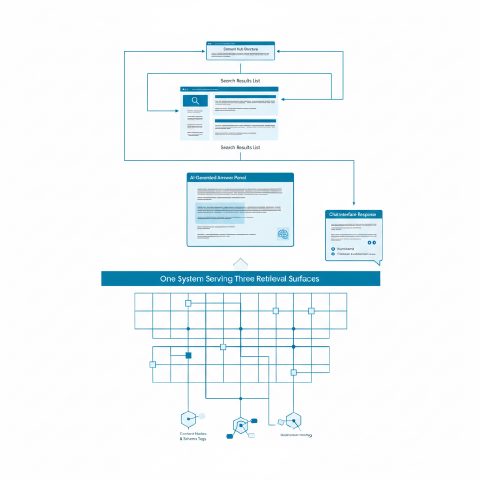
AEO vs GEO vs SEO for iGaming: What's the Difference?
AEO, GEO and SEO aren't three separate content strategies for iGaming affiliates, they're three retrieval layers sitting on top of the same architecture. Here's how to build that architecture once and win citations across Google, AI Overviews and LLM chat interfaces without tripling your content spend.
 guide
guide
SBC Summit Lisbon 2026: What Organic Growth Signals Emerged
I ran our SERP-volatility and AI-citation tracking against the affiliate marketing track at SBC Summit Lisbon 2026, and the gap between panel talking points and what the ranking data actually showed was bigger than most speakers admitted.
 guide
guide
What Is iGaming SEO and Why Is It Different From Normal SEO?
iGaming SEO is a distinct discipline built on YMYL scrutiny, jurisdiction-by-jurisdiction licensing rules and programmatic index control, not a niche variant of standard content SEO.
 landing
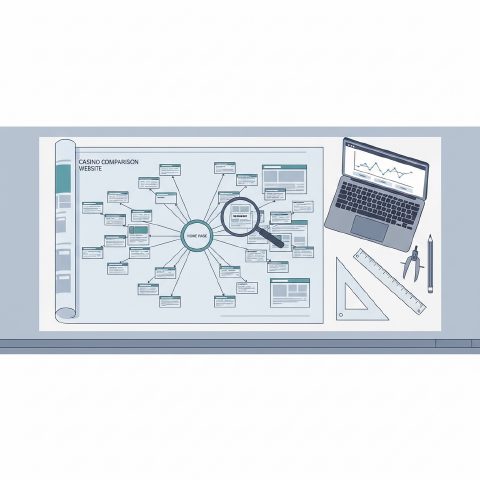
AEO for iGaming: Get Your Casino Brand Cited by ChatGPT & Perplexity
I run SEOiGaming Agency's data lab, and this is what our citation-tracking panel actually found when we measured which casino and affiliate pages ChatGPT, Perplexity and AI Overviews chose to quote, and why most igaming sites still lose that fight.
 guide
guide
Casino Affiliate SEO: The 2026 Blueprint
Daniel Osei lays out the architecture, E-E-A-T signals and index-control discipline casino affiliate and comparison sites need to survive the March 2026 core update cycle and get cited by AI search engines.
 landing
iGaming SEO Agency: How Strategic Organic Growth Works in 2026
Most igaming SEO agencies still sell rankings alone. Here's the compliance-first, AEO-ready architecture I build for casino affiliates and brands that need to survive core updates and get cited by ChatGPT and Perplexity in 2026.
Get a free iGaming authority audit
We'll show you exactly where your site is losing rankings, links and AI citations, and the compliance-first moves that fix it first.
- Where you're losing to competitors
- Your biggest quick wins
- A prioritised 90-day authority plan