Casino Affiliate SEO
The 2026 playbook for ranking casino affiliate and comparison sites without sacrificing trust for monetization.

Ranking a casino affiliate or comparison site in 2026 comes down to three compounding factors: content depth that actually helps a reader decide between operators, E-E-A-T signals strong enough to satisfy YMYL review standards, and a monetization structure that doesn't visibly compromise editorial trust. Sites that win sustainably treat those three as one system. A review page that's thin on real detail but heavy on affiliate links reads as untrustworthy to both human evaluators and Google's ranking systems, while a genuinely useful comparison that happens to monetize well tends to hold its position through core updates instead of losing it.
Content depth beyond word count
Content depth in this niche means more than word count; it means demonstrable, specific detail a generic aggregator can't fake without doing the work. A credible casino review covers licensing (which regulator, license number, jurisdictions covered), actual game library composition and providers, verified withdrawal times and methods by region, wagering requirements spelled out in plain terms rather than buried in fine print, and a clear statement of how the review was researched, whether through hands-on account testing, verified payout data, or direct comparison against terms published by the operator. Consider two pages targeting the same best-live-dealer-casinos query: one lists ten operators with a single boilerplate paragraph on each, while the other specifies actual live-dealer studio providers, table minimums and stream quality by operator; the second page costs more to produce, but it is also the one an editor, a reader and a language model can all verify is telling the truth. Thin content in this space isn't just a ranking risk; increasingly it's the dividing line between pages that get cited by AI answer engines summarizing best-casino queries and pages those systems skip because there's nothing extractable and verifiable to cite.
Named reviewers and verifiable trust signals
E-E-A-T on a casino comparison site starts with named, credentialed reviewers, ideally people with demonstrable gambling-industry or gaming-journalism experience rather than anonymous team bylines, paired with an editorial policy that explains review methodology, update frequency and how affiliate relationships are disclosed. Trust signals compound: a responsible-gambling section with links to national self-exclusion and support resources, visible age and jurisdiction restrictions, and current rather than stale bonus terms and license status all function as verifiable proof that the site takes its YMYL classification seriously. Google's rater guidelines explicitly reward exactly this kind of transparency on financial and gambling content, and the pattern shows up in ranking stability during core updates for sites that maintain it consistently versus sites that treat it as a one-time setup task.
Resolving the monetization-versus-trust tension
The monetization-versus-trust tension is real but manageable. The failure mode isn't having affiliate links; it's letting commercial incentive visibly distort the ranking or recommendation logic, like placing an operator first because of a better commission rather than better terms, or hiding worse terms in fine print. The fix is structural: publish explicit, consistent ranking criteria (bonus value, game selection, payout speed, licensing, customer support), apply them the same way across every operator reviewed, and disclose the affiliate relationship clearly near the top of the page rather than in a buried footer link. Readers and reviewers both notice consistency; a comparison table that quietly always favors the highest-paying operator is exactly the kind of thing that erodes trust fast once discovered, whether by a user, a journalist or a Google rater.
Formatting for SERPs and AI answers alike
What's changed heading into 2026 is that comparison content now competes for two different surfaces at once: traditional SERPs and AI-generated answers in ChatGPT, Perplexity, Gemini and Google's AI Overviews, and the formatting that wins both overlaps more than it diverges. Structured comparison tables with explicit criteria, FAQPage and Review schema, and direct-answer summaries near the top of the page help both a human scanning the page and a language model extracting a citable passage. Sites still writing loose, narrative-only casino reviews without structured data are increasingly invisible to the answer-engine layer even when they still rank reasonably in classic search. We've seen pages restructured this way pick up AI Overview citations for competitive terms like best-fast-withdrawal-casinos within weeks of publication, even without a corresponding jump in classic organic position yet, because the extraction logic and the ranking logic don't move on identical timelines.
A hub-and-spoke architecture built to last
A durable casino affiliate SEO strategy for 2026 builds a hub-and-spoke architecture around core comparison pillars, such as best overall casinos, best by payment method, best by game type and best by region, with supporting cluster content covering individual operator reviews, bonus explainers and licensing guides, all interlinked to demonstrate comprehensive topical coverage. Layer real E-E-A-T on top, keep the monetization logic transparent and consistent, and structure everything for extraction by answer engines as well as classic crawlers. Track performance by cluster rather than by individual keyword; watching how a full best-by-payment-method cluster performs together reveals structural weaknesses, like one region page consistently underperforming its siblings, that a single-keyword report would hide entirely. Sites doing all three tend to look boring compared to sites chasing quick keyword-stuffed wins, and that's exactly why they're still ranking two core updates later.

Written by Daniel Osei, Programmatic & Technical SEO Lead
Explore our insights
 comparison
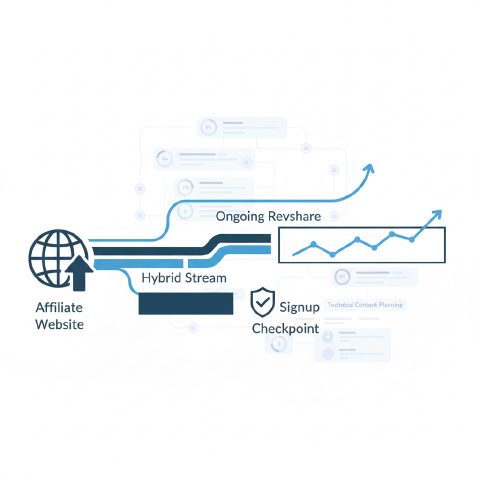
Casino Affiliate Model 2026: RevShare vs CPA vs Hybrid
RevShare, CPA and hybrid deals aren't just commercial terms, they dictate which pages on your site deserve deep content investment and which ones exist purely to convert fast. Here's how I model that decision.
 guide
guide
Casino Affiliate SEO: The 2026 Blueprint
Daniel Osei lays out the architecture, E-E-A-T signals and index-control discipline casino affiliate and comparison sites need to survive the March 2026 core update cycle and get cited by AI search engines.
Free: iGaming SEO & AEO playbook
Get our latest search & AI-visibility playbook by email, no spam.