Best iGaming Markets 2027: Where Keyword Difficulty Meets AI Citation Share
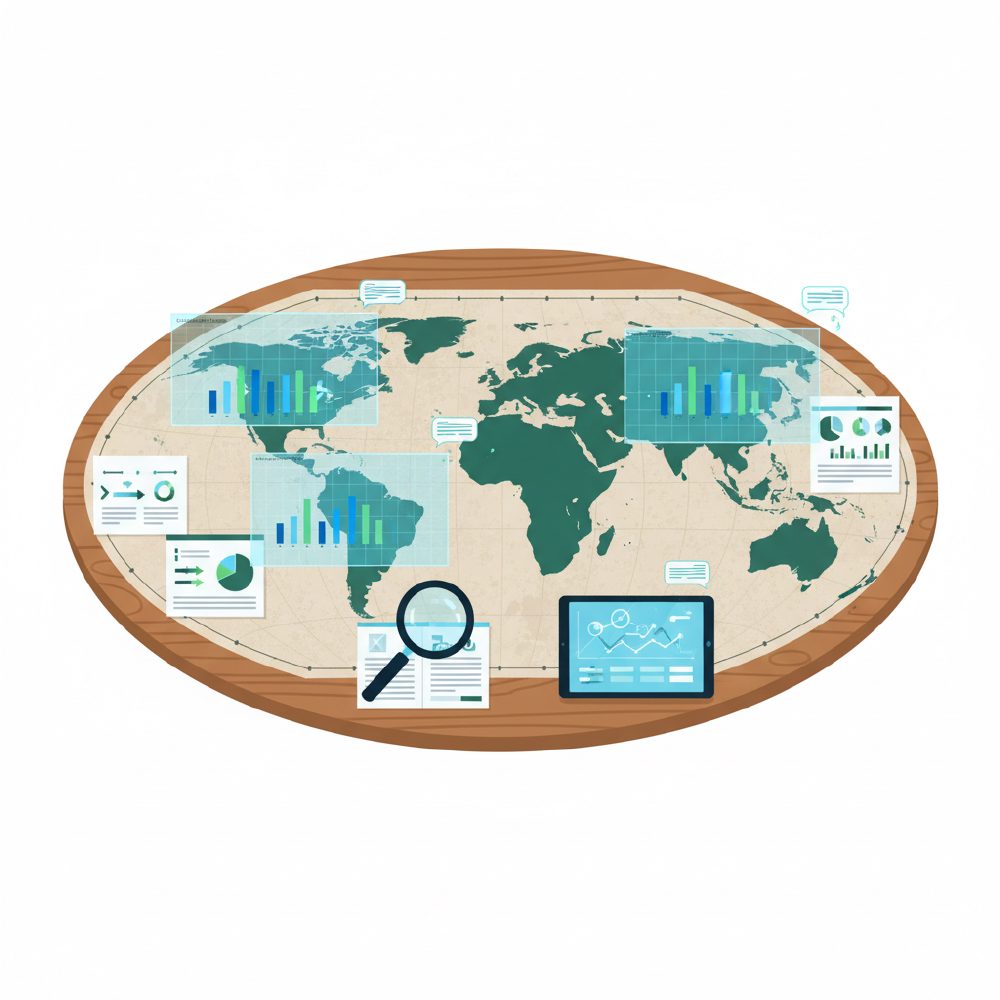
Why Won't Keyword Difficulty Alone Tell You Where to Launch in 2027?
Keyword difficulty measures how hard it is to rank a page in classic blue-link results, but it says nothing about whether ChatGPT, Perplexity or Google AI Overviews will ever cite that page. In 2027, market selection needs a dual score: traditional KD from Ahrefs or SEMrush plus a separate reading of AI-citation vacuum in that market.
For a decade, affiliate market selection ran on three inputs: KD, CPC, and regulatory feasibility. That formula still matters, but it's incomplete. I've tracked gambling-adjacent queries since the first AI Overviews rollout, and a growing share of informational betting queries, anywhere from roughly 30% to 45% depending on the market and query type, now trigger an AI Overview or a direct LLM answer before the user ever scrolls to organic listings. If your target market's core terms sit in that bucket, ranking #3 in classic SERPs might get you far less traffic than it used to.
Take a German example against a Brazilian one. "Beste online casino" sits around KD 65-70 on Ahrefs, and the AI Overview for that query already cites three or four entrenched German comparison brands consistently. "Melhor casa de apostas" in Brazil sits closer to KD 38-45, and as of my last tracking pass, the AI Overview for that query cycles through inconsistent sources, sometimes a regulator page, sometimes a generic aggregator, rarely a specialist affiliate with a clear author byline. That inconsistency is opportunity. It means no one has locked in the citation yet.
The practical takeaway: score every candidate market on KD and on AI citation stability. A market can have brutal KD and still be winnable if AI engines haven't settled on trusted sources. A market can have soft KD and still be a dead end if three global aggregator brands already own every citation slot.
Which iGaming Markets Have the Lowest Keyword Difficulty in 2027?
Nigeria, Kenya and South Africa currently show the lowest Ahrefs KD for core money terms, in the teens to mid-20s, followed by Peru and Poland in the low-to-mid 20s and 40s respectively. Brazil and India carry moderate-to-high KD but justify it with volume and AI citation opportunity.
The table below reflects estimates from cross-referencing Ahrefs and SEMrush data with manual SERP checks, treat the numbers as directional, not exact, since KD algorithms shift monthly and gambling verticals move faster than most.
What stands out is the split between volume and difficulty. India's core terms carry KD in the 45-55 range because domestic fantasy-sports and betting-adjacent brands with heavy domain authority already dominate, despite regulatory ambiguity at the state level. Poland sits at KD 40-48 not because of affiliate competition but because the state gambling monopoly and blacklist enforcement push most surviving content toward a handful of compliant domains, which concentrates authority. Contrast that with Kenya and Nigeria, where mobile-first betting adoption has outpaced content investment, plenty of search volume, almost no structured, schema-rich competition.
| Market | Core keyword example | Ahrefs KD (est.) | Est. monthly search volume | AI Overview trigger rate (est.) |
|---|---|---|---|---|
| Brazil | melhor casa de apostas | 38-45 | 90K-110K | ~35% |
| Nigeria | best betting site nigeria | 18-26 | 40K-60K | ~20% |
| Kenya | best betting sites kenya | 16-24 | 25K-35K | ~18% |
| South Africa | best betting sites south africa | 22-30 | 20K-30K | ~25% |
| India | best betting apps india | 45-55 | 150K-200K | ~40% |
| Peru | mejores casas de apuestas peru | 20-28 | 15K-20K | ~15% |
| Poland | legalne bukmacherzy | 40-48 | 30K-40K | ~30% |
| US (national) | best sportsbook apps | 72-85 | 300K+ | ~55% |
Why Is Brazil Still the Best iGaming Market Entry Point for Affiliates in 2027?
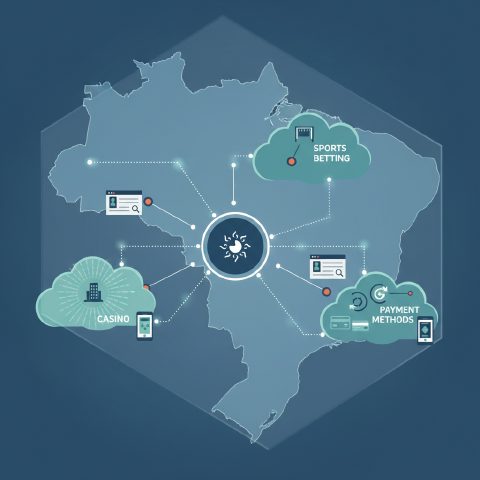
Brazil's 2024 licensing framework under the SPA created a regulated, high-volume Portuguese-language market with KD still sitting in the manageable 35-45 range on money terms. Combined with a genuine AI citation vacuum in Portuguese-language betting content, it remains the strongest volume-to-difficulty ratio available right now.
The Secretaria de Prêmios e Apostas licensed several hundred operators through 2024 and 2025, and search demand for Portuguese betting terms has grown steadily rather than spiking and collapsing the way some markets do post-legalization. That matters for affiliate planning: you're not chasing a short window, you're building into a market with multi-year runway.
What makes Brazil distinct from, say, the UK at the same maturity stage is the AI citation layer. English-language betting content has had years to accumulate the kind of structured, author-attributed, schema-marked pages that Gemini and Perplexity prefer to cite. Portuguese-language equivalents are thinner. When I run prompt tests against Brazilian betting queries, I consistently see AI Overviews citing generic news aggregators or regulator PDFs rather than dedicated affiliate comparison content, because that dedicated content, done properly with Organization schema, author bylines, and clear editorial policies, barely exists yet in Portuguese.
The trade-off is compliance overhead. Brazil requires operators to hold an SPA license, and affiliates promoting unlicensed brands risk association with entities that get delisted or blocked. Vet every operator relationship against the current SPA public registry before publishing a single comparison page.
What Makes Emerging iGaming Markets in Africa a Low-Competition Opportunity?
Nigeria, Kenya, Ghana and South Africa combine rapid mobile betting adoption with KD scores in the teens to mid-20s for core terms, the lowest of any sizeable market I'm tracking. English-language content already exists at volume, which paradoxically makes it easier for AI engines to surface it, if someone builds it properly first.
Mobile money infrastructure did the heavy lifting here. M-Pesa in Kenya and similar rails across Nigeria and Ghana turned betting into a frictionless, phone-native habit years before most operators built dedicated local content strategies. The result is a search landscape with genuine demand and shockingly thin supply of authoritative comparison content. I've pulled SERPs for "best betting sites kenya" and found page-one results still dominated by thin listicles with no author attribution, no update dates, and no structured data.
That thinness is exactly what an AI Overview or Perplexity answer struggles with. These engines want a citable, well-sourced answer and currently settle for whatever's available, which in several African betting queries I've tracked is a regulator page (Kenya's Betting Control and Licensing Board, Nigeria's National Lottery Regulatory Commission) or a single global aggregator brand. Neither is a specialist affiliate site. The vacuum is real, and it's the kind of vacuum that closes fast once one or two well-resourced players notice it.
The catch is monetization and regulatory patchwork. CPA and revenue-share rates from African-facing operators run lower than Western markets, and licensing frameworks vary sharply between Nigeria's federal-plus-state structure, Kenya's centralized board, and South Africa's provincial gambling boards. Budget for lower per-click value and heavier compliance research, and the low KD still pays off through volume and durability.
How Does AI Overview Citation Behavior Actually Change Market Selection for igaming SEO?
AI Overviews and Perplexity typically pull three to eight sources per answer and favor pages with clear structured data, author bylines, comparison tables and recent update timestamps. In markets where competitors haven't implemented these signals yet, a single well-built page can capture citation share that would take years to replicate through classic backlink-driven KD competition.
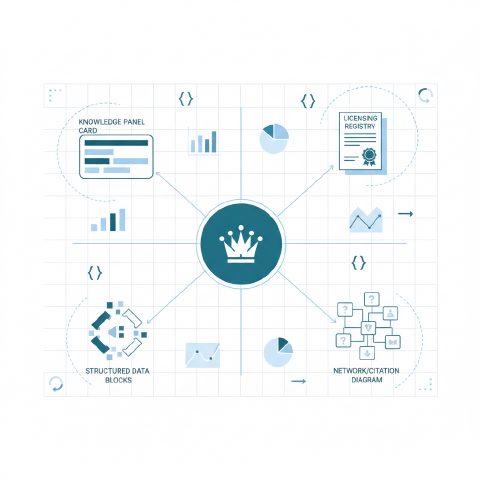
This is the core mechanism behind my scoring framework. Classic SEO ranks reward accumulated authority, backlinks, domain age, historical engagement signals. AI citation selection rewards something closer to structured clarity at the moment of crawl: does the page answer the exact question in extractable form, does it carry Organization and Review schema, does it name a real author with demonstrable expertise, does it cite primary sources like regulator filings or licensing registries.
In mature markets like the UK or Germany, competitors have had years to build both signal sets simultaneously, so KD and AI citation difficulty move together, hard to rank, hard to get cited. In emerging markets, they decouple. I've seen Kenyan and Nigerian betting queries where the organic KD is trivially low, yet the AI Overview still cites a regulator page by default simply because no affiliate has bothered to structure content well enough to be extractable. That's a 12-to-18-month window where a properly built page can dominate both the organic SERP and the AI answer with a fraction of the backlink investment a mature market would require.
The window closes once two or three serious operators notice the gap. Track citation share monthly using manual prompt audits across ChatGPT, Perplexity and AI Overviews for your core 20-30 terms, treat it as seriously as you'd treat a rank tracker.
Is the US iGaming Market Still Worth the Keyword Difficulty in 2027?
National US sportsbook terms sit at KD 72-85 on Ahrefs, with citation slots in AI Overviews already locked by Catena Media, Better Collective and similar entrenched affiliate networks. Entry only makes financial sense around narrow, newly-legalized state or niche angles with a short low-KD window before consolidation.
The US remains the highest-value CPA market in the world on a per-click basis, and that's exactly why it's saturated at every level, organic KD, paid CPC, and AI citation share alike. When a new state legalizes, there's a brief window, usually three to nine months, where state-specific terms carry manageable KD before the established affiliate networks redirect resources and content teams into that state and consolidate the SERP and the AI Overview citations simultaneously.
Missouri legalized in 2025 and I watched "missouri sports betting apps" move from KD in the high-20s at launch to the mid-50s within about eight months, tracking almost exactly with the arrival of major network content hubs. North Carolina followed a similar curve after its 2024 launch. Nebraska's retail-only model illustrates the other failure mode: no meaningful affiliate opportunity exists because there's no online licensing structure to monetize against.
My recommendation for US entry in 2027: don't compete on "best sportsbook" nationally. Target the launch window of the next state to legalize, build the content and schema before launch using the licensing bill's public timeline, and accept that your citation and ranking advantage has a shelf life measured in months, not years.
| State | Launch year | Core keyword KD (est.) | Note |
|---|---|---|---|
| Missouri | 2025 | 28-35 at launch, 50-55+ by late 2027 | Short low-KD window already closing fast |
| North Carolina | 2024 | 45-52 | Post-launch consolidation by major affiliates underway |
| Nebraska | Retail-only, no online launch confirmed | n/a | Minimal affiliate opportunity under current structure |
Where Do Eastern Europe and CEE Markets Rank for igaming market entry?
Poland, Czech Republic and Romania sit in the medium KD band (35-50) because state monopolies and licensing blacklists concentrate authority on fewer compliant domains rather than because of heavy affiliate competition. That structure raises legal risk but keeps the competitive field narrow for vetted operators.
Poland's regulatory model is the one to understand first. The state betting monopoly, Totalizator Sportowy, coexists with licensed private sportsbook operators, but the Ministry of Finance maintains an active domain blacklist targeting unlicensed operators and, by extension, sites promoting them. That enforcement thins the field of viable affiliate targets, which pushes KD for terms like "legalne bukmacherzy" into the 40-48 range even though raw competitor count looks modest.
Czech Republic runs a comparable licensed model with less aggressive blacklist enforcement, and Romania's market has grown steadily since its own licensing overhaul, with KD for core terms generally sitting a notch below Poland's. The opportunity across CEE is real but narrower than Brazil or Africa: smaller populations, moderate CPA rates, and a legal landscape that punishes sloppy operator vetting harder than most Western markets do.
If you enter CEE, build your operator vetting process against each country's current licensing registry before publishing comparison pages, and expect a 9-to-15-month timeline to meaningful organic traffic given the medium KD band.
How Should You Score a Market by Combining Keyword Difficulty and AI Citation Share?
Weight keyword difficulty at roughly 30%, search volume growth at 20%, AI citation vacuum at 20%, regulatory clarity at 20%, and payment or localization cost at 10%. Score each candidate market 1-10 per factor, multiply by weight, and compare weighted totals rather than ranking on KD or volume alone.
I built this framework after watching clients pour budget into markets that looked great on KD alone and stalled because regulatory friction or payment localization ate the margin. The five-factor model forces a more honest comparison. Keyword difficulty and AI citation vacuum get inverted scoring, lower difficulty and thinner citation competition score higher, since both represent easier entry.
Running Brazil, Nigeria and the US through this model illustrates the point cleanly. Brazil and Nigeria land close together on weighted total despite very different KD profiles, because Nigeria's regulatory clarity score is lower and its payment localization cost (mobile money integration, currency volatility) drags the total down relative to its excellent KD and citation-vacuum scores. The US scores low across the board except payment infrastructure, which is why it only makes sense as a narrow, timed play rather than a broad market bet.
Treat the numeric outputs as directional prioritization, not a guarantee. Re-run the model quarterly, regulatory clarity and AI citation vacuum both shift faster than KD does.
| Factor | Weight | Brazil score | Nigeria score | US score |
|---|---|---|---|---|
| Keyword difficulty (inverted) | 30% | 7/10 | 9/10 | 2/10 |
| Search volume growth | 20% | 8/10 | 6/10 | 4/10 |
| AI citation vacuum | 20% | 8/10 | 9/10 | 2/10 |
| Regulatory clarity | 20% | 7/10 | 5/10 | 6/10 |
| Payment / localization cost | 10% | 6/10 | 5/10 | 8/10 |
| Weighted total | - | 7.3 | 7.4 | 3.6 |
What Regulatory Risks Should You Weigh Against Low Keyword Difficulty?
Low KD often correlates with regulatory immaturity, which brings risks like sudden domain blacklisting, retroactive licensing requirements, tax hikes on affiliate or operator revenue, and payment processor restrictions. A market that looks cheap to rank in can become worthless overnight if the underlying operator relationships lose their license.
Kenya raised betting-related excise taxes multiple times between 2021 and 2024, materially compressing operator margins and, downstream, affiliate payouts. Ontario's iGaming Ontario introduced advertising and content restrictions in 2024 that forced several affiliate sites to rework entire page templates. Poland's blacklist can remove an operator's domain from search visibility within weeks of a compliance breach, taking your affiliate links down with it if you haven't diversified operator partnerships.
Brazil's own transition period matters here too. Operators had defined deadlines to secure SPA licensing or exit the market; affiliates who kept promoting unlicensed brands past those deadlines lost both traffic (as pages got flagged) and revenue (as brands vanished from Brazil entirely). None of this shows up in an Ahrefs KD score.
My rule for any low-KD market: build a compliance monitoring routine alongside your content calendar. Check licensing registries monthly, diversify across at least three to five licensed operators per market, and avoid single-operator dependency regardless of how attractive that operator's CPA rate looks.
Which Payment and Localization Factors Affect igaming market entry Cost?
Mobile money rails like M-Pesa in Kenya, PIX in Brazil, and UPI in India each demand different comparison-page structures and conversion messaging than card-based Western markets. Localization quality also affects AI citation, since LLMs favor grammatically clean, natively-written content over machine-translated pages.
Payment methods aren't a footnote in market entry, they're a content requirement. Brazilian users expect PIX deposit speed comparisons front and center; a comparison table that leads with credit card options reads as obviously foreign-built and converts poorly. Kenyan and Nigerian users expect M-Pesa and bank transfer withdrawal timing called out explicitly, often down to the hour, because that's the actual decision driver for many bettors choosing between similarly-licensed operators.
Translation quality has a second, less obvious cost: AI citation eligibility. I've compared machine-translated Portuguese and Swahili betting content against natively-written equivalents in prompt testing, and the natively-written pages get selected as AI Overview or Perplexity sources noticeably more often, even when both cover identical facts. The pattern isn't proven at scientific rigor, but it's consistent enough across dozens of test queries that I now treat native-language editorial review as a non-negotiable line item, not a nice-to-have.
Budget accordingly: native-speaking editorial talent costs more upfront than translation tools, but it's the difference between a page that ranks and a page that also gets cited.
How Do You Build a Topical Map for a Low-KD Emerging Market?
Start with entity research against the local regulator and top operators, then build a hub-and-spoke architecture around licensing, payment methods, and bonus terms before writing broad comparison content. Add Organization and Review schema, byline every page with a named author, and track AI citation share monthly from day one.
Step one is entity mapping: list every licensed operator, the regulator's official name and registry URL, and the two or three payment rails that dominate that market. This becomes your internal knowledge base and your schema source of truth.
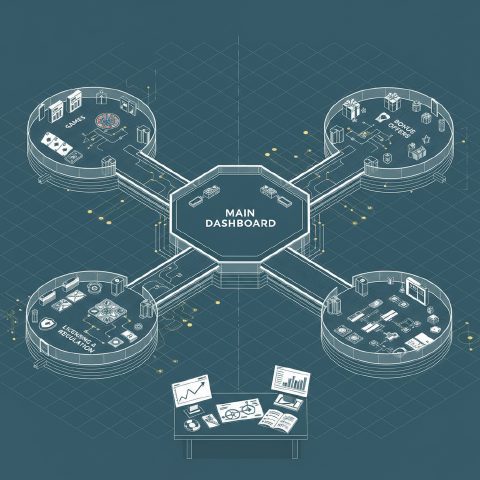
Step two is architecture. Build a pillar page for the market ('Best Betting Sites in Kenya') supported by spokes covering licensing status, payment methods, bonus terms, and sport-specific or product-specific angles. This mirrors classic topical mapping but with one addition: each spoke page needs its own extractable answer block near the top, written to stand alone if an AI engine pulls only that paragraph.
Step three is technical: implement Organization schema on your about/author pages, Review or AggregateRating schema on operator comparison pages where genuinely warranted, and visible last-updated dates. Step four is monitoring: run your core 15-20 terms through ChatGPT, Perplexity and Google's AI Overview monthly, log who gets cited, and treat any shift in citation as a leading indicator, months before it shows up in traffic data.
What's the Realistic Timeline to Rank in a New iGaming Market in 2027?
Expect 6-9 months to meaningful organic traffic in low-KD markets like Nigeria, Kenya or Peru, 12-18 months in medium-KD markets like Brazil, Poland or India, and 18-30 months in saturated markets like the US or UK, often without ever fully closing the gap to entrenched networks.
These ranges assume competent execution: correct schema from launch, native-language editorial quality, consistent publishing cadence, and a link-building or digital-PR program appropriate to the market's authority baseline. Low-KD African markets respond fastest because the competitive bar is genuinely low, a well-structured 40-page site with clean entity signals can start pulling organic and AI citation traffic within two to three quarters.
Medium-KD markets like Brazil demand more content volume and a stronger authority-building program, since volume itself attracts more competition faster than thinner markets do. Eighteen months is a realistic point to expect stable page-one rankings across your core term set, assuming you started with proper Portuguese-native content rather than translated English templates.
Saturated markets are a different calculation entirely. The 18-30 month range assumes you're targeting a defensible niche, not the head terms already owned by Catena Media or Better Collective-scale operations. Going head-to-head on "best sportsbook apps" nationally in the US without a comparable content and link budget isn't a timeline problem, it's a strategy problem, redirect that budget toward a narrower state or niche angle instead.
- — Moderate KD (38-45) on core Portuguese terms with a genuine AI citation vacuum and multi-year regulatory runway under the SPA licensing framework, the strongest volume-to-difficulty ratio available in 2027.
- — KD in the high-teens to mid-20s on core betting terms, driven by mobile-first adoption that outpaced content investment; thin, unstructured competition leaves AI citation slots wide open.
- — KD 16-30 depending on term, with regulator pages currently dominating AI Overview citations by default, a clear signal that no specialist affiliate has structured content well enough to displace them yet.
- — Higher KD (45-55) offset by massive search volume (150K-200K+ monthly on core terms); regulatory ambiguity at the state level raises risk but the citation and ranking upside justifies serious players.
- — KD 20-30 with steadily maturing licensing frameworks; smaller volume than Brazil but a real second-wave LatAm opportunity for teams already building Portuguese and Spanish content pipelines.
- — Medium KD (35-50) shaped more by monopoly and blacklist enforcement than by raw affiliate competition; narrower opportunity that rewards careful operator vetting over volume plays.
- — Short 3-9 month low-KD windows (KD 25-35) around each new state launch before consolidation by entrenched national affiliate networks pushes terms into the 45-55+ range.


Comments
No comments yet, be the first.