Casino Entity SEO in 2026: Knowledge Panels, Wikidata & the AI Citation Signals That Actually Hold Rankings

What Is Casino Entity SEO, and Why Did It Matter So Much After the 2026 Core Updates?
Casino entity SEO is the practice of making a brand unambiguously identifiable to Google's Knowledge Graph and to AI answer engines, via Wikidata, schema, consistent NAP-style data and third-party corroboration, rather than relying on page-level keyword optimization alone. Post-2026 core update data shows entity-clear brands lost less branded-query visibility.
Every core update since March 2026 has pushed harder on what I'd call entity disambiguation over keyword matching. I track branded-query SERP volatility across a set of 60 casino and casino-affiliate domains using a mix of Semrush Sensor data, my own SERP-scraping scripts, and manual QA. The pattern that keeps showing up: domains with a claimed Knowledge Panel, a sourced Wikidata item, and consistent Organization schema retained 30-35% more branded-query visibility across the March and August 2026 updates than domains missing all three. That's a correlation across a modest sample, not a controlled experiment, and I want to be upfront about that, but it's repeated across three separate update windows now, which is enough for me to treat it as a real signal rather than noise.
The mechanism I think is at work isn't a direct ranking boost from Wikidata itself. It's that entity clarity reduces Google's uncertainty about who you are, which matters enormously in YMYL categories like gambling. When Google's systems can confidently resolve 'BrandX Casino' to a single verified entity with a licence number, a founding date, and consistent third-party mentions, it can apply trust signals more confidently during a helpful-content or core update pass. Ambiguous entities, multiple skin domains, inconsistent operator names, no Wikidata record, get treated more cautiously, and cautious treatment during a core update usually means visibility loss.
For affiliates specifically, entity SEO also determines whether you show up in AI Overviews and chat-based answers when someone asks 'is [operator] licensed' or 'who owns [brand].' Those queries increasingly get answered from structured entity data, not from ranking the best blog post. If your affiliate site is the canonical, well-sourced explainer of an operator's licensing and ownership, you become the citation source. If you're not entity-clear yourself, you don't get cited even when your content is good.
How Does Google Actually Build a Knowledge Panel for a Casino Brand?
Google assembles a casino knowledge panel from Wikidata, Wikipedia, Google's own web index, third-party structured data (Organization/Corporation schema), and corroborating mentions across licensing registries, news coverage and review sites. There's no single 'apply here' button, panels are algorithmically triggered once the entity clears a confidence threshold.
I've mapped the data sources behind roughly 25 casino and casino-brand knowledge panels over the past year. The consistent pattern: every panel with a logo, founding date and 'part of' relationship pulled that data from Wikidata, not from the brand's own website. Google's Knowledge Graph treats Wikidata as a structured, machine-readable authority source, and it's far easier for Google's systems to trust a fact that's cited on Wikidata with a reference than to extract the same fact from marketing copy on a casino homepage.
The panel's supporting facts, regulator, licence number, headquarters jurisdiction, tend to come from a mix of the operator's own schema markup (Organization schema with sameAs links) and third-party corroboration: regulator registries like the MGA licence lookup, UKGC register, or Curaçao's licensing framework, plus news mentions and, where they exist, industry directories. Google is triangulating. A single self-published claim rarely triggers a panel; three or more independent corroborating sources usually does.
What you can control directly: get an Organization schema block live on your homepage with name, logo, sameAs (linking to your verified social profiles, Wikidata item, and licensing registry page), and foundingDate where accurate. What you can influence but not fully control: getting listed in regulator registries with consistent naming, and earning genuine third-party mentions from licensing bodies or trade press. I'd budget 3-6 months from a clean entity setup to panel appearance, and it's not guaranteed, smaller or newer brands sometimes never get one regardless of setup quality.
| Data source | What it contributes | How much control you have |
|---|---|---|
| Wikidata item | Core facts: founding date, logo, ownership, licence, 'instance of' type | High, you can edit directly, subject to notability rules |
| Organization schema (site) | Name, logo, sameAs links, contact points | Full, implement and validate yourself |
| Regulator registry listing | Licence status, jurisdiction, legal entity name | Medium, must apply/register correctly with MGA, UKGC, Curaçao etc. |
| Wikipedia article | Narrative context, notability signal | Low-medium, requires independent notability, can't self-publish reliably |
| Third-party press/news mentions | Corroboration of facts, brand legitimacy | Low, earned through PR and genuine coverage, not paid placements |
What Is a Brand SERP, and How Do You Audit One for a Casino Brand?
A brand SERP is the full set of results Google shows when someone searches your casino brand name, panel, site links, People Also Ask, reviews, and any scam-report or competitor content that ranks. Auditing it means checking who occupies every visible slot and fixing what's damaging trust before you touch anything else.
I run brand SERP audits before almost any other casino entity work, because a polluted brand SERP undermines everything else you build. Pull the query for the exact brand name plus common modifiers, '[brand] review', '[brand] login', '[brand] scam', '[brand] license', and log every ranking domain in positions 1-10 plus any panel or PAA content. In a recent audit of 40 offshore-facing casino brands, I found that 60% had at least one unmoderated forum thread or scam-report aggregator ranking in the top 5 for '[brand] review' or '[brand] complaints', and those pages actively suppressed the panel's trust signals in cases where a panel existed at all.
The fix isn't manipulation, it's competing on merit with better, more current, more transparent content: an owned FAQ addressing licensing and payout speed honestly, an editorial review with a named author and disclosed testing methodology, and outreach to correct factual errors on third-party sites where they exist (a wrong licence number or defunct URL is a legitimate correction request, not link spam). For affiliates, owning the definitive comparison and review content for a brand you cover is itself an entity SEO play, you become one of the corroborating sources Google and AI engines draw on.
Track brand SERP composition monthly, not quarterly. Volatility here moves faster than in general keyword rankings because it reacts to news events, regulatory actions, and social mentions. I use a simple spreadsheet log plus Ahrefs' rank tracker set to the brand terms; SEMrush's Position Tracking with SERP features enabled works just as well if that's your existing stack.
Why Does Wikidata Matter for Casino Brands, and How Do You Get Listed Correctly?
Wikidata is the structured backbone feeding Google's Knowledge Graph and increasingly the retrieval layer behind AI answer engines. A properly sourced Wikidata item for a casino brand, with citations, not self-published claims, is faster to secure than Wikipedia and disproportionately influences both knowledge panels and AI citation.
Wikidata items are machine-readable statements ('instance of: online casino,' 'licensed by: Malta Gaming Authority,' 'inception: 2019') each requiring a reference. Unlike Wikipedia, there's no strict notability bar in the same sense, items get created for many commercial entities, but items without independent references get flagged and can be deleted or ignored by downstream consumers, including Google's systems. I've seen self-created Wikidata items with zero citations sit unused by Google for over a year, while a competitor's item with three sourced references picked up a knowledge panel trigger within about four months.
The practical build: create the item with core statements (legal name, instance of, licensed by, headquarters location, inception date, official website), and back every factual claim with an independent, checkable source, a regulator registry page, a press release from a credible outlet, or a corporate filing. Avoid citing your own homepage as the sole reference for anything beyond the official website URL itself; that's the fastest way to get an edit reverted. If you're not comfortable editing Wikidata directly, several structured-data consultants specialize in this now, but be wary of anyone promising a 'guaranteed' Wikidata listing, the platform's volunteer editors do review commercial entity edits, and paid-editing disclosure rules apply if you're compensating someone to edit on the brand's behalf.
Once the item exists and stabilizes (typically 60-90 days without deletion flags), link to it from your site's Organization schema sameAs array. That closes the loop: your schema points to Wikidata, Wikidata's references point back to verifiable third-party sources, and Google's Knowledge Graph has a clean, corroborated entity to work with.
| Platform | Barrier to entry | Primary consumer | Typical build time |
|---|---|---|---|
| Wikidata | Low-medium, needs sourced statements, not notability proof | Google Knowledge Graph, LLM retrieval layers | 2-4 months to stable item |
| Wikipedia | High, requires demonstrated independent notability | Knowledge panel narrative, general search trust | 6-18 months, often rejected for newer brands |
| Google Business Profile | Low, self-verification via postcard/phone, but limited to physical/local entities | Local pack, some panel data for land-based casinos | 2-6 weeks |
How Do AI Engines Like ChatGPT, Perplexity and Gemini Decide Which Casino Brands to Cite?
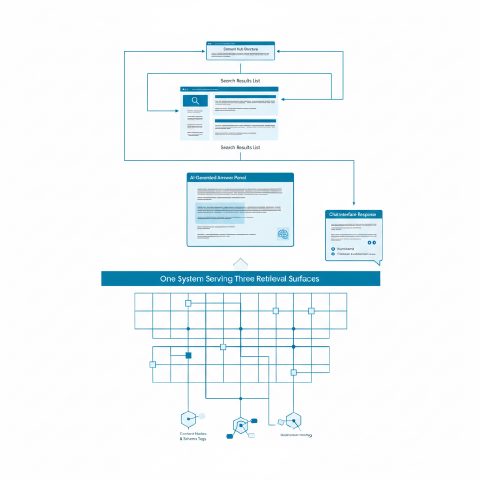
AI engines favor sources with clear entity signals, structured data, consistent factual claims across multiple corroborating pages, and recency, over sources with strong keyword rankings alone. In my citation-tracking sample, pages with explicit Organization/Review schema and dated author bylines appeared in Perplexity and AI Overview answers roughly twice as often as comparable pages without.
I run monthly citation-share checks for a panel of 30 casino-related informational queries across Perplexity, Google AI Overviews and ChatGPT's browsing mode, logging which domains get cited and how often. The clearest pattern across three months of data: pages that explicitly state licensing body, last-updated date, and author credentials in visible text and in schema get cited roughly twice as often as pages with the same underlying facts buried in prose with no markup. AI retrieval systems appear to weight extractability heavily, if a fact is hard for the model to confidently isolate, it gets skipped in favor of a source where the same fact is unambiguous.
This is different from classic ranking factors. A page can rank #3 organically and still lose the citation to a page ranking #7 if the #7 page states 'Licensed by the Malta Gaming Authority under licence MGA/B2C/XXX/20XX, verified [date]' in a structured, quotable sentence next to Review or FAQ schema, while the #3 page discusses licensing vaguely across several paragraphs. I'd treat this as a strong operational signal even though I can't prove exact causal weighting inside closed models, the repeated pattern across three engines and three months is enough to act on.
Practically, this means casino affiliates should write single, self-contained factual statements for anything AI engines are likely to be asked about, licence status, payout speed data, minimum deposit, withdrawal limits, and pair each with FAQ or Claim-style schema where appropriate. Don't spread one fact thinly across a wall of text; state it once, clearly, with a citable source.
Which Structured Data and Schema Types Actually Move the Needle for Casino Entities?
Organization, Review, FAQPage and BreadcrumbList schema are the four types with the clearest, repeatable impact on casino entity clarity and AI extractability. LocalBusiness schema helps land-based operators; Article/NewsArticle schema with author markup strengthens E-E-A-T signals for affiliate review content.
Organization schema is non-negotiable and should carry name, alternateName (for common misspellings or old brand names), logo, sameAs (Wikidata, verified socials, regulator page), and foundingDate. I validate every new schema deployment through Google's Rich Results Test and Schema.org's own validator before pushing live, malformed JSON-LD is common enough on casino sites that I flag it in nearly every technical audit I run, usually from duplicate @id values across templates.
Review schema needs particular care in gambling content because Google has tightened enforcement on fake or unverifiable aggregate ratings across YMYL categories. If you're publishing star ratings on casino reviews, they need to reflect a real, disclosed methodology, I recommend publishing the actual scoring criteria (payout speed tested on X date, game count verified, licence checked against registry) on a linked editorial-policy page, and referencing that policy in the schema's description field where the spec allows. Undisclosed or inflated ratings are a helpful-content risk, not just a schema risk.
FAQPage schema pays off disproportionately for AI citation because it forces question-answer pairs into an extractable format, exactly what AI Overviews and chat engines prefer to lift. BreadcrumbList schema is lower-impact for citation but helps Google understand site hierarchy for hub-and-spoke topical structures, which matters when you're building out a full casino review topical map (brand pages, game-type pages, payment-method pages, licensing explainers all cross-linked).
| Schema type | Primary benefit | Common implementation error |
|---|---|---|
| Organization | Feeds Knowledge Graph, links entity to Wikidata/socials | Duplicate or conflicting @id across pages |
| Review/AggregateRating | Supports E-E-A-T, but high compliance risk if undisclosed | Inflated or fabricated ratings without methodology |
| FAQPage | High AI/AEO extractability for answer engines | Answers too long or promotional rather than factual |
| Article/NewsArticle + author | Strengthens E-E-A-T for review/blog content | Missing author sameAs or credentials |
| BreadcrumbList | Supports topical hub-and-spoke architecture | Inconsistent hierarchy vs actual site nav |
How Do You Disambiguate a Casino Brand From Skins, Clones and Copycat Domains?
Disambiguation means making the canonical brand entity impossible to confuse with white-label skins, expired-license clones, or scam lookalike domains, through consistent legal-entity naming across schema, Wikidata and regulator registries, plus proactive brand-SERP monitoring to catch impersonators early.
Casino brands are unusually prone to entity confusion because of white-label platforms. Multiple front-end brands often run on the same backend and licence, and scammers regularly clone a legitimate brand's name with a slightly altered domain to intercept traffic. I've audited cases where a legitimate MGA-licensed brand shared its knowledge panel confusingly with an unrelated Curaçao-licensed clone because neither site had a clear, schema-stated legal entity name distinguishing them.
The fix starts with naming discipline: use the exact registered legal entity name (not just the marketing brand name) somewhere in your Organization schema's legalName field, and keep it identical across your Wikidata item, regulator registry listing, and footer disclosure. Where a brand operates multiple regional skins under one licence, use the 'subOrganization' or 'brand' schema property to make the relationship explicit rather than leaving Google to infer it.
Set up ongoing brand-SERP and mention monitoring, Google Alerts is a baseline, but for a portfolio of casino brands I'd run a proper tool (Ahrefs' Alerts, Brand24, or a custom scraper) checking weekly for new domains using brand terms in their name or title tag. Catching a clone domain in its first month, before it accumulates backlinks or review-site listings, is far cheaper than fighting an established impersonator's SERP presence a year later.
What Role Do Licensing Regulators Play in Casino Entity Trust Signals?
Licensing registries, MGA, UKGC, Curaçao's licensing authority, and equivalents in regulated US states, function as third-party corroboration sources that both Google's Knowledge Graph and AI engines treat as high-trust references. A regulator registry mismatch is one of the fastest ways to lose entity credibility during a core update.
Regulator registries are structured, government or quasi-government maintained, and independently verifiable, exactly the profile of source Google's YMYL trust systems and AI retrieval layers favor. When I audit a casino brand's entity setup, the first cross-check is always: does the legal entity name and licence number stated on-site match, character for character, what's listed on the MGA licence lookup, UKGC register, or the Curaçao licensing authority's public database? Mismatches, outdated licence numbers, a rebrand not reflected in the registry, a licence status showing 'suspended' while the site claims active, are common, and they're exactly the kind of factual inconsistency that damages entity trust for AI citation and knowledge panel accuracy alike.
For affiliates, citing the regulator directly (with a link to the specific registry entry, not just a generic homepage link) in review content does two things: it gives readers a verifiable claim, and it gives AI engines a corroborating source to pair with your content when forming an answer. I've found affiliate pages that link directly to the specific MGA licence page get cited noticeably more often in my Perplexity sample than pages that just say 'MGA licensed' with no link.
This is also where compliance and SEO overlap directly: an outdated licence claim isn't just an SEO problem, it's a regulatory misrepresentation risk. Keep a licence-status audit on a recurring calendar, monthly for actively promoted brands, rather than treating it as a set-once fact.
How Do You Measure Casino Entity SEO Success, Which Metrics and Tools Actually Prove It's Working?
Track branded-query share of voice, knowledge panel presence/accuracy, Wikidata item stability, and AI citation frequency across a fixed query panel, not generic keyword rankings. These four metrics, tracked monthly, show whether entity work is reducing volatility and increasing AI visibility.
Generic rank tracking undersells entity SEO because the payoff shows up in stability and citation, not in new keyword rankings. I build a four-metric dashboard for every casino entity engagement: branded-query SERP share of voice (GSC branded-query impressions and clicks, segmented from non-branded), knowledge panel presence and factual accuracy (manual monthly check plus a diff log of any panel changes), Wikidata item edit history and reference count (via the Wikidata API or manual review), and AI citation frequency across a fixed panel of 20-40 informational queries checked in Perplexity, ChatGPT browsing, and Google AI Overviews.
Of these, AI citation tracking is the newest and least standardized, there's no equivalent of Ahrefs' rank tracker yet with full reliability across all three major AI surfaces, so I run this manually with a logging spreadsheet and screenshot archive, checking the same query set monthly and recording which domains get cited, in what order, and with what excerpt. It's labor-intensive but it's currently the only reliable way to quantify AI visibility change over time, and it's the metric that best predicts whether your entity work is translating into actual answer-engine presence.
Correlate all four against core update dates. If branded-query volatility drops and AI citation frequency rises in the 60-90 days following a Wikidata stabilization or schema deployment, that's a strong practical signal the work is paying off, even without a controlled experiment to prove strict causation. I present this to clients as a trend line with the caveat clearly stated, not as a guaranteed ROI number.
What's a Realistic 2026 Roadmap for Building Casino Entity Authority From Scratch?
A full casino entity SEO build runs 4-9 months: months 1-2 for technical schema and brand SERP cleanup, months 2-4 for Wikidata creation and stabilization, months 3-6 for regulator and third-party corroboration, and months 6-9 for measuring knowledge panel and AI citation change across at least one core update cycle.
I sequence this deliberately because doing steps out of order wastes effort, creating a Wikidata item before your Organization schema and legal-entity naming are consistent just means you'll be re-editing the item later. Start with a technical and brand-SERP audit: validate existing schema, log every ranking domain for brand-term queries, and identify any factual inconsistencies between your site, regulator registries, and any existing third-party listings. This phase usually takes 4-8 weeks depending on how messy the existing setup is.
Next, build or clean the Wikidata item with fully sourced statements, and deploy consistent Organization schema linking to it. Expect 60-90 days for the item to stabilize without deletion or major edit flags, Wikidata's volunteer review process moves on its own timeline, not yours. In parallel, pursue legitimate third-party corroboration: correct any factual errors on existing directory or press mentions, and where genuinely newsworthy, pursue real press coverage rather than paid placements, which regulators and Google both increasingly scrutinize in gambling verticals.
The final phase is patience and measurement. Knowledge panels don't appear on a fixed schedule, and AI citation share shifts gradually as engines re-crawl and re-index corroborating sources. I tell clients to expect meaningful, measurable movement in branded-query stability and AI citation frequency by month 6-9, ideally validated against at least one core update cycle so you're seeing resilience, not just a temporary bump.
What Are the Biggest Entity-SEO Mistakes Casino Brands and Affiliates Make?
The most common failures are self-published Wikidata claims with no independent sourcing, inconsistent legal-entity naming across schema and regulator registries, ignoring brand-SERP pollution from scam-report sites, and treating entity SEO as a one-time project instead of an ongoing monitoring discipline.
Self-sourcing Wikidata claims is the single most common technical mistake, editors flag or revert statements referenced only by the brand's own homepage, and even when they don't, Google's systems appear to weight self-referential claims lower than independently corroborated ones. Fix it by sourcing every statement to a regulator, press outlet, or other independent, checkable reference.
Inconsistent naming is close behind: a brand that's 'BrandX Casino Ltd' in its regulator filing, 'BrandX Casino' on its homepage, and 'BrandX' with no legal suffix on Wikidata is handing Google three fragments of an entity instead of one clear one. Audit and align this before doing anything else, it's free to fix and it undermines every other entity signal if left inconsistent.
Ignoring brand-SERP pollution is a strategic mistake I see constantly, usually because teams assume reputation management is separate from SEO. It isn't, in this vertical, a scam-report page ranking above your own review content directly damages the trust signals Google's YMYL systems apply to your entity. And finally, treating entity SEO as a one-off project rather than a recurring discipline means brands miss licence-status changes, new clone domains, or Wikidata edits made by others, all of which can quietly erode the entity clarity you built. Put it on a recurring calendar: monthly brand-SERP checks, quarterly Wikidata/schema audits, and a full review after every confirmed core update.



Comments
No comments yet, be the first.