SiGMA World Rome 2026: The SEO and AEO Signals Affiliate Teams Can't Afford to Skip

What was SiGMA World Rome 2026 and why does it matter for affiliate SEO teams?
SiGMA World Rome 2026 was SiGMA's latest push into continental Europe, pulling operators, affiliates and compliance leads into sessions that skewed heavier toward search visibility and AI-answer citation than previous editions. For affiliate SEO teams, the shift confirmed acquisition strategy now starts with 'how do we get cited' rather than just 'how do we rank.'
Rome joined SiGMA's growing European rotation alongside Malta as the network kept expanding beyond its original Mediterranean base into markets with fresh regulatory momentum. The affiliate and marketing tracks pulled noticeably bigger crowds than the operator-only compliance rooms this time, and that alone tells you where budget attention sits heading into the second half of 2026.
What struck me walking the expo floor wasn't the volume of AI-powered booth signage, most of it recycled from 2024 and 2025 pitches, it was how many affiliate directors were asking booth staff pointed questions about schema markup and citation tracking instead of just link-building packages. Two years ago that conversation barely existed outside a handful of specialist panels.
I sat through sessions on Curacao's licensing overhaul, on Italy's ADM advertising restrictions, and on programmatic SEO for sportsbook comparison pages. The common thread across all three: search and AI-answer visibility now gets discussed as a compliance-adjacent topic, not a separate marketing silo. That's the real shift affiliate teams should take home from Rome.
Which SEO trends dominated conversations at SiGMA Rome 2026?
Three trends kept surfacing: helpful-content resilience after 2025's core updates, first-party data replacing scraped odds and bonus feeds, and localized compliance content for markets like Italy, Brazil and Ontario. Affiliates treating SEO as a traffic-only lever were noticeably absent from the more technical panels.
The helpful-content conversation has matured past the panic phase. Teams that survived the 2024-2025 core update cycle weren't the ones chasing algorithm leaks, they were the ones who'd already built genuine editorial depth: hands-on bonus testing, verified payout timelines, named authors with a track record. Several speakers referenced Ahrefs and Semrush visibility data showing recovery windows of roughly six to nine months for sites rebuilt around real expertise, versus sites still flat a year after losing 40-60% of organic traffic to thin comparison pages.
First-party data came up constantly, mostly because scraped odds feeds and syndicated bonus tables are getting harder to differentiate from a dozen competitors running the same API. Affiliates now talk about proprietary testing data, withdrawal-speed logs, screenshot evidence, as a ranking asset and, just as importantly, as citation bait for AI engines that prefer specific, sourced claims over generic marketing copy.
Localization panels focused less on translation and more on jurisdictional nuance: Italy's ADM rules on bonus advertising language, Brazil's newly enforced licensing regime, Ontario's iGO advertising standards. The takeaway for content teams building topical maps is blunt: one English template rewritten five times for five markets no longer clears the helpful-content bar or local regulator scrutiny.
What AEO and LLM citation signals were affiliates and operators discussing at SiGMA Rome 2026?
Conversations centered on which structured data and trust signals actually get pages cited inside ChatGPT, Perplexity, Gemini and Google AI Overviews. The consensus: entity clarity, byline credentials and freshness on regulatory facts matter more than raw domain authority once you're competing for a citation slot rather than a ranking position.
I ran informal citation checks before and during the show, testing how ten common gambling queries surfaced sources across the four major answer engines. Perplexity and Gemini leaned toward pages with visible publish and update dates and named authors carrying recognizable credentials. Google's AI Overviews still pulled heavily from pages already ranking top-5 organically, confirming that AEO right now is additive to SEO, not a replacement channel, at least in this vertical.
ChatGPT's browsing-enabled citations behaved differently again, favoring pages with clear Organization and Review schema and consistent entity data, license number, operator name, regulator, over pages with heavier prose but thinner markup. That's a meaningful signal for affiliate sites still treating schema as a checkbox rather than a citation lever.
The table below summarizes what I observed across roughly forty gambling-related prompts tested in the two weeks around the event. This is directional pattern-tracking, not a controlled study, but the gaps were consistent enough to act on.
| Signal | ChatGPT | Perplexity | Gemini / AI Overviews |
|---|---|---|---|
| Author byline with credentials | Strong weight | Strong weight | Moderate weight |
| Organization/Review schema present | Strong weight | Moderate weight | Moderate weight |
| Already ranking top-5 organically | Moderate weight | Moderate weight | Strong weight |
| Recent update date on regulatory facts | Moderate weight | Strong weight | Moderate weight |
| Raw backlink volume | Weak weight | Weak weight | Weak weight |
How is Google's helpful-content and core update guidance shifting for iGaming sites in 2026?
Google's YMYL review criteria for gambling content tightened again in 2026, with more explicit weight on responsible-gambling messaging, verifiable licensing claims and author accountability. Sites still publishing anonymous or freelance-pool listicle content without editorial ownership are showing the steepest core-update losses in the affiliate niche.
Panel data shared by a couple of SEO consultancies at the show, not vendor-sponsored, which made it more credible, pointed to a familiar pattern: sites with a named editorial team, a visible content review policy and consistent responsible-gambling disclosures held or grew traffic through 2025's update cycles. Sites relying on rotating freelance content with no oversight structure lost visibility, in some cases reportedly north of 50%, though exact figures vary wildly by niche and starting authority.
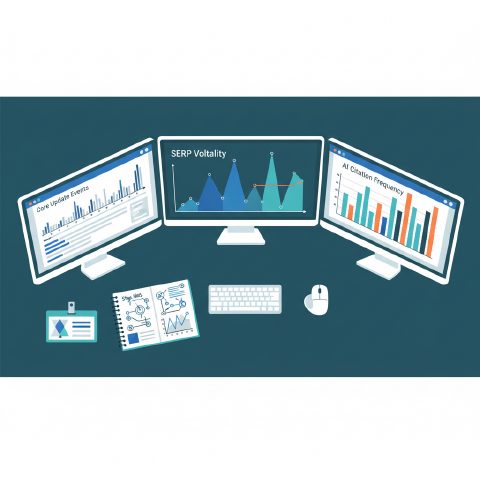
Google hasn't published a gambling-specific rater guideline update publicly, but SERP volatility trackers, Semrush Sensor and Ahrefs' volatility index among them, have shown gambling-adjacent queries running noisier than most other YMYL categories since early 2025. That's consistent with reviewers applying stricter scrutiny to a category that already sits at the top of the YMYL risk pyramid alongside financial and medical advice.
My read, shared privately by several other speakers during the Rome networking sessions: expect this scrutiny to keep tightening rather than settle. Budget for ongoing editorial governance, not a one-time E-E-A-T audit.
What entity SEO and structured data takeaways came out of Rome for iGaming affiliates?
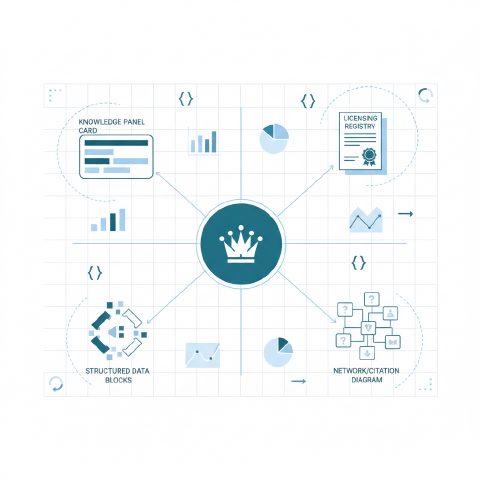
The strongest takeaway was that entity consistency, matching operator names, license numbers and author identities across your site, Wikidata, LinkedIn and industry directories, now functions as a prerequisite for both knowledge panel eligibility and AI citation, not a nice-to-have technical extra.
Several technical SEO speakers walked through building Organization, Person and Review schema stacks specifically for affiliate comparison pages, then validating them with Schema.org's validator and Google's Rich Results Test before pushing live. The advice that stuck with me: don't just mark up your own entity, mark up the operators you review too. Consistent license numbers and regulator names reduce ambiguity for both crawlers and LLMs trying to disambiguate which brand you're referencing across jurisdictions.
A few affiliate groups shared early experiments feeding author bios into Wikidata items and building sameAs links across LinkedIn, industry award listings and conference speaker pages, the kind of entity-building usually reserved for national news brands. Early anecdotal reports suggest it's helping with knowledge panel emergence for senior authors, which in turn seems to correlate with more frequent citation pull in Perplexity's source lists, though nobody in the room had rigorous before-and-after data yet.
How should affiliates split budget between SEO and PPC after SiGMA Rome 2026?
Most speakers landed on a hybrid model: PPC for fast market entry, seasonal promotions and geo testing, SEO/AEO for durable share-of-voice that survives platform ad policy shifts. Pure-PPC affiliates showed the widest swings in traffic quality when platforms tightened gambling ad policies mid-2025.
The seo-vs-ppc debate at Rome wasn't really a debate anymore, it was a sequencing question. Newer affiliate brands entering regulated markets like Brazil or newly-licensed states leaned on PPC because organic authority takes six to twelve months to build even with strong execution, and paid gives immediate pipeline while that authority compounds. Established brands, three-plus years of domain history, treated PPC as a supplement for high-intent commercial terms and reserved SEO/AEO investment for the long tail, where paid CPCs in gambling verticals routinely run $8-25+ on competitive terms.
What changed the calculus for 2026 specifically: platform ad restrictions on gambling creative, Meta and Google Ads gambling certification requirements, tightening app store policies, mean PPC accounts face more frequent disapprovals and certification delays than two years ago. Several attendees described losing two to three weeks of ad delivery mid-quarter to certification review cycles, a risk SEO and AEO channels simply don't carry once a site is established.
| Factor | SEO / AEO | PPC |
|---|---|---|
| Time to first meaningful traffic | 6-12 months for a new domain, faster on established authority | Days, pending ad account certification |
| Cost trajectory | Front-loaded content/technical investment, marginal cost drops over time | Scales linearly with spend, CPCs $8-25+ on competitive gambling terms |
| Platform/policy risk | Low once E-E-A-T and compliance content are established | Rising; gambling ad certification and disapproval cycles caused 2-3 week delivery gaps in 2025-2026 |
| Durability through algorithm/policy shifts | High if built on genuine expertise and entity signals | Low, dependent on ad platform policy at any given moment |
| Best use case in 2026 | Long-tail, brand, comparison/review queries, AI citation share-of-voice | New market entry, seasonal promos, high-intent bottom-funnel terms |
What YMYL and E-E-A-T signals are becoming non-negotiable for gambling content in 2026?
Named authors with documented gambling-industry experience, a published editorial and fact-checking policy, visible responsible-gambling resources, and up-to-date license and regulator verification are no longer nice-to-haves. Speakers at Rome treated their absence as the single biggest reason mid-tier affiliate sites keep losing ground after each core update.
I've said this in client audits for two years and Rome only reinforced it: an About Us page with a stock photo and no named team is a liability, not neutral filler. Reviewers, and increasingly LLMs cross-checking source credibility, both treat anonymous authorship on gambling advice as a red flag. The fix isn't cosmetic. It means assigning bylines to people with verifiable backgrounds, whether that's years working inside licensed operators, journalism credentials, or a documented testing methodology for bonus claims.
Responsible-gambling signals came up in nearly every SEO-adjacent panel, which surprised some first-time attendees expecting a pure marketing agenda. Affiliates that prominently link to self-exclusion tools, display age verification messaging, and disclose affiliate relationships clearly are increasingly cited as trustworthy examples by panelists themselves, and several claimed correlating traffic stability with that transparency, though causation versus correlation is genuinely hard to prove at the individual-site level.
License verification is the other piece: pages that state a specific regulator, MGA, Curacao's licensing authority, UKGC, and keep that information current when licenses change hands are outperforming pages using vague 'licensed and regulated' boilerplate. That specificity also happens to be exactly the kind of concrete, checkable claim AI answer engines prefer to surface.
How are affiliates rebuilding topical maps and hub-and-spoke architecture after Rome?
The practical takeaway is to rebuild content architecture around regulatory entities and player-intent clusters rather than keyword volume alone, pairing each jurisdiction hub with spokes covering licensing, payment methods, bonus terms and responsible-gambling resources so crawlers and AI engines can map topical authority quickly.
A recurring workshop exercise at Rome had attendees mapping existing content against jurisdiction, not against keyword clusters, then flagging where a hub page, Brazil online casinos, for example, lacked the spoke depth, payment methods accepted, licensing status, regional operator comparisons, responsible-gambling resources specific to that market, that both Google and LLMs expect before treating the domain as topically authoritative on that jurisdiction.
The gap most teams found: plenty of thin spoke pages built purely for keyword volume, almost none built around the actual sub-questions a regulator or a cautious player would ask. Rebuilding the map meant cutting some existing pages entirely rather than just adding more. Several speakers were candid that pruning 15-30% of thin pages preceded their strongest recovery periods post-core-update, a pattern consistent with Google's own helpful-content guidance since 2023 about removing low-value pages rather than only adding good ones.
What are the biggest AEO mistakes iGaming brands are still making in 2026?
The most common mistakes are treating AEO as a copy-paste of SEO tactics, ignoring entity consistency across the web, and publishing FAQ schema that doesn't match visible page content. Answer engines cross-check claims against multiple sources, and mismatches between markup and stated content are getting pages quietly dropped from citation sets.
The single biggest mistake I still see, and it came up in almost every AEO-focused conversation on the expo floor, is teams bolting FAQPage schema onto pages where the visible answer doesn't actually match the marked-up answer. That's not a gray-area tactic, it's a mismatch answer engines and Google's own rich-results validation can and do catch, and it erodes trust in every other schema signal on the domain once flagged.
Second: inconsistent entity data. A brand name, operator name or license number that reads one way on the homepage and another way in a footer disclaimer or a Wikidata reference creates disambiguation friction that pushes LLMs toward a cleaner competitor source, even one with objectively less content depth.
Third: treating AEO as a content-only exercise. Technical hygiene, page speed, crawlability, canonical clarity, still gates whether an AI crawler or a real-time browsing agent can even access and parse the page in the first place. A well-sourced review buried behind a JavaScript-rendered wall that Perplexity's crawler can't parse gets cited zero times, regardless of quality.
| Mistake | Why it hurts citation odds | Fix |
|---|---|---|
| FAQ schema doesn't match visible copy | Validators and LLM fact-checks flag the mismatch, tanking trust signals site-wide | Audit schema against rendered page copy monthly with a schema validator |
| Inconsistent entity/brand data across the web | Creates disambiguation friction, pushes LLMs to cleaner competitor sources | Standardize name, license number and operator references across site, Wikidata, directories |
| JavaScript-rendered content with poor crawlability | AI crawlers and real-time browsing agents can't parse the content at all | Server-side render or pre-render critical review/comparison content |
| No visible author or editorial policy | Reviewers and LLMs treat anonymous YMYL content as lower trust | Assign named bylines with documented credentials and publish an editorial policy page |
How should affiliate teams prioritize action items in the 90 days after SiGMA Rome 2026?
Start with an entity and schema audit, then fix the FAQ and Review markup mismatches actively hurting citation odds, then rebuild your weakest jurisdiction hub with real spoke depth. New content volume and backlink outreach can wait until the foundation matches what you're already claiming in structured data.
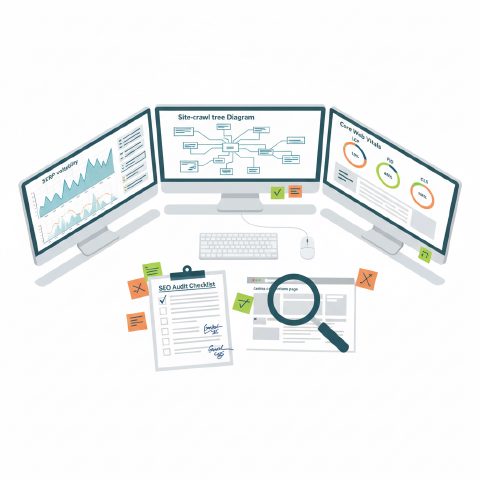
Weeks one through three: run a full schema audit across your highest-traffic pages using Schema.org's validator and Google's Rich Results Test, then manually check whether marked-up FAQ and Review content actually matches what's visible on the rendered page. This is unglamorous work and it's the highest-leverage fix available right now because it's actively suppressing citation eligibility on pages that otherwise deserve it.
Weeks four through eight: pick your two or three highest-value jurisdictions and rebuild the hub-and-spoke structure properly, licensing status, payment methods, responsible-gambling resources, named-author reviews, rather than spreading thin effort across every market you technically cover. Cut the pages that don't earn their place. Several Rome speakers reported this pruning step correlating with faster core-update recovery than any single piece of new content.
Weeks nine through twelve: start tracking AI citation share-of-voice manually. Run your fifteen to twenty highest-value commercial prompts through ChatGPT, Perplexity and Gemini weekly, log which domains get cited, and treat that log the way you'd treat a rank tracker. There's no mature third-party tool yet that does this reliably at scale for gambling queries specifically, so manual tracking is still the realistic baseline in 2026.
What tools and metrics did SiGMA Rome 2026 speakers recommend for tracking SEO and AEO performance?
Ahrefs and Semrush remain the backbone for traditional visibility, keyword and backlink tracking, while AEO measurement is still largely manual: logging citation appearances across ChatGPT, Perplexity and Gemini for a fixed prompt set, paired with Google Search Console's AI Overviews reporting where it's available.
On the SEO side nothing revolutionary came out of Rome, Ahrefs and Semrush for visibility and backlink tracking, GSC for indexing and query-level performance, schema validators for structured data QA. What's changed is how teams layer these together. Several speakers now treat a drop in AI Overviews impressions inside GSC, where available, as an early warning signal worth investigating before it shows up in a broader organic traffic decline.
AEO tracking is genuinely less mature, and I said as much on a panel myself: there isn't yet a reliable third-party platform giving affiliate teams accurate, at-scale citation tracking across ChatGPT, Perplexity and Gemini for gambling queries specifically. A few analytics vendors are building prompt-monitoring dashboards, but the gambling niche's volatility and compliance restrictions on some engines mean manual, disciplined prompt logging is still the most reliable method available right now. I'd rather tell a client that honestly than sell them a dashboard that's guessing.
The metric that mattered most in Rome conversations wasn't a single number, it was a trend line: citation frequency for your domain across a fixed prompt set, tracked monthly, alongside your existing organic visibility index. Movement in one without the other is diagnostic; movement in both together tells you whether your entity and content investment is actually compounding.

Comments
No comments yet, be the first.