Casino Indexation SEO in 2026: Building Index Control at Programmatic Scale

What is indexation control and why does it matter for casino sites in 2026?
Indexation control is the deliberate practice of deciding which URLs Google crawls, indexes and ranks versus which get noindexed, canonicalized or blocked. For casino affiliates running thousands of state, brand and game-page variants, it prevents index bloat, protects crawl budget, and stops thin or duplicate pages from dragging down site-wide quality signals.
I've inherited casino affiliate sites where the sitemap listed 6,200 URLs and Google had indexed 5,400 of them, but when I pulled the GSC Page Indexing report against actual organic sessions, barely 900 of those pages had earned a single click in 90 days. That gap is the indexation control problem in a nutshell: volume without value, and Google's helpful-content signals, folded into core ranking since the 2023-2024 updates, evaluate that ratio site-wide, not page-by-page.
Casino and igaming sites are structurally exposed to this because the business model rewards scale, more state pages, more game reviews, more 'best casino for X' comparison pages, while the content underneath is frequently templated. A site can have genuinely strong editorial on fifty core reviews and still get suppressed because four thousand thin bonus-code variants sit in the same index, diluting the aggregate quality signal Google reads for the whole domain.
Indexation control means setting rules for noindex, canonical consolidation, crawl-budget allocation and internal link weight as part of the content template itself, not as a cleanup project six months after a core update tanks traffic. In 2026, with AI Overviews and answer engines pulling directly from indexed canonical pages, the cost of getting this wrong is higher: messy indexation now suppresses both organic rankings and AI citation eligibility at the same time.
How does duplicate content actually happen on igaming affiliate sites?
Duplicate content on casino sites rarely comes from copy-pasting, it comes from templates doing exactly what they're built to do across too many near-identical contexts: state-variant pages, multi-brand CMS reuse of the same review boilerplate, and faceted filters that multiply a few hundred listings into thousands of near-duplicate URLs.
State-variant pages are the biggest offender I see. A 'best online casino for [state]' template built for New Jersey, Pennsylvania, Michigan and Ontario will often share 70-85% of its paragraph structure, varying only the licensing body, payment rails and a couple of operator names.
The second major source is multi-brand CMS reuse. Affiliate networks running six or eight brand sites off one CMS instance frequently share the same review database and the same bonus-term boilerplate, syndicated with only the brand name swapped. I've audited networks where a single casino review existed, nearly verbatim, across eleven domains, Google indexed one and filtered the rest into 'duplicate, submitted URL not selected as canonical,' and the affiliate had no idea which domain Google had actually chosen to rank.
Faceted navigation is the quieter third source. 'Casinos by payment method,' 'slots by provider,' 'bonuses by wagering requirement', each filter combination generates a crawlable URL, and without parameter handling or noindex rules, a site with twelve payment methods and thirty providers can mathematically generate thousands of near-duplicate filtered URLs from a few hundred underlying casino listings.
When should you noindex casino pages instead of deleting or redirecting them?
Noindex is right when a page has internal utility, it supports navigation or filtering, but the content underneath is at least 70% identical to a sibling page. Delete and 301-redirect when a page has zero backlinks and zero organic impressions over 90 days with no functional role left in the site.
My rule of thumb: noindex when a page serves users structurally but can't win a SERP it's competing in anyway. The practical threshold I apply before indexing a new templated page is roughly 30% genuinely unique content against its closest sibling, measured with a batch comparison in Siteliner or Copyscape. Below that, it ships as noindex,follow, crawlable so link equity still passes through, invisible for ranking purposes.
Pagination, expired bonus-code pages with no backlinks, and filtered list combinations almost always fall into this bucket. The content exists for user navigation, not for search demand.
One risk I watch closely: mass-noindexing pages that already carry backlinks or rank weakly. Pulling those out of the index without a redirect plan can register as a soft-404 pattern and spike the 'Excluded by noindex tag' count in a way that reads, to Google, as a quality collapse rather than a cleanup. I stagger rollouts in batches of a few hundred URLs and track Index Coverage deltas weekly rather than flipping an entire template at once.
| Page type | Recommended action | Why |
|---|---|---|
| Expired bonus-code pages with existing backlinks | 301 redirect to current offer page | Preserves link equity, avoids soft-404 signals |
| Faceted filter combinations (payment x provider) | Noindex,follow + canonical to parent list | Keeps the crawl path open, removes it from index competition |
| Duplicate review synced across sibling brand domains | Cross-domain canonical to the primary domain | Consolidates ranking signals onto one URL |
| Pagination (page 2, 3... of listings) | Self-canonical, rarely needs noindex if sort order is unique | Avoid blanket-blocking pagination; it still supports crawl discovery |
| Legacy regulation pages that are no longer accurate | Noindex, then update or delete/301 | Protects YMYL accuracy signals on gambling content |
How do canonical tags work for gambling sites with cross-market duplication?
Canonical tags tell Google which URL is the master version among near-duplicates, but it's a hint Google weighs against other evidence. On near-identical ccTLD casino content, Google overrides the declared canonical roughly 15-20% of the time in my experience, which is why canonical signals must be backed by real localization, not just a tag.
This matters most for operators running the same casino review syndicated across .com, .co.uk and .in versions of a brand, or across a network of affiliate sites sharing a content pipeline. If the localization is cosmetic, same paragraphs, swapped currency symbol, Google treats it as duplicate and consolidates signals onto whichever version it judges strongest by authority, often not the one you declared as canonical. I catch this mismatch in GSC's URL Inspection tool, comparing 'User-declared canonical' against 'Google-selected canonical.'
The fix isn't a better canonical tag, it's better content underneath it. UK pages need UKGC licence numbers and GamStop references, Ontario pages need AGCO registration and Canadian payment rails, and each variant needs at least one data point, live RTP figures, region-specific terms, local support hours, that a copy-paste competitor structurally can't replicate.
Canonical tags should confirm real differentiation technically, not substitute for it. I audit canonical implementation with Screaming Frog's canonical report before every major template rollout, specifically checking for self-referencing canonicals on pages that are, in reality, 80%+ duplicates of a sibling.
How do you build a crawl budget strategy for a casino site with thousands of programmatic pages?
Crawl budget strategy means routing Googlebot's existing visits toward pages that can rank and starving pages that can't, using log file analysis, robots.txt rules and internal link weight rather than just sitemap submission. On a 5,000-URL domain, 40-60% of daily crawl hits often go to low-value faceted or paginated URLs by default.
A domain with 5,000 URLs and moderate authority, roughly Ahrefs DR 30-45, in my experience, typically gets somewhere between 8,000 and 15,000 Googlebot hits a day. If 60% of those hits land on paginated filter combinations, hub pages and new reviews wait days or weeks longer to get re-crawled after an update.
I run this diagnostic with log file analysis, Screaming Frog's Log File Analyser or Botify for larger sites, cross-referenced against the GSC Crawl Stats report, segmented by URL pattern. The output usually surfaces an obvious imbalance: bonus-code pages and faceted filters eating a disproportionate share of crawl hits while core review and comparison hub pages, the ones actually driving revenue, get crawled far less often.
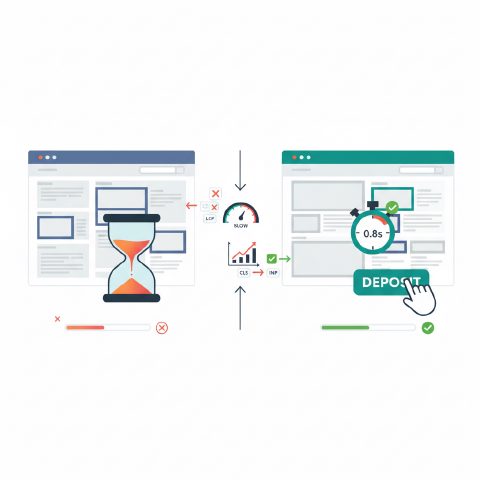
Server response time compounds this. Casino sites are notoriously heavy with ad tech, affiliate tracking pixels and third-party widgets for live odds or jackpot feeds, which push TTFB past 600-800ms on underperforming setups. Slow TTFB directly reduces how many URLs Googlebot will fetch per crawl session, so a Core Web Vitals fix, CDN, image compression, deferred third-party scripts, is functionally a crawl-budget fix too.
| Page tier | Typical share of crawl hits (unmanaged) | Target share (managed) | Index status |
|---|---|---|---|
| Hub / pillar pages (by state, by category) | 5-10% | 20-25% | Index, high priority |
| Individual casino & game reviews | 25-30% | 40-45% | Index |
| Bonus-code / promo pages | 20-25% | 10-15% | Partial index (Tier A/B only) |
| Faceted filters & sort combinations | 30-40% | under 5% | Noindex,follow |
| Pagination & archive pages | 10-15% | under 5% | Noindex or canonical to page 1 |
What site architecture prevents duplicate content at programmatic scale?
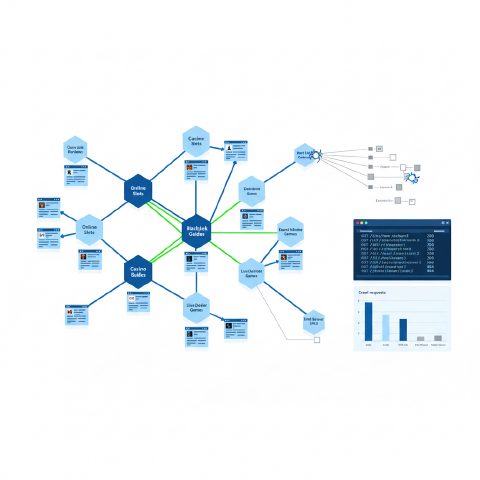
Hub-and-spoke architecture is the only structure I've seen hold up at scale: one strong pillar page per vertical linking to spoke pages that each carry a unique data point, a verified wagering requirement, a live RTP figure, a licensing registration number, that templated competitor pages can't replicate.
On programmatic builds I've architected, I enforce a rule that no money page sits more than three clicks from the homepage, and that every spoke links back to exactly one pillar, not scattered across five loosely related hubs, which dilutes the topical signal Google uses to understand the cluster.
I've taken sites from roughly 300 indexed pages to 3,000-4,000 using this structure without the thin-content penalty that usually hits fast-scaled programmatic builds. The mechanism is simple: every template tier has a minimum unique-content gate before it's allowed to publish indexable. Tier-1 templates, state or category hubs, need full original research; Tier-2 individual reviews need a minimum word count plus at least three unique verified data fields.
Anything that can't clear its tier's gate publishes as noindex until an editor upgrades it. That gate lives in the CMS publishing workflow itself, not in a quarterly audit, which is the difference between scaling safely to a few thousand pages and scaling into a helpful-content penalty.
How does hreflang interact with indexation control for multi-market casino brands?
Hreflang routes searchers to the right regional URL, but it doesn't stop Google from treating two 85%-identical ccTLD pages as duplicates and consolidating them anyway. You still need genuinely localized licensing, currency and payment-method content per market, or variants get dropped from the index regardless of correct hreflang tagging.
Hreflang solves a routing problem, not a duplication problem. I've seen correctly implemented hreflang clusters still lose a market variant from the index because the underlying content wasn't different enough to justify two independent URLs, Google simply folded them together.
The common implementation errors I audit for on multi-market casino builds: missing return tags (the UK page points to CA, but CA doesn't point back), a missing x-default for the generic .com fallback, and hreflang values pointing to URLs that themselves 404 or redirect. I catch these faster with Ahrefs' hreflang report or the Merkle hreflang tag generator than by manual review across a few hundred region pairs.
Once the technical tags are clean, the real fix is substantive localization: separate licensing disclosures across UKGC, MGA and AGCO, separate payment method sets, separate currency and separate compliance language, each variant earning its own index slot because it answers a genuinely different regulatory context, not because a tag told Google it should.
How do you handle thin programmatic pages like bonus codes and game lists at scale?
Treat thin templated pages as managed inventory, not an accident. Segment into tiers, original editorial, templated-but-useful, pure boilerplate, index only the first two tiers, and noindex the boilerplate by default until you add real differentiation like verified wagering terms or live screenshots.
In my experience scaling these builds, only 20-30% of a casino site's first-pass programmatic output deserves to be indexed on day one. The rest ships as noindex,follow, crawlable for link equity and internal discovery, invisible for ranking purposes, until an editor adds the missing differentiation: a verified wagering requirement pulled directly from the operator's T&Cs, a live screenshot, a region-specific payout timeframe.
The automation checks I build into the publishing pipeline itself: a hard word-count floor, typically 400-600 words minimum for Tier B review pages; a duplicate-content percentage cap against the nearest sibling, checked via Siteliner or a Copyscape batch run before publish; and a minimum count of unique structured data fields, RTP, licence number, minimum deposit, that must be populated before the noindex flag can be lifted.
This turns quality control into a gate in the CMS rather than a manual audit after the fact, which is the only way I've found to scale past a few hundred pages without a human bottleneck slowing publishing to a crawl.
What tools and audits catch indexation problems before a core update hits?
Run a quarterly audit combining the GSC Page Indexing report, a full Screaming Frog or Sitebulb crawl for canonical and noindex conflicts, and log file analysis for crawl waste. Once 'Crawled - currently not indexed' exceeds roughly 15% of a template's URLs, it's a leading indicator that usually precedes a ranking drop by six to ten weeks.
I run a quarterly indexation audit on every casino site I manage, combining three data sources: the GSC Page Indexing report for index status distribution, a full Screaming Frog or Sitebulb crawl for canonical and noindex conflicts, and log file analysis to catch crawl waste on low-value templates.
Ahrefs' Site Audit duplicate-content report is useful for a second opinion at scale, flagging URL clusters above a similarity threshold across the full site rather than page-by-page comparison. For structured data, I run every review and FAQ template through Google's Rich Results Test and a schema.org validator before deployment, broken Review or FAQPage schema doesn't directly hurt indexation, but it strips rich-result and AI-citation eligibility from pages that are otherwise perfectly indexed, wasting the indexation budget just spent cleaning them up.
The audit cadence matters more than any single tool. Core updates don't announce which signal tripped a drop, so quarter-over-quarter Index Coverage snapshots let me isolate whether a traffic dip correlates with a spike in thin indexed pages, a canonical mismatch introduced by a template change, or something unrelated like a Core Web Vitals regression from a new ad network.
| GSC status | What it means | Typical action |
|---|---|---|
| Indexed | Page is live in search results | Monitor organic performance |
| Crawled - currently not indexed | Google has seen it but chose not to index it | Audit uniqueness and quality; early thin-content warning |
| Discovered - currently not indexed | Google knows the URL exists but hasn't crawled it yet | Check crawl budget allocation and internal linking |
| Duplicate, Google chose different canonical | Google overrode your declared canonical | Review content differentiation and fix the canonical signal |
| Excluded by noindex tag | Correctly excluded as intended | Confirm this matches your tiering plan |
| Page with redirect | 301/302 in place | Verify the redirect target is correct and final |
How does indexation control affect AI citation and AEO for casino content?
AI answer engines need one clean, indexed, canonical URL to cite. If a casino review exists across duplicate URLs with conflicting canonicals, or sits behind an accidental noindex, ChatGPT, Perplexity and AI Overviews have no single authoritative page to point to, so clean indexation is now a prerequisite for AEO visibility, not a separate workstream.
AI answer engines need exactly what Google's algorithm needs: one clean, indexed, canonical URL to cite as the source. If a casino review exists across ten near-duplicate URLs with conflicting canonicals, or sits behind a noindex tag by mistake, ChatGPT, Perplexity and Google AI Overviews simply have no single authoritative page to point to.
Structured data reinforces the signal once indexation is clean. Review schema with verified ratings, Organization schema carrying licensing details, and FAQPage markup all help an AI system confirm it's looking at a single, trustworthy, machine-readable source rather than guessing from unstructured text spread across duplicates.
Worth flagging precisely because it's easy to miss: AI crawlers, GPTBot, PerplexityBot, Google-Extended, generally respect robots.txt and noindex directives the same way Googlebot does. A page you've noindexed for ranking purposes is also invisible to these systems. If a page is genuinely valuable and you want AI citation, it needs to clear the same indexable bar as a ranking page, there's no separate, lower threshold for AI visibility.
What's a realistic rollout timeline for fixing indexation problems on an existing casino site?
Expect 4-6 weeks for audit and triage, 2-3 months for staggered noindex and canonical implementation, and 2-4 more months before Google fully re-crawls and rankings stabilize. Core update cycles mean full confirmation can take a whole quarter from the day implementation starts.
Realistically: weeks 1-4 for the full audit and triage, pulling GSC data, running the crawl, tiering every template. Weeks 5-12 for implementation, rolling out noindex rules, canonical fixes and template-level content gates in staggered batches rather than all at once, so you can isolate what each change actually did.
Then expect two to four more months before Google fully re-crawls, re-evaluates, and the index bloat metrics and rankings stabilize. The KPIs I track through that window: the indexed-page ratio, targeting a steady climb toward 60-80% rather than the 90%+ that usually signals over-indexing; the 'Crawled - currently not indexed' percentage trending down; and an efficiency metric I use internally, organic sessions per indexed page, which should rise even as total indexed count falls, confirming the cleanup improved quality rather than just shrinking the site.
I've seen sites recover 20-35% of lost organic traffic within a single quarter after an indexation cleanup following a core update hit, but I'm explicit with clients that this isn't guaranteed on a fixed timeline. Google's re-crawl and re-evaluation pace depends on the site's existing crawl frequency and authority, and a site with a weak backlink profile will simply take longer to get re-assessed regardless of how clean the technical fix is.




Comments
No comments yet, be the first.