JavaScript SEO for Casino Game Lobbies in 2026: Fixing the Rendering Gap Before It Costs You

Why do casino game lobbies break JavaScript SEO more than other site types?
Casino lobbies pull inventory from a live game-catalog API, apply jurisdiction-based filtering, and render provider tiles with lazy-loaded images after initial paint. Googlebot's first crawl often sees an empty shell; the full content only appears in a second rendering pass that can lag by hours to days, depending on crawl budget.
Most large casino affiliate and operator lobbies I've audited run on React or Vue, frequently through Next.js or Nuxt defaulting to client-side rendering for speed of development. That's fine for the user, the browser executes JS instantly on a warm connection. It's not fine for a crawler that fetches raw HTML first, queues the page for rendering separately, then comes back later to execute JS. Google has been upfront that this second wave isn't instant; on large or low-authority sites it can take anywhere from a few hours to over a week. For a lobby that rotates featured games weekly or adds new slot titles from providers like Pragmatic Play or Hacksaw Gaming every few days, that lag means pages are stale or empty at the exact moment they'd otherwise rank.
Personalization compounds this. Lobbies geo-filter game availability for licensing reasons, a title live for Ontario under AGCO rules might be blocked for a Curaçao-licensed visitor, or vice versa. If that filtering happens client-side based on IP detection, Googlebot (crawling primarily from US IPs) may index a jurisdiction-specific subset that doesn't match what most real visitors see, skewing both rankings and user experience signals.
I've also seen provider filters rewrite the URL as a hash fragment, /lobby#provider=netent, rather than a real path. Hash fragments after the # aren't separate URLs to a crawler at all, so every filtered view collapses into one indexed URL, killing any chance of ranking for provider-specific queries like 'netent slots lobby'.
What's the difference between SSR, SSG, CSR and ISR for a casino lobby, which one should you actually use?
SSR renders full HTML per request, SSG pre-builds it at deploy time, CSR ships an empty shell and builds in the browser, and ISR (incremental static regeneration) sits between SSG and SSR with background revalidation. For a casino lobby with frequent catalog changes, SSR or ISR beats pure CSR or SSG almost every time.
I default to SSR for the core lobby and category/provider hub pages because the catalog changes daily and the content needs to be correct on first request, for both bots and users. SSG works beautifully for evergreen pages that don't move much: game rules explainers, provider profile pages, FAQ hubs. ISR is where I land for high-volume lobbies with hundreds of titles rotating, static speed most of the time, with a revalidation window (I typically set 10-60 minutes depending on catalog volatility) so new games surface without a full rebuild.
CSR-only lobbies aren't dead, but I only recommend them behind a login wall, account dashboards, bonus trackers, anything that isn't meant to rank. The moment a page is meant to earn organic traffic, CSR becomes a liability you're paying for twice: once in dev time, once in lost rankings.
| Approach | What a crawler sees | Best fit | SEO risk | Build complexity |
|---|---|---|---|---|
| Client-side rendering (CSR) | Empty shell until second-wave render, often 1-7+ days lag | Logged-in dashboards, bonus widgets | High, missed or delayed indexing on new game launches | Low to build, high in lost rankings |
| Server-side rendering (SSR) | Full HTML on first request, matches what users see | Public lobby, provider and category hubs | Low, treated like static HTML | Medium-high (server costs, Next.js/Nuxt SSR config) |
| Static site generation (SSG) | Pre-built HTML, instant for crawlers | Evergreen pages: rules, provider profiles, FAQ hubs | Very low | Medium (needs rebuild triggers for catalog changes) |
| Incremental static regeneration (ISR) | Static shell with background revalidation | High-rotation lobbies with hundreds of titles | Low-medium if revalidation window is tuned | High (cache invalidation, stale-while-revalidate logic) |
| Dynamic rendering (Prerender.io, Rendertron) | Separate pre-rendered HTML served to bots only | Legacy SPAs that can't be rewritten short-term | Medium, workaround, risk of bot/user divergence | Medium (extra infra and maintenance layer) |
Is dynamic rendering still viable for igaming lobbies in 2026, or has Google killed it?
Google has called dynamic rendering a workaround, not a long-term solution, since its 2022 guidance update, and it's right for classic Googlebot indexing today. But dynamic rendering igaming setups still earn their keep as a stopgap for legacy SPAs mid-migration, and increasingly for serving AI crawlers that render JavaScript poorly or not at all.
For Googlebot specifically, I treat dynamic rendering as a six-to-twelve-month bridge, never the end state. Googlebot's rendering engine is evergreen Chromium now, so the original justification, bots running outdated JS engines, mostly disappeared. If you're still leaning on Prerender.io or Rendertron for Googlebot in 2026, you're carrying infrastructure debt that should be funding an SSR or ISR migration instead.
Where it genuinely earns its place is AEO. GPTBot, ClaudeBot and PerplexityBot have historically shown inconsistent or limited JavaScript execution compared to Googlebot, I've seen server logs where these crawlers fetch raw HTML and never trigger a render pass at all. If your lobby's provider filters, game descriptions and RTP data only exist post-hydration, these crawlers may see nothing citable. A lightweight pre-rendered snapshot served specifically to known AI user-agents (not cloaking, since the content matches what a rendered page would show) closes that gap without waiting on a full framework rewrite.
The non-negotiable rule: whatever you serve pre-rendered must match the fully rendered user experience content-for-content. Divergence, even unintentional, from a stale prerender cache, reads as cloaking risk under Google's guidelines and is exactly the kind of manipulative pattern that invites a manual action, not a core update hit.
How do you actually audit a JS-rendered casino lobby for indexing problems?
Compare raw HTML against fully rendered HTML side by side, check Google Search Console's URL Inspection live render, crawl the site twice in Screaming Frog (JS rendering on and off), and diff the word count, internal links and structured data between the two crawls. Gaps larger than 15-20% signal a real indexing problem.
I start every audit with a two-pass Screaming Frog crawl: once with JavaScript rendering disabled to see what a non-rendering crawler gets, once with Chromium rendering enabled to see the end state. On a lobby I audited last year, the raw-HTML crawl returned 340 words and zero internal links on category pages; the rendered crawl showed 1,200 words and 40+ links. That delta is the exact content Googlebot's first crawl wave misses before the second render pass catches up, and on a site with a tight crawl budget, that second pass may never come for low-priority URLs.
GSC's URL Inspection tool is the next check, the live test shows you Google's actual rendered screenshot and HTML, which sometimes differs from your own Chromium render if you're blocking a JS/CSS resource in robots.txt that Google needs to execute properly (a mistake I still see on maybe one in four lobby audits, usually a blocked CDN path serving the game-catalog bundle).
Finally, I pull the indexed page count from GSC's Coverage/Indexing report against the actual sitemap count. A lobby with 2,800 game pages but only 900 indexed as 'Crawled, currently not indexed' almost always has a rendering or thin-content signal problem, not a manual penalty, and that distinction changes the entire remediation plan.
How does crawl budget get wasted on infinite-scroll game lobbies?
Infinite scroll generates near-limitless URL states through pagination parameters and filter combinations, and Googlebot crawls a meaningful share of them before realizing most lead nowhere new. Log file analysis on mid-size lobbies routinely shows 60-80% of crawl hits landing on thin, near-duplicate, or parameter-stacked pages instead of money pages.
Infinite scroll itself isn't the villain, the problem is when it's implemented without paginated, crawlable fallback URLs. If 'load more' only fires via a JS click handler with no corresponding ?page=2 URL, Googlebot either never sees games beyond the first 20-30 tiles, or, worse, your dev team added query-string pagination for accessibility and now every filter combination multiplies: provider × game type × RTP range × page number can generate tens of thousands of unique, indexable-looking URLs from a catalog of only 600 actual games.
I pull this from server logs, not guesses, Screaming Frog's Log File Analyser or a raw log pull through GSC's crawl stats report, cross-referenced against which URLs actually get indexed. On one affiliate lobby rebuild, we found Googlebot spending roughly 70% of its weekly crawl allocation on parameter-stacked facet URLs that collectively drove less than 2% of organic sessions. Reclaiming that budget, through robots.txt disallow rules on low-value parameter combinations plus consistent self-referencing canonicals on the rest, redirected crawl attention to the 400 actual money pages (category hubs, provider pages, top game reviews) within about three weeks of the log monitoring restarting.
What's the right architecture for a programmatic casino lobby at scale?
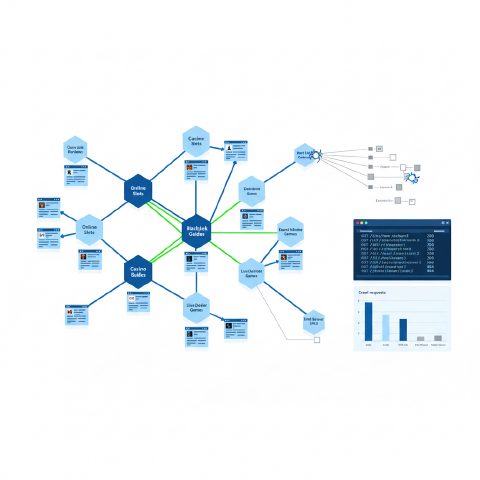
Build hub-and-spoke: pillar pages for provider and game-type categories, spoke pages for individual games, bonus pages and comparison tables linking back up. Pair that structure with strict index management, noindex on thin or duplicate facet combinations, so a 3,000-page lobby doesn't dilute into a 3,000-page thin-content problem.
This is the piece most teams skip, and it's the reason programmatic expansion tanks instead of compounds. Scale without index control just produces more pages for Google to classify as low-value. My standard model for a casino affiliate lobby: a top-level 'Slots' or 'Live Dealer' pillar, provider sub-hubs beneath it (NetEnt, Evolution, Play'n GO), and individual game pages as the spokes, each spoke carrying unique content: real RTP figures, volatility rating, min/max bet, a short editorial take, not a scraped provider description duplicated across 40 affiliate sites.
Every spoke links up to its provider hub and category pillar; every hub links down to its spokes and sideways to related hubs. That internal linking isn't decorative, it's how PageRank-equivalent authority actually distributes through a large site, and it's what lets a new game page earn initial crawl priority from day one instead of waiting to be discovered organically through sitemap crawling alone.
On index management specifically: I noindex,follow any URL generated purely by filter/sort parameters that don't represent a genuinely distinct search intent, keep canonical tags pointing to the clean hub URL, and cap the number of live indexable spoke pages to what the content team can actually keep unique and current, I've seen sites scale to 4,000+ indexed pages this way without thin-content flags, but only because quality gates sat in front of the scale, not after it.
How do you handle faceted filters, provider, RTP, volatility, without creating duplicate content?
Crawlable, indexable URLs only for high-search-demand facets (by provider, by game type); everything else, multi-facet combinations, sort order, pagination state, gets a self-referencing canonical plus noindex,follow or a robots.txt parameter block. Check actual search volume in Ahrefs or GSC before deciding a facet deserves its own indexable URL.
The mistake I see most often is treating every filter as equally SEO-worthy. 'Pragmatic Play slots' and 'high RTP slots' both get real search volume, those deserve clean, indexable, server-rendered URLs with unique intro copy and curated game lists. 'Pragmatic Play slots sorted by RTP under 0.03 volatility between $0.10-$0.50 bet' gets zero search volume and exists purely as a UI convenience, that one should never be indexable, full stop.
Technically, I implement this with a facet classification pass before any code ships: single-facet URLs (provider only, game-type only) get full SSR, unique meta tags and inclusion in the XML sitemap. Multi-facet combinations get a self-referencing canonical back to the single-facet parent and a noindex,follow directive, so link equity still flows without the thin page competing for index space. Parameters purely for UI state, sort order, items-per-page, get blocked in robots.txt entirely, since there's no SEO value and no reason to let Googlebot spend budget crawling them at all.
What structured data actually helps casino lobby pages get cited by AI engines?
ItemList for hub pages, BreadcrumbList for hierarchy, and Organization schema with sameAs links to licensing regulators do the most work in 2026, not because they guarantee rich results, but because they give AI crawlers a clean entity map to parse when deciding what to cite in an AI Overview or Perplexity answer.
FAQPage rich results shrank dramatically after Google's August 2023 update restricted them mostly to government and health sites, so I no longer sell FAQ schema on the promise of a SERP rich snippet. I still implement it on casino content, though, because answer-engine tools parse FAQPage markup as a structured signal for extractable Q&A content, it's less about the SERP now and more about making your content machine-readable for citation.
ItemList on hub and category pages matters more than most teams realize for AEO specifically: it tells a crawler exactly what's in a lobby category without needing to infer it from visual layout, which is especially valuable if any of that layout is still JS-dependent. I keep list lengths realistic, 20 to 50 items reflecting what's genuinely in that category, rather than marking up every infinite-scroll state, which would just reintroduce the duplication problem from a different angle.
Organization schema with sameAs links to licensing bodies (MGA, UKGC, Kahnawake) and author/reviewer bylines does double duty, it's an E-E-A-T trust signal for YMYL review content under Google's standards, and it gives AI engines a verifiable entity to anchor citations to, which matters when the whole point of AEO is getting named as the source rather than paraphrased anonymously.
| Schema type | What it signals | Priority | Notes |
|---|---|---|---|
| ItemList | Ordered games in a category or provider hub | High on hub pages | Keep to 20-50 real items; don't mark up infinite-scroll duplicates |
| BreadcrumbList | Hierarchy: Lobby > Provider > Game | High | Mirrors hub-and-spoke internal linking and entity relationships |
| Organization + sameAs | Publisher entity, licensing links, authorship | High (E-E-A-T) | Link to the regulator and author profile, core YMYL trust signal |
| Product + AggregateRating | Review/rating signal for a game or operator | Medium | Use only real aggregated data; fabricated ratings risk a manual action |
| FAQPage | Direct Q&A matching real queries | Medium-high for AEO | Rich-result eligibility shrank in 2023; still useful for AI parsing |
How do game widgets and iframes wreck Core Web Vitals, and what's the actual fix?
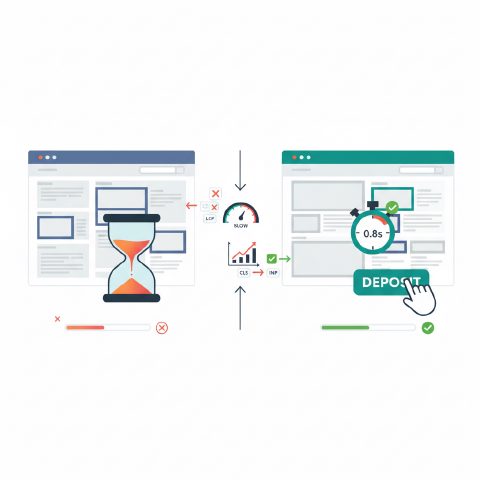
Hero carousels inflate LCP, async-loaded game tiles without reserved dimensions spike CLS, and heavy filter JS handlers push INP into the red. Fix order: reserve aspect-ratio boxes for every tile, lazy-load below-fold iframes and game launchers, defer non-critical JS, and serve images as AVIF/WebP through a CDN.
Game launcher iframes are the biggest single offender I run into on operator and affiliate lobbies both. Each live-casino or slot-demo iframe typically loads its own bundle of fonts, trackers and WebSocket connections regardless of whether it's visible, I've measured lobbies where 15 above-the-fold-adjacent iframes added 3-4 seconds to Total Blocking Time before a user even scrolled. The fix is lazy-loading iframes with loading="lazy" or an IntersectionObserver trigger so only visible or near-visible launchers initialize.
CLS on lobbies almost always traces back to game tiles that load provider logos and thumbnails asynchronously without a reserved box, the grid visibly jumps as images pop in. Setting explicit width/height or an aspect-ratio CSS property on every tile container, even before the image loads, eliminates nearly all of this; I've taken lobbies from a CLS of 0.35 down to under 0.08 with that single change plus font-display:swap on web fonts.
INP is the newer metric worth watching closely on filter-heavy lobbies, every provider/game-type/RTP checkbox typically fires a re-render of the entire grid. Debouncing filter input, virtualizing long game lists (rendering only visible rows via something like react-window), and moving filter logic off the main thread where possible usually brings INP from the 400-600ms range down under Google's 200ms 'good' threshold. A CDN layer, Cloudflare or Fastly in front of the SSR origin, handles the edge caching that keeps TTFB reasonable once the rendering side is fixed.
How does hreflang work when a casino lobby renders game availability by jurisdiction client-side?
Hreflang needs to map to stable, server-rendered URLs per market, it breaks when jurisdiction detection happens client-side after the initial HTML response, because Googlebot crawls each hreflang-tagged URL independently and may never trigger the JS that would show the correct regional game set.
This is the international SEO trap specific to igaming: you need separate URLs per regulated market anyway, a UKGC-licensed operator showing one game catalog and bonus structure, an MGA-licensed version showing another, a Curaçao-facing affiliate page showing a third, and each needs its own hreflang-tagged URL (/en-gb/, /en-mt/, /en/ as x-default) with server-rendered content matching that market, not a single URL that detects jurisdiction via IP and swaps content client-side.
I've audited lobbies where the dev team built one clever URL with client-side geo-detection to 'simplify' the stack, assuming it was smarter than maintaining multiple hreflang variants. It backfired: Googlebot, crawling largely from US-based infrastructure, indexed the US/default experience for every hreflang variant pointing at that single URL, so the UK and Malta versions never got evaluated with their actual intended content. Separate, SSR'd, hreflang-tagged URLs per jurisdiction cost more upfront in build time but are the only setup that reliably ranks each regional variant on its own regulatory and content merits.
What's a realistic timeline and resourcing plan to fix JS SEO on a casino lobby?
Ten to fourteen weeks end-to-end on a mid-size lobby: one to two weeks of audit and log analysis, roughly a week to settle on SSR/ISR architecture, four to eight weeks of engineering build and staging QA, then two to four weeks of phased rollout before ranking recovery becomes visible in GSC.
I quote this range deliberately wide because lobby size and existing tech debt swing it hard. A 300-page affiliate site on Next.js that just needs its rendering mode flipped from CSR to SSR for existing pages might clear the whole project in six weeks. A 5,000-page operator platform with custom React components, a separate game-catalog microservice, and five regulatory jurisdictions to keep server-rendered correctly is realistically a quarter-long project, sometimes longer if legal/compliance review gates each market's content.
The phased rollout stage matters more than teams budget for. I never flip an entire lobby's rendering mode in one deployment, stage it by URL segment (provider hubs first, then category pages, then individual game spokes), monitor GSC's Crawled/Indexed ratio and Core Web Vitals report after each phase, and only proceed once the previous phase shows clean rendering parity in live URL Inspection tests. Ranking recovery itself typically shows up in two waves: an initial bump within 2-3 weeks as Google re-crawls and re-renders priority pages, then a second, larger lift at 8-12 weeks once accumulated internal linking and fresh indexing compound.
| Phase | Typical duration | Who owns it | Deliverable |
|---|---|---|---|
| Technical audit & log file analysis | 1-2 weeks | Technical SEO lead + dev | Render-gap report, crawl budget waste map |
| Rendering architecture decision (SSR/ISR) | 1 week | Engineering lead + SEO | Framework/migration spec |
| Build & staging QA (rendered vs raw HTML diff) | 4-8 weeks | Frontend engineering | Staging env passing Googlebot rendering parity tests |
| Phased rollout + monitoring | 2-4 weeks | SEO + DevOps | Log monitoring, GSC coverage tracking by segment |
| Recovery & re-ranking window | 8-12 weeks post-launch | SEO lead | Ranking/impression recovery vs pre-migration baseline |




Comments
No comments yet, be the first.