Programmatic Casino Bonus Pages in 2026: Building Scale Google Won't Punish
What are programmatic casino bonus pages, and why do affiliates build them?
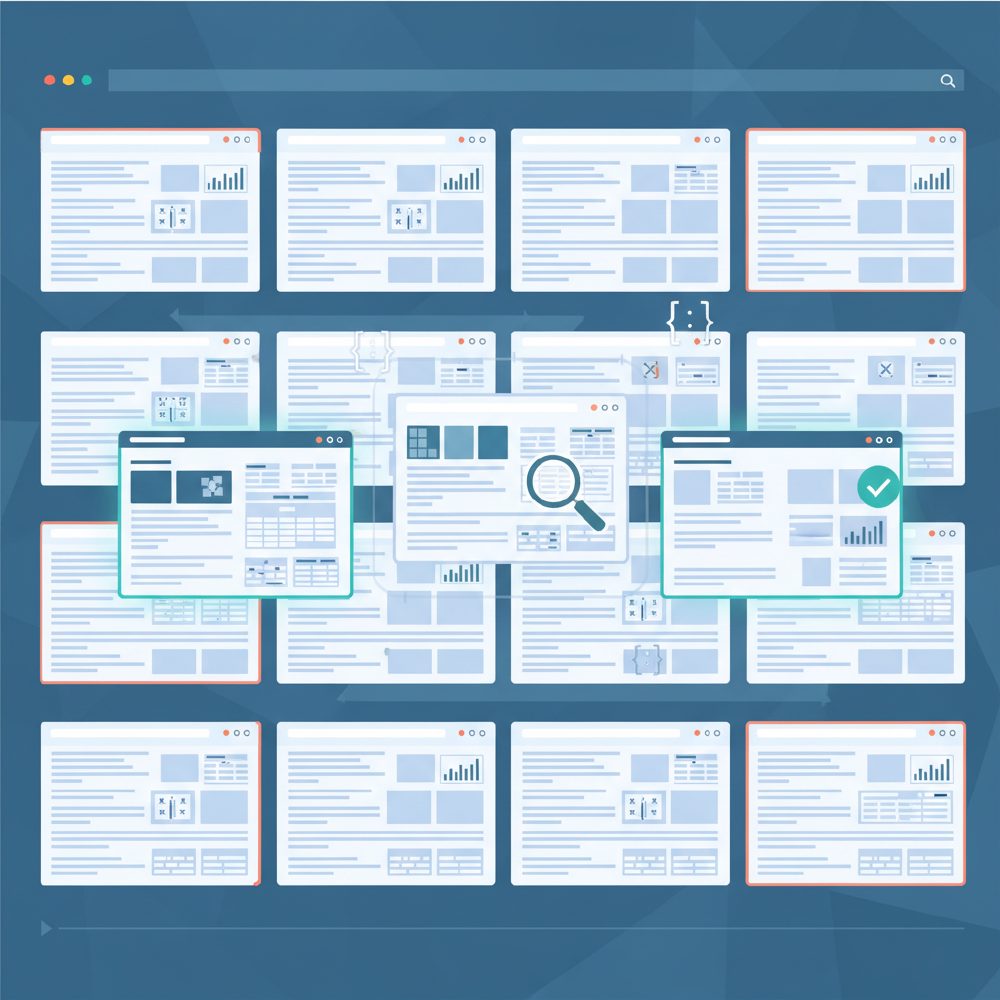
Programmatic bonus pages are templated landing pages generated at scale from a shared data layer, operator name, bonus amount, wagering requirement, geo-eligibility, pushed through one design shell. Affiliates built thousands of these from 2015-2021 to cover long-tail bonus queries across dozens of operators and markets without hand-writing every page.
The mechanics are simple: a CMS or headless frontend pulls from a spreadsheet, API feed, or operator database, and a template renders the bonus terms, CTA, and a wrapper of supporting copy. I've worked with affiliate groups running 400 to 1,500 of these pages across markets like the UK, Canada, and emerging LatAm regions, each one targeting a near-identical query pattern: '[Operator] no deposit bonus', '[Operator] free spins 2026', '[Operator] welcome offer review'.
The appeal is obvious, you cover an entire operator catalogue or an entire vertical of no deposit bonus pages SEO opportunities in weeks instead of months. The problem is that Google now reads this exact pattern as a signal, not a strategy. In audits I've run on client sites hit by the March 2024 core update, programmatic bonus sections with under 150 words of genuinely unique copy per page lost 40-60% of organic visibility within eight weeks, while sibling pages on the same domain with 400+ words of operator-specific analysis held steady or grew.
That gap is the whole argument for this article. Programmatic doesn't mean templated-and-thin. It means systemized production of pages that still clear a real quality bar, and in 2026, with AI Overviews pulling from a narrower set of trusted sources, that bar is higher than it was in 2021.
How do you build a scalable bonus page template without triggering a doorway-page penalty?
Build the template around a variable content layer, not just variable data fields. Every page needs unique operator analysis (wagering math, game restrictions, withdrawal friction), a distinct comparison context, and at least one original data point, not just swapped bonus amounts inside identical sentence structures.
Google's doorway page guidance, reinforced inside the March 2024 spam policy update on scaled content abuse, targets pages 'created to rank for specific, similar queries' that funnel users to the same destination with negligible added value. A programmatic bonus template fails this test when the only thing that changes between pages is the operator name and bonus figure inside otherwise identical paragraphs, I still see this on 2026 audits, and it's the single fastest way to get an entire template section deindexed in one sweep.
The fix is architectural, not cosmetic. I require clients to build a template with three locked unique-content blocks per page: a wagering requirement breakdown specific to that operator's actual terms (not a generic '35x applies' line), a withdrawal-speed and payment-method note sourced from the operator's actual cashier page, and a short editorial verdict that can genuinely differ page to page because it's written against real account testing, not generated from the data feed.
Run every batch through Siteliner or Ahrefs' content similarity check before publishing. I set a hard internal threshold: no page goes live below 55% unique content against its nearest template sibling. Below that line, you're building doorway pages with better CSS, and Google's classifiers in 2026 are considerably better at spotting that than they were in 2022.
What does Google's helpful-content and spam policy actually flag on bonus pages?
Google's systems flag three specific patterns on casino bonus pages: near-duplicate body copy across a URL set, thin pages that exist only to funnel to an affiliate link, and bonus information that's stale or contradicts the operator's live terms. All three map directly to the 2024 scaled-content-abuse and helpful-content criteria.
I treat these as three separate risk vectors because they get fixed differently. Near-duplicate copy is a production problem, solved by the unique-content-block system above. Thin affiliate funnels are an architecture problem, a bonus page with no independent editorial value beyond 'click here to claim' reads as doorway content regardless of word count, and I've seen 600-word pages flagged for exactly this because every sentence was restating the CTA.
Stale terms are the one affiliates underestimate most. Wagering requirements, max cashout caps, and eligible countries on casino bonuses change frequently, sometimes monthly. A bonus page last verified eight months ago, still showing an expired offer, is a trust signal failure under YMYL review criteria, and it's also the single most common reason I find AI Overviews citing a competitor instead of a client: the model has no confidence the figures are current.
Build a verification cadence into the template itself, a visible 'last verified' date pulled from your CMS, checked against the operator's live bonus page on a fixed schedule (I run this monthly for tier-one operators, quarterly for long-tail ones). That single field does double duty: it's a trust signal for human reviewers and a recency signal AI crawlers weight heavily when selecting a citation source.
Flat programmatic rollout or hub-and-spoke, which architecture actually survives a core update?
Hub-and-spoke wins for durability. A pillar page covering bonus strategy, wagering math, and comparison criteria sits at the center, with individual operator bonus pages as spokes linked both ways. Flat programmatic rollout, hundreds of standalone URLs with weak internal linking, is the pattern most consistently hit in 2023-2025 core updates.
The difference isn't cosmetic, it's about crawl budget and topical authority concentration. In flat rollouts, Googlebot treats each bonus page as an isolated unit competing for the same query cluster, and with no strong internal link signal pointing toward a canonical authority page, thin individual URLs get reassessed independently, and independently is where they lose.
In hub-and-spoke, the pillar page ('How No Deposit Bonuses Actually Work in 2026', for example) absorbs the bulk of backlink equity and establishes topical depth once, then distributes authority to each operator spoke through contextual internal links. I've measured this directly on client migrations: moving a 600-page flat bonus section into twelve topic hubs with 40-60 spokes each produced a 25-35% lift in indexed-page retention over the following two core updates, versus a comparable flat-structure cohort that lost coverage.
This also solves the AEO side of the problem. LLMs answering a query like 'how do no deposit bonuses work' pull from pages with clear topical scope and strong internal citation structure, a pillar page with FAQ schema and inbound links from dozens of relevant spokes reads as an authority node. A standalone bonus page with no surrounding context rarely gets selected, even if its on-page content is accurate.
| Factor | Flat Programmatic Rollout | Hub-and-Spoke |
|---|---|---|
| Crawl efficiency | Low, each URL competes independently for budget | High, pillar concentrates crawl priority |
| Core update resilience | Poor, thin isolated pages flagged in batches | Stronger, topical depth buffers individual spokes |
| Internal link equity | Scattered, weak canonical signal | Concentrated through pillar-to-spoke linking |
| AI citation likelihood | Low, lacks surrounding topical context | Higher, reads as an authority node to LLM crawlers |
| Build complexity | Lower initial effort | Higher upfront, lower long-term maintenance cost |
How do no deposit bonus pages differ from deposit-match bonus pages in SEO treatment?
No deposit bonus pages carry higher YMYL scrutiny because players risk less upfront but face stricter withdrawal conditions, making accuracy on caps and eligible games more consequential. Deposit-match pages need heavier wagering-math transparency since the player's own money is at stake from the first deposit.
I separate these in content planning because the trust signals readers, and reviewers, need are different. No deposit bonus pages SEO work has to foreground maximum cashout limits, which games contribute 100% toward wagering, and country restrictions, because the most common player complaint (and the most common reason these pages get flagged for misleading content) is a promised bonus that turns out capped at a fraction of what the headline implies.
Deposit-match pages need a different emphasis: real wagering requirement math, shown as an actual calculation rather than a bare '40x' figure, plus realistic time-to-clear estimates based on typical stake sizes. Readers comparing deposit-match offers are making a financial decision with their own funds, which pushes these pages further into YMYL territory under Google's quality rater guidelines, expect reviewers to weight expertise and accuracy signals more heavily here than on no-deposit content.
Practically, this means your template needs two distinct content modules, not one generic 'bonus terms' block reused across both types. Building a single template for both bonus categories is where I see the most avoidable quality loss in programmatic affiliate SEO casino builds, it saves a week of dev time and costs months of ranking stability.
| Element | No Deposit Bonus Pages | Deposit-Match Bonus Pages |
|---|---|---|
| Primary trust signal | Max cashout cap, eligible games list | Wagering requirement math, clearance time |
| YMYL sensitivity | High, free money claims scrutinized for accuracy | High, player's own funds at risk |
| Common failure point | Headline bonus overstates real value after caps | Wagering terms buried or miscalculated |
| Update frequency needed | Monthly for tier-one operators | Monthly to quarterly depending on operator |
| Ideal content length | 350-550 words with cap breakdown | 450-700 words with worked wagering example |
What structured data should programmatic bonus pages carry for both Google and AI citation?
Use Offer schema for the bonus terms, FAQPage schema for genuine reader questions, and an explicit affiliate-disclosure statement in both visible copy and structured metadata. Avoid fabricated AggregateRating markup, it's a manual-action risk and LLMs increasingly flag unverifiable rating claims as low-trust.
Structured data on bonus pages does two jobs now, not one. It still feeds Google's rich-result eligibility, but since the 2024-2025 expansion of AI Overviews and the growth of Perplexity and ChatGPT browsing citations, schema has become a machine-readable trust signal that answer engines use to decide which source to quote. I've tracked client pages move from zero AI citation share to consistent inclusion in AI Overview panels within 10-14 weeks largely by tightening schema hygiene, no new content, just correct markup.
The non-negotiables: Offer schema with accurate price/validThrough fields tied to your 'last verified' date, Organization schema establishing the publisher entity clearly, and FAQPage schema built from questions your support team or comment section actually gets, not invented filler questions. Validate every template batch through Google's Rich Results Test and Schema.org's validator before rollout, a single malformed field can silently disqualify an entire page type from rich results.
What I actively tell clients to remove: fabricated star ratings via AggregateRating when no real review collection mechanism exists. This violates Google's structured data guidelines directly, and it undermines the exact trust signal AI answer engines are trained to weight. An affiliate disclosure statement, by contrast, should appear both as visible on-page text and ideally referenced in your editorial policy page, LLMs cite sources that disclose commercial relationships more consistently than ones that obscure them, because disclosure reads as a transparency signal in the training data these models were built on.
How many programmatic bonus pages can you scale before quality signals start breaking down?
There's no fixed cap, but I use a production-capacity rule: don't publish faster than your editorial team can genuinely verify terms and write unique analysis, typically 15-25 fully differentiated pages per week per writer, not per template run. Batches published faster than that ratio consistently show quality-signal decay in later audits.
Affiliate teams ask me for a magic number constantly, and I resist giving one because the real constraint isn't page count, it's verification throughput. A team that can genuinely fact-check wagering terms, test withdrawal flows, and write a distinct editorial verdict for 20 operators a week can scale to 1,000+ quality pages over a year without issue. A team that pushes 300 pages live in a weekend using the data feed alone is building a liability, regardless of the eventual total.
I've audited sites that published 200 no deposit bonus pages in a single sprint using pure data-feed automation, bonus amount and operator name swapped into a fixed template, and watched 80% of that batch lose all meaningful rankings within one core update cycle, roughly four to six months later. Compare that to a client who scaled to 450 pages over fourteen months at a disciplined 20-25 pages per week, with every page passing the 55% uniqueness threshold and a human verification pass: that cohort held 90%+ of its indexed pages through two consecutive core updates.
The practical cap, then, is your editorial capacity multiplied by your patience. If you need to hit 500 pages in a quarter, hire more verifiers, not more automation.
What E-E-A-T signals does a casino bonus page need to pass YMYL review?
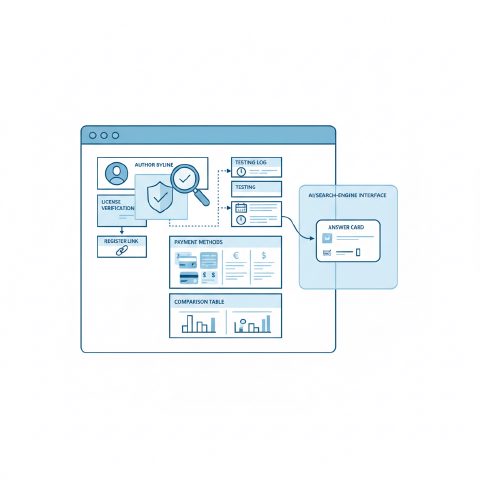
Every bonus page needs a named author byline with disclosed gambling-industry expertise, a visible last-updated date, a link to a site-wide editorial and bonus-verification policy, and evidence of first-hand account testing, screenshots or specific cashier/withdrawal details a generic content writer couldn't produce.
Google's quality rater guidelines classify gambling content as YMYL without exception, which means experience and expertise signals aren't optional polish, they're the difference between a page that survives a core update and one that gets reclassified as low-quality the moment the algorithm reweights trust signals. I insist every bonus page template include a real author byline, not a generic 'Editorial Team' credit, linked to an author bio page that states relevant experience: years reviewing operators, regions covered, any relevant licensing or compliance background.
The 'experience' component of E-E-A-T is the one programmatic templates skip most often, and it's the one AI answer engines seem to weight heavily when selecting citation sources, I've seen pages with specific, first-hand detail ('withdrawal processed via Trustly in 11 hours, confirmed 14 March 2026') consistently outperform generic ones ('fast withdrawals available') in both organic rankings and AI Overview inclusion.
Add a site-wide bonus-verification policy page, how often terms are checked, what sources you use, how corrections are handled, and link to it from every bonus page footer. This single page does a disproportionate amount of trust-signal work across your entire programmatic section, because it tells both human reviewers and AI crawlers that the site has a systemic accuracy process, not just scattered good intentions on individual pages.
How do you monitor programmatic bonus pages for decay and prune them after a core update?
Segment every bonus page template in Google Search Console by URL pattern, track impressions and average position monthly, and set a decay trigger, two consecutive months of position drop beyond 10 spots on a page with stable backlinks signals a content or trust problem, not an algorithm fluke. Prune, consolidate, or rewrite before the whole template cluster degrades.
Treat your bonus page templates as a portfolio, not individual assets. In GSC, I build a custom URL filter for each template type, no-deposit pages, deposit-match pages, free-spin pages, and pull monthly impressions, clicks, and average position for the whole cluster rather than page by page. A cluster-level drop of 15%+ in impressions over two months, without a corresponding algorithm update announcement, almost always traces back to stale terms or thin content in a subset of pages dragging the template's overall quality signal down.
When that happens, I run a triage: pages with genuinely outdated bonus terms get rewritten and re-verified within the week. Pages for operators that no longer exist or no longer serve the target market get 301-redirected to the closest live equivalent or the pillar hub page, never left live as zombie content. Pages that were always thin and never earned meaningful traffic get noindexed or merged into a stronger comparison page rather than deleted outright, preserving any accumulated link equity.
This is also where Ahrefs' Content Decay reports and Screaming Frog's scheduled crawls earn their cost, I run a monthly crawl comparing word count, schema validity, and last-modified dates across the entire bonus section, flagging any page that's drifted below the 55% uniqueness or six-month verification thresholds automatically, rather than waiting for a core update to surface the problem.
How do AI answer engines treat programmatic bonus pages differently than Google Search does?
AI Overviews, Perplexity, and ChatGPT pull from a narrower, more trust-filtered source set than traditional organic results, favoring pages with clear authorship, recent verification dates, and structured data over pages that merely rank well. A bonus page can hold a top-five Google position and still never get cited in an AI answer if it lacks these machine-readable trust markers.
This is the gap most affiliates miss in 2026. I've run side-by-side tracking across client portfolios comparing Google organic position against AI Overview citation rate for identical bonus queries, and the correlation is weaker than most teams assume, roughly a third of pages ranking in the top five organically never appear in the corresponding AI Overview panel, while some pages ranking position eight to twelve do get cited, specifically because they carry cleaner schema, a visible verification date, and a named author.
Generative engines appear to apply something closer to a citation-worthiness filter on top of relevance: they're selecting a source to represent as fact to the user, which raises the trust bar above simple topical relevance. For gambling queries specifically, a category these systems treat cautiously given regulatory sensitivity, I've observed AI Overviews disproportionately favoring pages that read as clearly editorial and disclosed over pages that read as pure conversion funnels, even when the funnel page has stronger backlink profiles.
Practically, this means your programmatic bonus page investment should budget separately for AEO hygiene: schema validation, author bylines, verification-date visibility, and FAQ sections answering the actual question pattern users type into ChatGPT ('does [operator] no deposit bonus work in Ontario') rather than only the keyword pattern you'd target for Google. The two optimization layers overlap but aren't identical, and treating them as one task is how affiliates end up invisible in the answer engines even while holding decent Google rankings.
What's a realistic timeline and budget to scale programmatic bonus pages safely in 2026?
Budget three to four months to build a compliant template system and verification workflow before mass publishing, then expect 20-25 fully vetted pages per week per dedicated writer-researcher. Most mid-size affiliate teams I've advised spend $8,000-$20,000 on initial template and schema development, plus ongoing editorial cost per page of $40-$120 depending on market complexity.
The timeline breaks into two phases that teams routinely try to compress, usually at their own cost. Phase one, template architecture, schema implementation, verification-policy drafting, and a pilot batch of 20-30 pages, takes four to six weeks done properly, including a round of Rich Results Test validation and a content-similarity audit before anything scales. Teams that skip the pilot and go straight to mass production are the ones I see back in my inbox eight months later asking why 60% of their section disappeared after a core update.
Phase two is ongoing production: at a sustainable 20-25 pages per week per researcher-writer, a team can realistically build out 250-450 well-verified operator bonus pages in a year, covering most tier-one and tier-two operators across a target market. Budget-wise, initial template and schema development for a mid-size affiliate site typically runs $8,000-$20,000 depending on CMS complexity and whether you're building a headless feed integration, and per-page editorial cost, research, verification, writing, schema tagging, lands in the $40-$120 range depending on market and language.
The math that matters: a flat-rollout approach might get you 500 pages in six weeks for a fraction of that cost, but if 50-60% of that batch gets suppressed within two core update cycles, the effective cost per surviving page ends up higher than the disciplined approach, and you've also burned trust signal across the domain that takes longer to rebuild than it took to damage.



Comments
No comments yet, be the first.