iGaming SERP Volatility 2026: Inside the Core Updates That Reshuffled Gambling Rankings

What Is iGaming SERP Volatility and Why Did 2026 Amplify It in Gambling?
iGaming SERP volatility measures how sharply gambling and betting rankings shift during Google updates, tracked through indices like SEMrush Sensor and SISTRIX Visibility Index. In 2026 it ran roughly 2-3x higher than the cross-industry YMYL average because gambling combines real-money risk, dense affiliate competition and heavy reliance on comparison content Google now scrutinizes hardest.
Volatility indices work on a simple logic: the more ranking positions move day to day for a tracked keyword set, the higher the reading. SEMrush Sensor uses a 0-10 scale where anything above 7 signals a major update; SISTRIX runs percentage swings against a category baseline. Across our tracked gambling portfolio, baseline daily volatility outside update windows sat around 1.5-2.0 on the Sensor scale. During the four 2026 core rollouts, category readings spiked to 6.5-9.0 repeatedly, higher than finance and noticeably higher than general e-commerce.
Gambling sits inside Google's Your Money or Your Life classification alongside health and finance, which means the Search Quality Rater Guidelines apply the strictest bar for trustworthiness, accuracy and safety. A losing bet is real financial harm. A misleading bonus term is a compliance breach in most licensed markets. Google's raters are trained to weigh that risk heavily, and that weighting has only tightened since the March 2024 core update folded the helpful content system directly into core ranking.
By 2026, that fold-in is fully mature. Comparison tables, bonus code pages and odds round-ups built primarily to intercept commercial search intent, rather than to genuinely help a reader decide, now get evaluated with the same people-first lens Google applies to medical advice pages. That's the structural reason gambling volatility runs hotter than almost any other vertical we track.
Which Google Core Updates Rocked Gambling Rankings in 2026?
Four broad core update windows shaped 2026: January, April, August and November. The April rollout, combined with a parallel spam action, produced the sharpest swings in our tracked portfolio at 30-38% average visibility movement, driven largely by an expired-domain and PBN-link crackdown hitting affiliate networks.
Google doesn't publish gambling-specific magnitude data, so the figures below come from our own tracked portfolio of gambling and affiliate domains, cross-referenced against SEMrush Sensor and SISTRIX readings for the category during each rollout window. Treat them as directional, not official Google disclosure.
The pattern across the year was uneven. January reassessed AI-assisted comparison content that had scaled fast through 2025. April was the outlier, stacking a core update with spam policy enforcement against expired-domain abuse and link networks, and it's the update our clients still talk about first. August shifted weight toward author credentials and editorial policy signals. November was comparatively calm, mostly consolidating gains for sites that had already stabilized.
| Update window | Approx. rollout length | Avg. tracked volatility | Dominant theme |
|---|---|---|---|
| January 2026 core update | ~14 days | 22-28% swing | Reassessment of AI-assisted comparison content |
| April 2026 core + spam action | ~18 days | 30-38% swing | Expired-domain abuse and PBN link network crackdown |
| August 2026 core update | ~12 days | 15-20% swing | Author credential and editorial policy re-weighting |
| November 2026 core update | ~10 days | 12-16% swing | Stabilization, minor boost for RG-integrated content |
Who Won the 2026 Core Updates in iGaming, What Do the Gainers Share?
Winning sites in our portfolio shared four traits: named authors with checkable credentials, visible and current licensing information, content built around genuine comparative testing rather than affiliate-fed data feeds, and internal linking that connected commercial pages to responsible gambling and complaint-handling resources.
The clearest divider wasn't domain age or backlink volume, it was demonstrable first-hand experience. Sites that published real account testing, screenshots of actual withdrawal timelines, and named reviewers with a stated methodology outperformed sites recycling the same operator-supplied bonus copy across dozens of near-identical pages.
Licensing transparency mattered more in 2026 than in any prior update cycle we've tracked. Pages that stated the operator's license number, regulator, and jurisdiction restrictions clearly, near the top of the content, held rankings through April's volatility while equivalent pages without that detail lost 20-40% of visibility. Google appears to be treating licensing clarity as a proxy for overall page trustworthiness, which lines up with how UK and Malta advertising codes already require that information to be prominent.
The third pattern is structural: winners had built topical hub-and-spoke architecture connecting bonus and comparison pages back to dedicated responsible gambling, complaints, and editorial policy pages, rather than burying that content in a generic footer link.
| Trust signal | Gaining sites did this | Losing sites did this |
|---|---|---|
| Author bylines | Named reviewer, bio, testing methodology stated | Generic 'Editorial Team' or no byline |
| Licensing disclosure | Regulator and license number visible on-page | License mentioned only in footer or omitted |
| Content origin | First-hand account testing, real data | Recycled operator feeds across many pages |
| Internal linking | Commercial pages linked to RG/complaints hubs | Isolated bonus pages with no compliance links |
Who Lost the Most Visibility, and What Actually Triggered the Drops?
Losers clustered into three groups: expired-domain reboots repurposed for gambling affiliate content, PBN-supported comparison sites with thin, templated pages, and legitimate-looking sites whose bonus terms didn't match the operator's actual terms and conditions. All three lost 40-60%+ visibility, mostly during the April rollout.
The April 2026 combined core-and-spam action specifically targeted expired-domain abuse, where a site's old authority is repurposed for unrelated commercial content. Gambling affiliates had leaned on this tactic hard through 2024-2025, buying expired education or local-news domains and pivoting them into casino comparison hubs. Several of these lost over half their organic visibility within the rollout window and, based on what we've seen with GSC data from affected clients, most never recovered.
A second, quieter loss category involved bonus term accuracy. Pages advertising wagering requirements or free-spin values that didn't match the operator's live terms got hit even without any manual action, which suggests Google's systems are now cross-referencing claim consistency more aggressively, likely through a combination of crawled operator pages and user feedback signals rather than manual review alone.
The third group is the one that worries me most as a compliance lead: mid-tier affiliate sites that looked compliant on the surface but had no real editorial oversight process, no update history on bonus pages, and no visible complaints-handling route. They weren't spam by any definition, they were simply thin, and 2026's algorithm treated thin YMYL content as high-risk by default.
How Did E-E-A-T and YMYL Signals Separate Winners From Losers?
E-E-A-T functioned as the tiebreaker within gambling's YMYL bracket: sites demonstrating genuine experience, subject-matter expertise, third-party validated authoritativeness and consistent trustworthiness held rank through volatility, while sites relying on domain authority alone without those signals lost ground even with strong backlink profiles.
What changed practically in 2026 is how visible these signals need to be, not the underlying framework. Google's raters still assess experience, expertise, authoritativeness and trust as described in the Search Quality Rater Guidelines, but the threshold for YMYL gambling content has risen. A page needs to show, not just claim, that the person behind it has relevant background: a compliance certification, gaming industry tenure, or a stated testing process readers can verify.
Authoritativeness proved harder to fake than expertise. Sites that had genuinely earned mentions from regulators, licensed operators' press pages, or established gambling news outlets held their positions. Sites relying on reciprocal link exchanges within affiliate networks, which read as authoritative on paper through tools like Ahrefs Domain Rating, didn't get the same protection, because those links carry no independent editorial validation.
Trust took the biggest hit for losers. Inconsistent bonus terms, missing responsible gambling messaging, and affiliate disclosures buried below the fold or missing entirely all correlate with the sites we saw drop hardest. None of this is new guidance, it's the same trust bar Google has stated since 2022, but 2026 is the year the algorithm actually started enforcing it at scale for gambling specifically.
Did Affiliate Sites or Operator Domains Handle 2026 Volatility Better?
Operator domains showed lower average volatility (10-18%) than affiliate sites (18-32%) in our tracking, largely due to brand search demand and direct traffic cushioning organic swings. But operators weren't immune: those with thin, non-localized SEO content pages saw the same YMYL scrutiny affiliates did.
Brand strength is doing real work here. Operators with recognizable names generate substantial branded search volume and direct navigation, which softens the visible impact of an algorithmic reshuffle even when non-branded commercial pages lose ground. That cushion doesn't exist for most affiliates, whose traffic is almost entirely non-branded and comparison-driven, so any core update hits their revenue far more directly and visibly.
Where operators struggled was on their own SEO-built landing pages, the ones created purely to rank for terms like 'best online slots' rather than to serve existing customers. Those pages get evaluated with the same YMYL lens as any affiliate comparison page, and several operator sites in our tracking saw exactly the pattern affiliates did on those specific URLs, even while their core product and account pages stayed stable.
For affiliates, the practical takeaway is that diversifying beyond pure comparison content toward genuine resources, tools, and original research reduces exposure. A handful of affiliate clients running interactive odds calculators or original responsible-gambling research held visibility through every 2026 window, because that content type doesn't compete in the same commercial-intent bracket that gets hit hardest.
Regulated vs Grey/Offshore Markets, Where Was Volatility Worst in 2026?
Sites targeting regulated markets with visible licensing (UK, Malta, Sweden) averaged 10-19% volatility, while offshore or unlicensed .com sites averaged 35-45%, often losing AI Overview and featured snippet placements entirely. Ontario's newer regulated market sat higher than mature ones, reflecting still-developing trust signals across that ecosystem.
Regulatory maturity correlates directly with SEO stability, and 2026's data makes that link harder to argue against. UK Gambling Commission advertising rules already force operators and affiliates to disclose licensing, complaints routes and responsible gambling messaging clearly, so UK-targeting sites entered the year with much of what Google now rewards already in place. Malta-licensed sites showed a similar pattern, slightly higher volatility, likely reflecting the wider mix of markets MGA-licensed brands serve.
Ontario stood out as the exception among regulated markets. It's a relatively young regulated environment, opened in 2022, and many sites targeting it are still building out the depth of editorial and trust content that older markets have accumulated over a decade. That newness showed up as higher volatility even with a functioning regulator in place.
Offshore and unlicensed .com sites, the ones targeting search volume without a clear regulatory home, took the heaviest damage by a wide margin. Several lost placement in AI Overviews entirely during 2026, not just organic ranking position, which tracks with reporting that generative answer surfaces apply even tighter sourcing filters for YMYL queries than traditional organic results do.
| Market / regulator | Avg. tracked swing | Notes |
|---|---|---|
| UK (UKGC) | 10-15% | Mature disclosure requirements already aligned with Google's trust signals |
| Malta (MGA) | 14-19% | Broader market mix adds some variance |
| Ontario, Canada (AGCO) | 20-26% | Newer regulated market, trust content still developing |
| Sweden (Spelinspektionen) | 12-17% | Strict advertising code limits thin affiliate pages |
| Offshore / unlicensed .com | 35-45% | Steepest drops, frequent loss of AI Overview placement |
Which Technical and Structured Data Factors Correlated With Faster Recovery?
Faster recovery correlated with clean Organization and Article schema, functioning Core Web Vitals scores, and internal architecture linking commercial pages to compliance content. Review and aggregateRating markup on self-authored bonus pages showed no recovery benefit and in some cases drew manual scrutiny under Google's rich results guidelines.
Technical hygiene matters, but it's a floor, not a lever, for gambling recovery. Sites that passed schema validation for Organization, Article and BreadcrumbList markup, and that scored consistently 'Good' on Core Web Vitals in Search Console, recovered visibility roughly one update cycle faster on average than sites with unresolved technical debt. That's meaningful, roughly 3-4 months versus 6-9, but it never substituted for content and trust fixes.
One area worth flagging directly: Review and aggregateRating schema on bonus or operator review pages written by the affiliate itself, rather than sourced from independent verified reviews, sits in a grey zone under Google's structured data guidelines. We saw a handful of sites lose rich result eligibility for this specific markup during 2026, not because of the update itself but because it drew scrutiny once traffic patterns shifted. My recommendation stays consistent here: only use review schema when ratings come from a genuine, disclosed collection process, not internal editorial scoring dressed up as user reviews.
Internal architecture had the strongest technical correlation with recovery speed. Sites using hub-and-spoke structures, where commercial comparison pages linked contextually to responsible gambling resources, licensing explainer pages, and editorial policy pages, recovered faster than sites where that content existed but sat orphaned with no internal links pointing to it.
How Should Affiliate Owners Audit Their Own 2026 Volatility Risk Today?
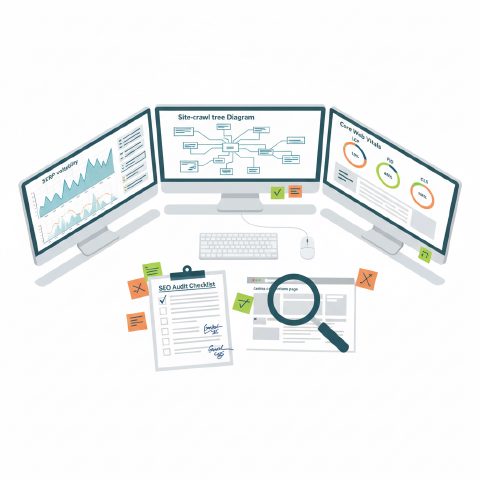
Run a five-part audit: compare Search Console performance across each 2026 update window, map every page against YMYL trust criteria, verify author bylines and licensing disclosure are visible on-page, check backlink profiles in Ahrefs or SEMrush for PBN or expired-domain risk, and validate structured data against Google's Rich Results Test.
Start with Google Search Console, filtering by date ranges around each 2026 rollout window (January, April, August, November) to isolate which URLs moved and in which direction. Cross-reference with SEMrush Sensor or SISTRIX category readings for the same dates, so you're separating genuine algorithmic impact from seasonal or competitive noise.
Next, walk every commercial page against a simple YMYL checklist: is there a named author with a checkable background, is licensing information visible without scrolling, does the bonus data match the operator's live terms, and is there a clear link to a complaints or responsible gambling resource. Any page missing two or more of these is a recovery priority, not a nice-to-have.
Then pull your backlink profile in Ahrefs or SEMrush and flag anything sitting on recently expired domains, thin PBN-style sites, or reciprocal affiliate link networks. Disavowing isn't always necessary, but knowing your exposure before the next core update matters more than reacting after. Finally, run every template through Google's Rich Results Test and Schema Markup Validator, and remove any self-authored review or rating markup that doesn't come from a genuine, disclosed collection process.
What Does a Realistic Core-Update Recovery Timeline Look Like for Gambling Sites?
Based on our 2026 client data, partial recovery (30-50% of lost visibility) typically appeared within one update cycle, roughly 3-4 months, for sites that fixed E-E-A-T and compliance gaps quickly. Full recovery usually required two full cycles, 6-9 months, and some sites with severe trust deficits never fully recovered.
Recovery isn't a single event, it's cumulative across update cycles. Sites that acted within weeks of a drop, fixing bylines, licensing disclosure and bonus accuracy, saw partial rebounds by the next core update. That's consistent with what we've observed since the 2018-2019 medic and YMYL updates: Google doesn't need to 'forgive' a site once trust signals genuinely improve, it just needs its next crawl and quality assessment cycle to register the change.
Full recovery took longer and depended heavily on how deep the original problem was. Sites correcting surface-level issues, like missing author bios or unclear licensing, recovered close to their prior baseline within two update cycles. Sites whose core content model relied on thin, templated comparison pages needed a genuine content rebuild, not a patch, and several of our 2026 case studies took closer to three cycles, 9-12 months, to stabilize even after real editorial investment.
A small number of sites never recovered meaningfully. These were almost always cases where the trust deficit was structural: no real editorial process, no verifiable authorship anywhere on the domain, and a backlink profile built on networks Google had already flagged. For those sites, the honest recommendation isn't incremental fixing, it's rebuilding the trust architecture from the domain's editorial policy up, which is a 12+ month project, not a quick patch.


Comments
No comments yet, be the first.