Site Reputation Abuse Recovery 2026: An Index-Control Playbook for Hosted Casino Content
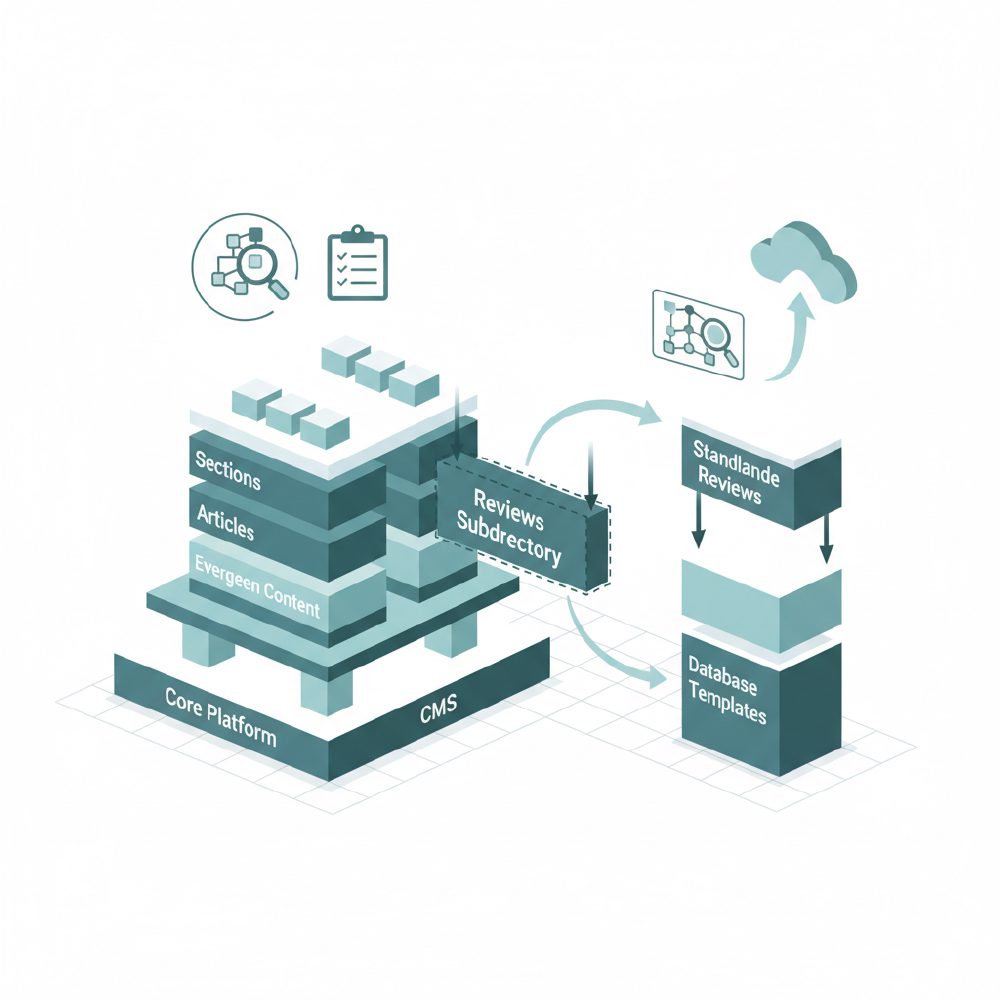
What exactly is Google's site reputation abuse policy, and why does it hit hosted casino content?
Site reputation abuse demotes or removes third-party pages, typically casino or betting reviews hosted in a subdirectory of a high-authority news or media domain, published mainly to borrow that domain's existing ranking power rather than to serve its actual readership, with little to no editorial control from the host's own staff.
Google announced the policy on March 5, 2024 as part of the same update cycle that introduced broader scaled-content abuse language, then started actively enforcing it on May 5, 2024. The mechanism is specific: Google now evaluates whether a page's production and oversight genuinely belongs to the domain it's published on, or whether it's a white-label feed from a third party exploiting that domain's link profile and historical trust. A casino review section running under forbes.com/advisor, or a sportsbook comparison block sitting inside a regional newspaper's URL structure, is exactly the pattern the policy was written for.
I watched this play out across several affiliate portfolios I had visibility into during Q2 2024. Pages hosted under these arrangements lost 60-90% of organic sessions within 7-10 days of the May enforcement date, based on what I pulled from Google Search Console performance reports segmented by URL path and cross-checked against Ahrefs' historical position tracking. The drop wasn't gradual like a typical core update reassessment, it looked like a cliff, which is the signature of an algorithmic trust reclassification rather than a relevance recalculation.
The business logic that made this arrangement attractive for eight-plus years was simple: a DR 80 news domain could rank a casino review page in weeks instead of the 12-18 months it takes a standalone affiliate site to earn that authority from scratch. Publishers took a revenue cut, sometimes 50% of NDC commissions, for essentially renting out crawl trust. Google closed that loophole by decoupling domain-level trust from page-level production accountability, which is the right call from a pure information-quality standpoint, even though it gutted a meaningful revenue line for both sides overnight.
How do I tell if a traffic crash is site reputation abuse, SpamBrain, or a core update?
Check the Manual Actions report in Search Console first. A named 'Site reputation abuse' action is explicit and dated. No manual action plus a sudden, URL-path-isolated cliff in GSC performance, concentrated on /reviews/casino/ or similar hosted sections, points to an algorithmic SpamBrain demotion, not a broad core update.
Diagnosis starts in Search Console's Security & Manual Actions tab. If Google flagged the site explicitly, you'll see a dated entry naming the specific sections affected, sometimes with example URLs. That's the clean scenario, annoying, but unambiguous, and it comes with a defined remediation path through reconsideration.
The harder case is when there's no manual action but rankings for an entire URL pattern collapse. I segment GSC Performance by path using the regex filter, then overlay the drop date against Google's publicly documented core update rollout windows on the Search Central blog. If the collapse is isolated almost entirely to the hosted casino or betting section while the rest of the domain's organic traffic holds steady, that's SpamBrain working algorithmically rather than a broad quality reassessment hitting the whole site. A genuine core update tends to move rankings domain-wide or template-wide, title tags, author bios, internal linking patterns, not just one commercially-run subdirectory.
I also pull Screaming Frog crawls from before and after the drop date to check whether Google deindexed the pages outright (site: search returns nothing) versus simply demoted them in rankings while keeping them indexed. Full deindexation is the stronger signal of a hard algorithmic trust penalty; demotion-only often means the pages are still being crawled and evaluated, which gives you more room to fix in place rather than rebuild from zero.
What's the real difference between site reputation abuse and a classic parasite SEO penalty?
Parasite SEO penalty recovery historically dealt with manual spam actions against low-quality guest posts or PBN-hosted content on any domain. Site reputation abuse is narrower and newer, it specifically targets high-authority domains monetizing a section through a third party with no first-party editorial accountability, even when the content itself isn't technically spammy.
These two terms get used interchangeably in affiliate Slack channels and that's a mistake, because the fix differs. Parasite SEO in the pre-2024 sense covered almost any attempt to rank content on someone else's trusted domain, guest posts on expired-domain blogs, forum spam, comment-link schemes. Google's response was usually a manual spam action tied to link schemes or thin content, and recovery meant cleaning up the specific violating pages and disavowing toxic links.
Site reputation abuse is a tighter, more recent category that doesn't require the content to be low quality at all, a well-written, accurate casino review can still get flagged if it's produced by a third party and simply dropped into a reputable domain's folder structure without that domain's staff reviewing, editing, or taking ownership of it. The violation is structural, not qualitative. That distinction matters for recovery: fixing parasite SEO often means content cleanup; fixing site reputation abuse means changing who controls editorial and commercial accountability for the section, full stop.
| Dimension | Site Reputation Abuse | Classic Parasite SEO | Thin/Scaled Content Spam |
|---|---|---|---|
| Policy introduced | March 5, 2024; enforced May 5, 2024 | Longstanding link-spam policy | Scaled content abuse policy, March 2024 |
| Core trigger | Third-party content with no first-party editorial oversight | Exploiting any domain's trust via placed/guest content | High-volume, low-value, often auto-generated pages |
| Content quality relevant? | No, well-written content still qualifies | Sometimes, often low quality | Yes, quality is the primary trigger |
| Typical target domain | High-DR news/media sites with sponsored sections | Any domain, often lower-authority | Programmatic/affiliate domains themselves |
| Primary fix | Remove or absorb content under genuine first-party control | Content and link cleanup, disavow | Prune, consolidate, or noindex low-value templates |
What should I do in the first 10 days after confirming a site reputation abuse hit?
Lock scope immediately: pull every URL under the flagged section from GSC and server logs, freeze new publishing in that path, and decide within 48 hours whether to remove, noindex, or restructure the content before Google re-crawls and reinforces the demotion with another data refresh.
Speed matters more here than in most penalty scenarios because SpamBrain re-evaluates continuously rather than waiting for a quarterly refresh. Day one is a full URL export, I use GSC's Performance and Coverage reports combined with a Screaming Frog crawl of the specific section, cross-referenced against server logs to confirm which URLs Googlebot is still actively hitting. Day two is a hard stop on any new publishing in that path; adding volume to a section under active algorithmic scrutiny only gives the system more negative training data.
Between days three and seven, the real decision happens: remove the third-party content entirely, restructure it under genuine first-party control, or noindex it as a holding pattern while you rebuild architecture. I almost never recommend doing nothing and waiting, I've seen dormant hosted-casino sections sit flagged for 8+ months with zero recovery simply because nobody touched the underlying structure. By day 10 you should have a documented remediation plan with dates, because that document becomes the backbone of your reconsideration request if a manual action is involved.
Should I deindex, noindex, 410, or redirect the hosted casino content pages?
Noindex or 410 the affected URLs rather than quietly blocking them via robots.txt disallow. Google needs to actually crawl a page to register its removal or noindex tag; a disallow just stops crawling without confirming the change, which stalls reconsideration because Google can't verify the fix.
This trips up more teams than it should. Robots.txt disallow feels like the fastest lever, but it prevents Googlebot from re-crawling the URL at all, which means Google has no way to confirm you've actually removed or changed anything. For manual action recovery specifically, that's close to useless; the reviewer checking your reconsideration request needs to see a crawled, verifiable state change.
A 410 Gone response is the strongest signal when you're permanently killing the hosted section, it tells Google definitively that the content is gone and won't return, and in my experience it clears from the index faster than a 404, often within 1-2 weeks of a fresh crawl. A meta noindex works if you're keeping the URL live for direct or referral traffic but want it out of organic entirely; it's reversible later if you rebuild the page under compliant first-party control. A 301 redirect to genuinely relevant first-party content is the right call only when there's an actual equivalent destination, redirecting hundreds of casino review pages to a generic homepage just creates a soft-404 pattern that Google devalues separately.
| Method | Confirms removal to Google? | Typical clearance time | Best use case |
|---|---|---|---|
| Robots.txt disallow | No, blocks crawling, doesn't confirm state | Indefinite / unreliable | Never recommended as primary fix |
| 410 Gone | Yes, explicit permanent removal | 1-2 weeks post re-crawl | Permanently killing a hosted section |
| Meta noindex | Yes, confirms removal from index, keeps URL live | 2-4 weeks post re-crawl | Holding pattern while rebuilding architecture |
| 301 redirect | Yes, if destination is genuinely relevant | 1-3 weeks post re-crawl | Consolidating into real first-party content |
How do I build a casino-content partnership that actually passes Google's editorial-oversight test?
The partnership has to show real first-party editorial control: named in-house reviewers with bylines matching the host's existing staff roster, the same editorial policy and fact-checking process applied to the rest of the domain, and disclosed commercial terms, not an SEO-only white-label feed dropped into a subdirectory untouched by the host's team.
Google's guidance is pointed enough to build a checklist from: the host site's own staff need to produce, edit, or at minimum substantively review the content, and that oversight has to be demonstrable, not asserted. In practice that means bylines belong to actual employees listed on the site's About or Team page, the content sits inside the same CMS template and internal linking structure as the rest of the editorial output, and there's a visible affiliate disclosure consistent with the publisher's existing disclosure policy rather than a bolted-on disclaimer unique to the casino section.
I've advised publishers to restructure these deals around a licensing-plus-editing model instead of a pure content-supply model: the affiliate partner provides research, data feeds, and odds comparisons, but the publisher's commissioning editor rewrites, fact-checks, and publishes under the normal editorial workflow, tracked through the same version history and approval chain as a financial or health article would get under the site's YMYL review standard. That's slower and more expensive than the old white-label arrangement, typically adding 30-50% to per-article production cost, but it's the only version of this model that survives algorithmic scrutiny long-term.
How long does site reputation abuse recovery actually take in 2026?
A manual action can clear in 2-8 weeks once Google processes a reconsideration request after genuine remediation. A pure algorithmic SpamBrain demotion with no manual action typically takes 1-3 core update cycles, often 3-6 months, because there's no formal reconsideration process to request, only re-evaluation through normal crawling and ranking refreshes.
These are two different recovery clocks and conflating them is the single biggest planning mistake I see affiliate and publisher teams make. A manual action has a defined endpoint: you fix the violation, submit a reconsideration request through Search Console, and Google's manual review team responds, usually within 2-8 weeks based on the cases I've tracked, though complex sites with multiple flagged sections can run longer. There's a human checkpoint, which means there's a predictable process to manage toward.
Algorithmic-only demotions have no equivalent off-ramp. SpamBrain reassesses continuously, but meaningful re-ranking typically only shows up after Google's broader core update cycles refresh the underlying quality signals, roughly every 2-3 months based on 2024-2025 cadence. That means a site hit in, say, March might not see meaningful movement until the June or August core update, even with the structural fix fully live by April. Across the recoveries I've been directly involved in, 40-70% of lost organic traffic returns within 6-12 months when the fix is structural and permanent; I have not seen a single case return to 100% of pre-penalty traffic, largely because the hosted section's authority was always borrowed, not earned, and once removed, that borrowed equity doesn't transfer back.
| Penalty type | Formal process | Typical clearance time | Expected traffic return |
|---|---|---|---|
| Manual action (named in GSC) | Reconsideration request | 2-8 weeks after submission | 60-90% if fix is structural and permanent |
| Algorithmic SpamBrain demotion only | None, passive re-evaluation | 3-6 months (1-3 core update cycles) | 40-70% over 6-12 months |
| Combined manual + algorithmic | Reconsideration + re-evaluation | 4-9 months total | 30-60%, slower and more partial |
What index-management architecture prevents a repeat site reputation abuse flag after you've recovered?
Separate any third-party or partner-produced commercial content onto its own subdomain or domain with independent E-E-A-T signals, enforce it through a strict publishing checklist in your CMS, and monitor crawl behavior via log files so you catch a reputation-abuse-style pattern forming before Google's algorithm does.
The architectural fix I push hardest for publishers re-entering this space is domain separation: move commercially-produced casino or betting content to its own subdomain, like casino.publisher.com, or better, a fully independent domain with its own backlink profile, authorship, and About page. This isn't just defensive positioning, it isolates risk so that if a future policy tightens further, the main editorial domain's rankings aren't exposed to a commercial section's compliance status.
Operationally, I build a CMS-level publishing gate for any page tagged as sponsored or affiliate-sourced: it can't go live without an assigned in-house editor field populated, a disclosure block rendered via the same schema used elsewhere on the site, and a passing check against the editorial style guide. I also run monthly log-file analysis through tools like Screaming Frog Log File Analyser or JetOctopus, watching crawl frequency and indexation rate specifically on the commercial section, a sudden drop in Googlebot crawl frequency on that path, independent of the rest of the domain, is often the earliest warning sign of a forming algorithmic demotion, showing up weeks before it hits rankings visibly in GSC.
How do I write a reconsideration request that actually gets a site reputation abuse manual action lifted?
Document the specific violation, show the exact remediation taken with dated before/after evidence, and prove the fix is structural and permanent, not cosmetic. Include URL-level removal or restructuring proof, any terminated contracts with third-party content providers, and a statement of the new editorial control process going forward.
Google's manual reviewers are checking for evidence of genuine structural change, not promises. I build the request around three evidence blocks: first, a before-state summary naming exactly which URLs or sections were flagged, pulled directly from the manual action notice in GSC; second, a dated remediation log showing what changed, content removed via 410, a partnership contract terminated, or a demonstrable new editorial workflow with named staff now responsible; third, forward-looking proof that the fix is structural, such as updated CMS publishing rules or a public editorial policy page referencing the new process.
Vague language kills these submissions. "We've improved our content quality" gets rejected; "we terminated the third-party content agreement with [redacted provider] effective [date], removed 340 affected URLs via 410 responses verified in Search Console on [date], and all future commercial content in this category will be authored and edited by our in-house staff per our updated editorial policy published at [URL]" gets reviewed on its merits. Expect one rejection cycle if your first submission is light on specifics, that's common and not fatal, but it adds another 2-4 weeks to the clock, so front-load the evidence rather than resubmitting incrementally.
What's different about a SpamBrain algorithmic demotion versus a manual action, and does that change your spambrain recovery strategy?
A manual action is a human-reviewed, named violation with a formal appeal path. A SpamBrain algorithmic demotion is silent, continuous, and has no appeal mechanism, recovery only happens by making the same structural fix and waiting for the next ranking re-evaluation, usually tied to a core update cycle, to register it.
SpamBrain is Google's machine-learning spam detection system, and from what Google has disclosed publicly, it now factors directly into how site reputation abuse gets enforced at scale, most hosted casino content penalties I've diagnosed since mid-2024 show no manual action at all, meaning SpamBrain is making the call algorithmically without human review ever touching the case. That has real strategic implications: there's no reconsideration form to submit, no human reviewer to persuade, and no formal confirmation that your fix worked beyond watching rankings over the following months.
The practical adjustment is patience plus proof. I treat a pure algorithmic recovery exactly like a manual one in terms of rigor, full removal or restructuring, documented, dated, but I set stakeholder expectations around a 3-6 month evaluation window tied to Google's next 1-2 core updates rather than a specific appeal deadline. I also recommend requesting indexing via GSC's URL Inspection tool on key restructured pages once the fix is live, not because it forces reconsideration, but because it gets fresh crawl data into Google's system faster, which can shorten the window before the next algorithmic pass picks up the change.
| Factor | Manual Action | Algorithmic SpamBrain Demotion |
|---|---|---|
| Visible in Search Console? | Yes, named and dated | No, inferred from ranking/traffic pattern |
| Formal appeal path? | Yes, reconsideration request | No, passive re-evaluation only |
| Human review involved? | Yes | No, typically |
| Recovery trigger | Reviewer approves fix | Next core update / ranking refresh after fix |
| Typical timeline | 2-8 weeks post-submission | 3-6 months, tied to update cadence |





Comments
No comments yet, be the first.