Chile Online Gambling SEO in 2026: Claiming Topical Authority Before the Market Crowds
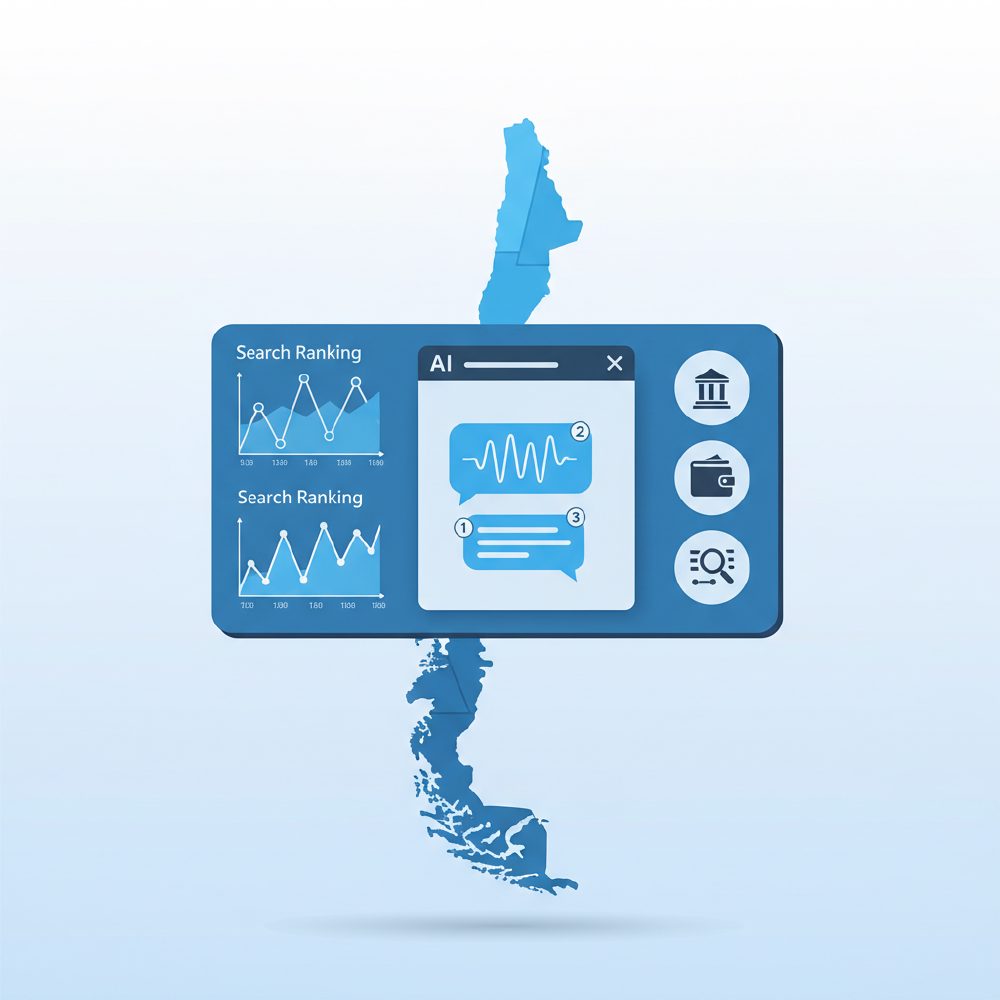
Why is 2026 the inflection point for chile online gambling seo?
Chile's licensing regime under Ley 21.593 is moving from legal text to active SCJ enforcement, which means the SERPs for chile online gambling seo terms are still thin and poorly structured. Affiliates who build topical depth now can lock in rankings and AI citations before licensed operators scale their own content teams.
I've watched three regulated-market openings in the last five years, Peru, Brazil, and now Chile, and the pattern repeats: the first 12-18 months after a licensing law passes produce the lowest-competition, highest-upside window an affiliate will ever see in that market. Chile is at exactly that stage. Ley 21.593 was published in January 2024, establishing the Superintendencia de Casinos de Juego (SCJ) as the regulator for online casino and sports betting, but secondary regulation, the reglamento covering tax rates, advertising rules and licensing fees, was still being finalized through 2025. That lag is your content runway.
Right now, a search for 'mejores casinos online chile' or 'apuestas online chile' pulls a mix of unlicensed offshore brands, generic LatAm comparison pages translated from Mexican or Colombian templates, and a handful of forum threads. None of it demonstrates deep Chilean specificity, no RUT-based KYC explanations, no Webpay Plus payment breakdowns, no SCJ licensing status checks. That's a gap I'd move on immediately if I were running an affiliate program targeting this market.
The risk is obvious too: once SCJ starts publishing an official licensed-operator registry, expect a wave of well-funded entrants, Betsson, Codere and Kaizen Gaming-backed brands have all signaled LatAm expansion intent, building localized hubs with real compensation budgets. The affiliates who've already built 40-60 pages of topical depth and earned a handful of .cl backlinks will hold a structural advantage that's hard to buy back later.
What exactly changed under Chile's Ley 21.593 and the SCJ licensing regime?
Ley 21.593 created Chile's first legal framework for online casino and sports betting, replacing the previous gray-market status quo with SCJ-issued licenses. Operators must register locally, implement RUT-based identity verification, and comply with advertising restrictions, all of which become content and trust signals affiliates need to reference accurately.
Before this law, Chile operated the way much of unregulated Latin America did: a gray market where international operators accepted Chilean players without local licensing, and SEO content treated Chile as an afterthought inside broader 'Latinoamérica' pages. Ley 21.593 changes that by requiring a local SCJ license for any operator legally targeting Chilean players, with provisions covering responsible gambling messaging, data protection, and, this is the part affiliates underestimate, restrictions on how gambling can be advertised, including influencer and affiliate marketing disclosure requirements.
I'd treat the exact tax percentage and final advertising rule text as still moving targets; as of early 2025 the reglamento details hadn't been fully published, so any article stating a precise GGR tax rate without citing the Diario Oficial risks becoming outdated within months. What I do recommend citing confidently: the existence of SCJ as regulator, the shift from gray to licensed market, and the expectation that licensed brands will carry visible compliance badges once licenses start issuing.
For content purposes, this means your 'is online gambling legal in Chile' page needs a visible last-updated date and a direct link to SCJ's official communications, not because Google requires it structurally, but because it's the single highest-trust signal you can give both human readers and AI answer engines parsing YMYL gambling-legality questions.
Which search intents actually drive apuestas online chile seo traffic?
Chilean gambling search intent splits into three buckets: legality/trust queries (is it legal, which sites are licensed), comparison queries (best casino, best betting site), and transactional queries tied to local payment methods like Webpay and Khipu. Volume is modest by LatAm standards, but conversion intent runs high because searchers are already deciding, not browsing.
Keyword tools built on global databases consistently underestimate Chilean volume, Ahrefs and SEMrush's Chile-specific indices are thinner than their Mexico or Brazil data, so treat any volume number under 1,000-2,000 monthly searches for terms like 'apuestas online chile' as directionally useful, not gospel. What I trust more is Google Search Console query data from month three onward, once you've got enough impressions to see real click patterns rather than modeled estimates.
The legality cluster ('apuestas online chile es legal', 'casino online chile licencia SCJ') is currently underserved and arguably the highest-leverage content to publish first, it's lower competition, it builds the topical authority Google's helpful-content systems reward, and it's exactly the kind of factual, citable answer that AI Overviews and Perplexity prefer to surface. The comparison cluster ('mejor casino online chile', 'bono bienvenida chile') is more competitive and will only get harder as licensed brands launch their own comparison pages.
The payment cluster deserves its own spoke pages. Chilean players search specifically for 'casino que acepta Webpay', 'apuestas online con Khipu' and increasingly 'casino con Mach', Mach being the Bci-backed digital wallet that's grown fast in Chile. Generic LatAm content that only mentions Visa and Mastercard misses this entirely and signals to both readers and algorithms that the page wasn't written for a Chilean audience.
How do you structure a topical authority hub for chile casino seo?
Build a single pillar page on Chile's online gambling legal status and licensing, then branch spoke pages covering payment methods, game-type reviews, operator comparisons, and responsible gambling resources, each interlinking back to the pillar. This hub-and-spoke model is what signals topical depth to both Google's ranking systems and AI citation engines.
I structure every new-market build the same way: one authoritative pillar answering 'is online gambling legal in [market]' with full legal citations, then eight to twelve spokes covering the sub-questions real searchers have. For Chile specifically, that means spokes on SCJ licensing verification, Webpay/Khipu/Mach payment guides, Chilean peso deposit limits, sports betting versus casino-specific rules, and a responsible-gambling resource page linking to Chile's national gambling-harm support lines.
The mistake I see most often is affiliates publishing ten 'best casino' listicles before they've published a single page that actually explains the legal framework in Chilean-specific terms. That ordering is backwards for both SEO and AEO. Google's helpful-content systems reward sites that demonstrate comprehensive coverage of a topic before they reward commercial comparison pages, and AI answer engines specifically favor sources that answer foundational questions clearly, a ChatGPT or Gemini response to 'can I legally gamble online in Chile' is far more likely to cite a clear legal-explainer page than a 'top 10 casinos' listicle buried in affiliate links.
Internal linking matters more here than in saturated markets because you're often the only comprehensive source Google has to choose from. Link every spoke back to the pillar with descriptive Chilean-Spanish anchor text, and link the pillar out to SCJ's official page, that outbound link to a .gob.cl authority source is a trust signal that costs nothing and pays off disproportionately in a thin market.
| Page type | Example target query | Primary role |
|---|---|---|
| Pillar | apuestas online chile legal 2026 | Establish legal/regulatory authority, link to SCJ |
| Spoke, payments | casino online chile webpay khipu | Capture transactional, localized payment intent |
| Spoke, licensing | casino licencia SCJ chile verificar | Trust/verification queries, high AEO citation value |
| Spoke, comparison | mejor casino online chile 2026 | Commercial conversion, competitive cluster |
| Spoke, responsible gambling | juego responsable chile ayuda | YMYL trust signal, low competition, high E-E-A-T value |
| Spoke, sports betting | apuestas deportivas online chile | Secondary vertical, overlaps with casino intent |
What technical and AEO signals matter most for AI citation in Chile queries?
AI Overviews, Perplexity and ChatGPT currently cite almost no Chile-specific gambling sources because the content pool is shallow. Clean entity markup (Organization, Review, FAQPage schema), clear author bylines, and explicit date stamps give you an outsized chance of becoming the default citation for Chilean gambling-legality and licensing questions.
I've tracked citation patterns across AI Overviews since its first rollout, and the pattern in thin markets is consistent: answer engines default to whichever source most clearly structures a direct answer to the query, with visible entity signals confirming expertise and recency. In saturated markets like the UK or US, that's a crowded fight. In Chile right now, it's closer to an open field, most of the content answer engines currently pull for 'apuestas online chile' queries is either generic LatAm content or Wikipedia-adjacent regulatory summaries, neither of which answers the specific SCJ-licensing question well.
Practically, that means every pillar and spoke page needs schema.org markup, Organization schema identifying your site as a review/comparison publisher, FAQPage schema wrapping your genuine FAQ content, and Review schema if you're scoring operators, with ratingValue fields that match what's visible on-page. I'd also put a visible 'last updated' date near the top of any legality or licensing page; LLMs weight recency heavily for regulatory questions because stale legal information is a known failure mode they're tuned to avoid.
Author identity matters more here than in most niches. A byline tied to a real person with demonstrable iGaming or LatAm regulatory experience, linked to a bio page and ideally a LinkedIn profile, gives both Google's YMYL review systems and AI engines a verifiable entity to associate with the content. Anonymous or "Editorial Team" bylines on gambling-legality pages are a weak signal precisely when Chile's market needs a strong one, the topic sits squarely in YMYL territory, and generic authorship is one of the first things a core update or a helpful-content review will discount.
How should affiliates handle YMYL and compliance signals for SCJ-licensed brands?
Treat every Chile gambling page as full YMYL content: disclose affiliate relationships clearly, verify and display each operator's SCJ licensing status, and never represent an unlicensed offshore brand as legally available to Chilean players. This isn't optional, it's the trust layer Google's review-content systems and AI engines both check for.
Google's YMYL review-content guidance asks for evidence the reviewer actually tested or verified what they're recommending, not just rewritten marketing copy. For Chile, that means your operator comparison pages should state, explicitly, which brands hold or have applied for an SCJ license and which don't. Once SCJ starts publishing its registry (expected through 2025-2026 rollout), I'd build an automated or manually-updated licensing-status table rather than a static claim, because licensing status is exactly the kind of fact that goes stale and gets flagged in a core update review.
Affiliate disclosure needs to be unambiguous and placed near the top of the content, not buried in a footer. Chile's advertising provisions under Ley 21.593 touch on responsible marketing of gambling products, and regulators in comparable markets, Spain's DGOJ, Italy's ADM, have shown willingness to scrutinize affiliate advertising practices once licensing regimes mature. Building clean disclosure habits now avoids a costly retrofit later.
I'd also avoid the common shortcut of recommending offshore, unlicensed operators as "the best option" while Chile's licensing regime is still ramping up. Short-term, it might capture traffic from searchers whose intent doesn't yet distinguish licensed from unlicensed. Long-term, it's a brand-risk and ranking-risk bet against a regulator that's clearly moving toward enforcement, and against Google's own pattern of discounting sites that recommend non-compliant gambling operators in regulated markets.
What link-building and digital PR tactics work in the Chilean market?
Prioritize .cl domain links from Chilean business, tech and sports media over generic international gambling link networks. Digital PR angles around Chile's new licensing law, data-backed market-size estimates, and responsible-gambling commentary earn coverage from outlets like La Tercera, Emol or Diario Financiero that generic casino link-building can't replicate.
Link profiles for Chile-targeted gambling sites currently skew heavily toward generic international PBN-style gambling links, and it shows, few sites in this niche have meaningful Chilean domain authority behind them. That's an opportunity. A well-timed data story, "what Chile's new online gambling law means for the market", pitched to Chilean business press around any SCJ announcement has a real shot at coverage, because local journalists are actively looking for expert commentary on a regulatory story their audience cares about.
I'd also look at Chilean sports media. Betting content naturally pairs with football coverage, Chile's Primera División and the national team generate consistent search and social interest, and sports-adjacent .cl outlets are generally more open to expert-contributed content or data partnerships than general news is. A well-sourced piece on betting trends tied to a Colo-Colo or Universidad de Chile match can earn a natural link where a cold pitch about "best casino bonuses" never would.
Avoid link schemes built purely around anchor-text-rich gambling directories; Google's spam systems have gotten materially better at discounting these since the 2023-2024 core updates, and in a thin market like Chile, a handful of genuinely relevant .cl links will outweigh fifty generic gambling-directory placements on both ranking signals and the kind of entity trust that feeds AI citation.
How does Chile's igaming seo differ from Peru, Colombia and Mexico?
Chile's market is earlier-stage and lower-volume than Peru, Colombia or Mexico, but its regulatory clarity under Ley 21.593 and SCJ oversight is comparatively cleaner. That means less immediate search volume to capture, but a longer runway before competitive saturation hits, compared to markets where licensing has been settled for years.
Peru's licensing regime under MINCETUR has been operational since 2023, and its SEO landscape already shows the pattern Chile is heading toward: established operator-affiliated content, mature comparison sites, and a search volume base roughly three to five times larger than what Chile currently shows in tools like Ahrefs. Colombia's Coljuegos-regulated market is even further along, having licensed online operators since 2017, which means the "easy win" window there closed years ago, ranking now requires genuine domain authority and years of accumulated trust signals.
Mexico sits in a different category entirely: a legally ambiguous federal framework that's produced an enormous, loosely regulated content ecosystem, with search volumes an order of magnitude above any other market in this comparison, but correspondingly brutal competition from large multinational affiliate networks. Chile won't reach that volume, realistically, but it also won't face that level of competitive density for the next 18-24 months.
The practical takeaway: if you're allocating a limited SEO/content budget across LatAm markets, Chile offers the best ratio of achievable topical authority to competitive pressure right now. Colombia and Mexico require bigger budgets to compete meaningfully; Peru sits in between. Chile is where a focused, well-executed 6-8 month content push can realistically produce page-one rankings across most of the commercial cluster.
| Market | Regulatory status | Relative search volume | SEO competitiveness |
|---|---|---|---|
| Chile | Ley 21.593, SCJ licensing rolling out 2025-2026 | Low-moderate | Low, early-mover window open |
| Peru | MINCETUR-licensed since 2023 | Moderate | Moderate, maturing fast |
| Colombia | Coljuegos-licensed since 2017 | Moderate-high | High, established incumbents |
| Mexico | Federally ambiguous, de facto open market | Very high | Very high, large affiliate networks dominant |
What's a realistic 12-month SEO and AEO timeline and KPI set for Chile?
Expect three to four months to establish indexation and initial rankings for low-competition legality and payment-method pages, five to eight months to see meaningful organic traffic on comparison terms, and six to twelve months before AI answer engines start consistently citing your Chile-specific pages. Track impressions-to-click ratio and AI citation appearances alongside standard rank tracking.
In a near-empty niche, early traction comes faster than SEOs used to crowded markets expect, I've seen legality and licensing-explainer pages in comparably thin markets reach page-one within 8-10 weeks of publication, simply because there's so little well-structured competition. Commercial comparison terms take longer, typically five to eight months, because that's where whatever established operator content exists tends to cluster.
For AEO specifically, I track citation appearances manually through test queries run across ChatGPT (with browsing), Perplexity and Google AI Overviews, logging which domains get cited for a fixed set of twenty to thirty Chile-specific gambling questions monthly. In genuinely new markets, I've seen a well-structured site go from zero citations to being the primary cited source for five or six recurring question types within six months, that's a far faster share-of-voice gain than is achievable in the US or UK, where competition for LLM citation is already dense.
KPI-wise, I'd set monthly targets for: indexed page count against published page count (should stay near 95%+), impressions growth in Google Search Console filtered to Chile geography, click-through rate on legality/licensing queries (a strong CTR here signals your meta descriptions are answering the actual question), and a monthly manual AI-citation audit. Rank position alone undersells progress in a market this early, impressions and citation appearances tell you whether you're actually becoming the reference source, which is the real goal.
| Timeframe | Primary milestone | Key metric to watch |
|---|---|---|
| Month 1-3 | Pillar + 6-8 spokes published, indexed | Index coverage rate, GSC impressions |
| Month 3-5 | Page-one rankings on legality/payment long-tails | Average position, CTR on legality cluster |
| Month 5-8 | Growth on comparison/commercial terms | Organic sessions, affiliate click-through |
| Month 6-12 | First consistent AI Overview/Perplexity citations | Monthly manual citation audit across test queries |
What are the most common mistakes affiliates make targeting chile online gambling seo?
The biggest mistakes are treating Chile as a translation of Mexican or Spanish content, skipping the legality/licensing pillar in favor of comparison listicles, ignoring local payment methods like Webpay and Mach, and failing to update licensing-status claims as SCJ's registry rolls out. Each one undercuts the exact trust signals this YMYL niche depends on.
Machine-translated or lightly-localized Spain or Mexico content is the fastest way to signal low effort in this market, Chilean Spanish has distinct vocabulary and payment-culture references, and both human readers and increasingly sophisticated language models pick up on content that reads as generic "LatAm Spanish" rather than Chile-specific. I'd rather see a shorter, genuinely Chile-written page than a longer one padded with translated boilerplate.
The second mistake, leading with comparison listicles before establishing legal-authority content, costs affiliates the topical depth signal that Google's helpful-content systems and AI citation engines both reward. I've seen sites try to skip straight to monetizable "best casino" pages and plateau at mediocre rankings because there's no supporting cluster proving genuine subject-matter coverage.
Third, ignoring Mach, Khipu and Webpay in favor of generic card-payment content misses a huge share of real Chilean purchase intent, these wallets dominate everyday Chilean e-commerce, and gambling searchers specifically filter by payment compatibility. Finally, static "licensed operators" claims that don't get revisited as SCJ's registry publishes and updates will age badly fast; build a maintenance cadence into your editorial calendar now, not after the first correction request.



Comments
No comments yet, be the first.