Nigeria Betting SEO in 2026: The Compliance-First Playbook for Rankings That Outlast Core Updates
What makes Nigeria's sports betting SEO market fundamentally different from Kenya or South Africa?
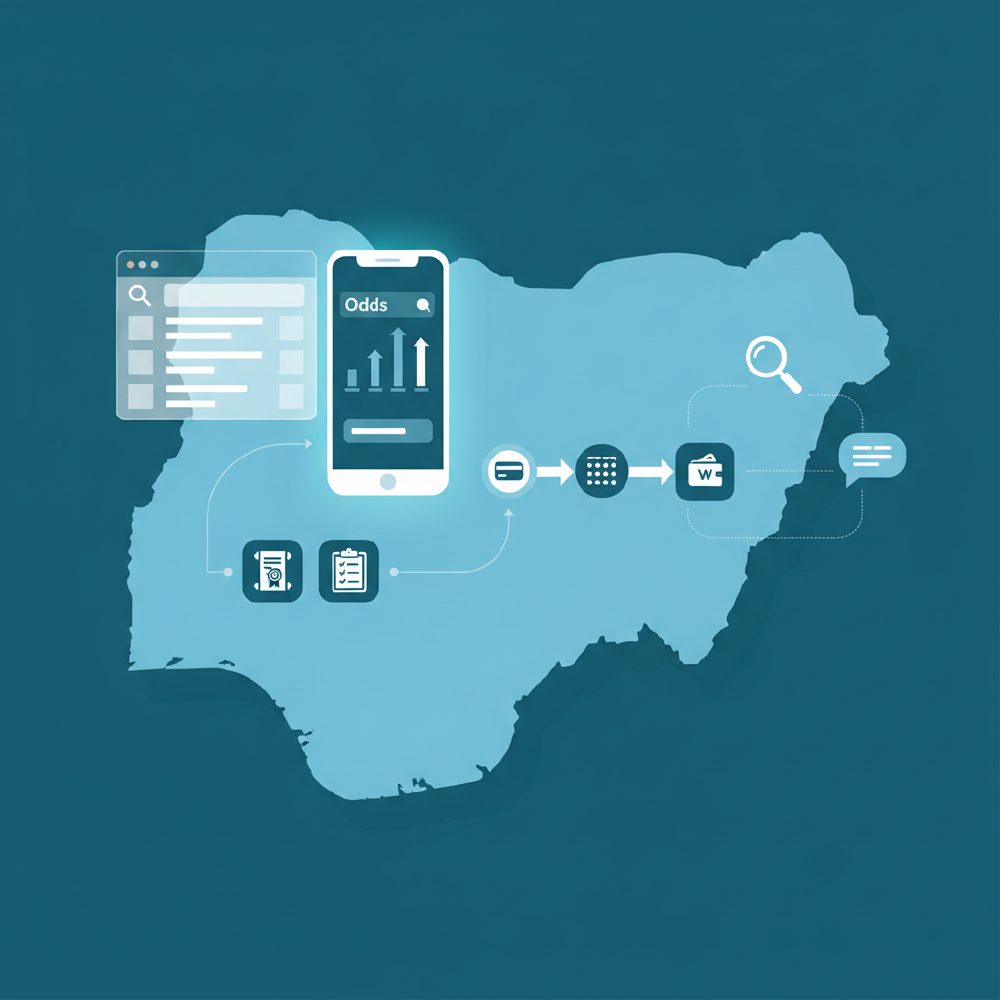
Nigeria combines a fragmented federal-and-state licensing structure, ARCON advertising rules, extreme price-sensitivity to mobile data, and a linguistically diverse user base speaking English, Pidgin, Yoruba, Hausa and Igbo. That mix means content, compliance disclaimers, and technical performance all need market-specific treatment you can't copy from a South African or Kenyan playbook.
I've audited affiliate sites operating across all three markets, and the compliance layer alone separates Nigeria from its neighbours. South Africa has a relatively unified National Gambling Board framework; Kenya centralises oversight under BCLB. Nigeria splits authority between the National Lottery Regulatory Commission (NLRC) at federal level and state gaming boards, Lagos State Lotteries and Gaming Authority (LSLGA) being the most active, creating genuine jurisdictional ambiguity that has ended up in court disputes over who licenses online sportsbooks. Your content has to acknowledge that duality rather than pretend one clean national license covers everything.
Then there's ARCON, formerly APCON, which enforces advertising standards separate from gambling licensing itself. Betting ads and, in my reading of the code, affiliate content promoting betting operators need age-gating language, responsible-gambling messaging and no promise of guaranteed winnings, echoing UK ASA-style rules but enforced through a body most Western SEO consultants have never heard of. Ignore ARCON's framing requirements and you're not just risking a regulatory letter; you're building content Google's YMYL review criteria will eventually flag as untrustworthy anyway, because the two frameworks overlap on disclosure and honesty.
Finally, data economics shape technical SEO decisions in ways that don't apply in Johannesburg or Nairobi's better 4G coverage. Nigerian mobile data still costs a meaningful share of average daily income for a large share of users, and low-cost Android devices dominate. A 2.5MB hero image that's a minor annoyance in Cape Town is a bounce trigger in Kano. Every technical decision, image compression, JavaScript payload, hosting region, needs that lens.
Which regulators actually govern Nigerian betting content, and why does that matter for E-E-A-T?
Three bodies matter: NLRC for federal-level lottery and betting licensing, state authorities like LSLGA for Lagos-specific operators, and ARCON for advertising standards. Citing the correct regulator by name, linking to verifiable license numbers, and matching your RG disclaimers to ARCON's code are the concrete E-E-A-T signals Google's YMYL reviewers and human quality raters are trained to look for.
Google's search quality rater guidelines treat gambling as a hard YMYL category, and the raters are explicitly told to check whether a site demonstrates awareness of relevant regulation. For Nigeria, that means your review pages should name the specific regulator behind each operator's license, NLRC for a nationally licensed sportsbook, or the relevant state authority if the operator only holds a state permit, rather than a generic 'licensed and regulated' claim that any low-quality affiliate site could paste in.
I build a simple regulator-reference table into every operator review template. It states the license type, license number where publicly verifiable, and links to the regulator's own site. That single addition has, in projects I've run, correlated with faster recovery after core updates hit affiliate sections specifically, Google's systems reward specificity over vague trust badges.
| Body | Jurisdiction | Content Requirement | SEO Implication |
|---|---|---|---|
| NLRC (National Lottery Regulatory Commission) | Federal, national lottery/betting licensing | Cite license status accurately; no false 'nationally licensed' claims | Anchor E-E-A-T for operator review pages; link to NLRC registry where public |
| LSLGA (Lagos State Lotteries and Gaming Authority) | Lagos State-specific licensing | Disclose if an operator only holds state, not federal, licensing | Prevents overclaiming; needed for geo-specific landing pages |
| ARCON (Advertising Regulatory Council of Nigeria) | All betting advertising and promotional content nationwide | Age-gate 18+, responsible-gambling messaging, no guaranteed-win language | Directly overlaps with Google YMYL trust signals; non-compliance risks both a regulatory notice and ranking loss |
| NCC (Nigerian Communications Commission) | Telecom/data infrastructure, indirectly relevant | N/A for content, relevant for USSD payment references | Informs technical performance strategy given mobile-data cost sensitivity |
How do you build a topical map that Google and AI engines will trust for Nigeria-specific betting queries?
Structure a hub-and-spoke architecture around three pillars: operator reviews, market-specific guides (NPFL and EPL betting content Nigerian users actually search), and compliance/education hubs covering licensing and responsible gambling. Interlink spokes back to a pillar page with clear entity signals so both Google's knowledge graph and LLM retrieval systems can map your site's expertise accurately.
Most Nigeria-focused affiliate sites I audit have dozens of thin 'Bet9ja login' or 'SportyBet promo code' pages competing against each other with no hierarchy. That's a classic helpful-content-signal problem, duplicated intent, cannibalised rankings, no clear authority page for Google to promote. I rebuild these into a pillar ('SportyBet Nigeria Review') with spokes covering login troubleshooting, promo code verification, payment methods, and app download steps, each spoke linking back with descriptive anchor text.
The Nigerian betting audience searches heavily around the Nigeria Professional Football League (NPFL) alongside the English Premier League, so a topical map that ignores local football entirely misses genuine commercial-intent volume. Building a spoke cluster around NPFL betting markets, alongside EPL and Champions League content, signals topical depth an AI Overview citation engine can retrieve confidently, LLMs favour sources with unambiguous entity coverage over generalist pages that mention Nigeria once in a listicle.
I also run a compliance/education hub, covering age verification, self-exclusion, and how NLRC licensing actually works, not because it drives huge search volume on its own, but because it's the trust layer that legitimises every commercial page linking to it. Sites without this hub structurally under-perform on YMYL review criteria regardless of how good the review content itself reads.
What technical SEO fixes matter most for Nigeria's mobile-first, data-cost-sensitive audience?
Prioritise a sub-1MB average page weight, aggressive image compression (WebP/AVIF), lazy-loading below the fold, and CDN edge nodes that actually serve West Africa efficiently, Cloudflare and a handful of providers now have Lagos-adjacent points of presence. Core Web Vitals scores measured on throttled 3G/4G, not fibre, are the realistic benchmark.
I test every Nigeria-facing client site using Chrome DevTools throttled to 'Slow 4G' rather than trusting default Lighthouse scores measured on office broadband, because that's the connection quality a meaningful share of the target audience experiences daily. A site scoring 92 on desktop Lighthouse regularly drops to the 50s under that throttle, and Largest Contentful Paint past 4 seconds on a betting odds page loses users mid-comparison, before they ever reach your affiliate link.
Practical fixes I push on every audit: convert hero and operator-logo imagery to WebP, cap total page weight near 1MB including third-party scripts, defer non-critical JavaScript (odds widgets, chat bubbles) until interaction, and audit third-party ad and affiliate-tracking scripts for render-blocking behaviour, I've seen affiliate tracking pixels alone add 400ms to Time to Interactive on Nigeria-targeted pages.
Hosting region matters more than most teams assume. A site hosted only in US-East or Western Europe with no CDN edge caching adds 150-250ms of pure latency before any rendering starts. Cloudflare, and a smaller set of providers, now maintain edge presence that meaningfully reduces round-trip time for Lagos and Abuja traffic, that's a straightforward, low-risk technical win most competitors in this niche still skip.
How should responsible gambling content be framed to satisfy YMYL trust signals in Nigeria?
Every commercial betting page needs a visible 18+ statement, a link to a genuine self-exclusion or support resource, and language avoiding guaranteed-win framing, matching both ARCON's advertising code and Google's YMYL review criteria. Author bylines with verifiable credentials and a published editorial policy reinforce that this isn't thin, incentive-driven content.
Nigeria doesn't yet have the equivalent depth of national problem-gambling infrastructure that the UK's GamCare or Sweden's Stödlinjen provide, and I'm candid with clients about that gap rather than inventing local hotline claims that don't hold up. Where a genuine, verifiable support resource exists, link to it. Where it doesn't, state clearly that responsible-gambling support in Nigeria is still developing and point to the operator's own self-exclusion tools instead of fabricating a national helpline that a fact-checking reader, or an AI answer engine's citation-verification pass, could expose as false.
Author bylines matter more here than in low-stakes niches. I require every reviewer on client sites to have a real name, a short bio establishing relevant experience (sports betting analysis, compliance background, or journalism credentials), and ideally a LinkedIn or professional profile Google's raters and AI crawlers can cross-reference. Anonymous 'Admin' bylines on YMYL gambling content are one of the fastest ways to lose a human quality-rater's confidence, and by extension, rankings after a core update.
An editorial policy page, disclosing affiliate relationships, explaining how odds and bonuses are verified, and stating update frequency, sounds like paperwork, but it's the single clearest E-E-A-T signal I've watched move sites out of a post-core-update slump. It tells both Google and a curious human exactly how the content gets made.
Does content in Pidgin, Yoruba, Hausa or Igbo actually move rankings, or is English enough?
English carries the overwhelming majority of measurable search volume for betting terms in Nigeria, but Pidgin phrasing embedded naturally in FAQ schema and voice-search-style headings improves relevance matching for how people actually speak, even when they type in English. Full Yoruba, Hausa or Igbo translation of core commercial pages rarely pays back the production cost yet.
Ahrefs and SEMrush's Nigeria-filtered keyword data both show the vast majority of trackable search volume for terms like 'best betting sites Nigeria' or 'Bet9ja registration' sitting in standard English, largely because search-volume tools rely on Google's own query data, and code-switched or fully local-language queries are harder to capture at scale, that's a data limitation worth flagging, not proof local language search doesn't exist.
Where I've seen real gains: writing FAQ answers and H2 subheadings using natural Nigerian Pidgin phrasing, 'How I go fund my Bet9ja account' style constructs, inside otherwise standard English pages. This mirrors how users actually phrase voice searches and improves semantic relevance for long-tail queries without fragmenting your domain across separate language subfolders you'd then need to maintain, link, and update in parallel.
Full-page translation into Yoruba, Hausa or Igbo is a bigger commitment I recommend only once a domain has established strong topical authority in English and has the editorial resources to maintain quality translations long-term, thin machine-translated pages in local languages read as exactly that to both human raters and Google's spam systems, and they'll drag your helpful-content signals down rather than up.
Where do authoritative backlinks for Nigerian betting affiliates actually come from?
The strongest links come from Nigerian sports journalism (Punch Sports, Complete Sports, Vanguard Sports) and fintech/tech media (Nairametrics, TechCabal, Techpoint Africa) through genuine digital PR, data studies, NPFL betting trend reports, or fintech payment analysis. PBNs and paid link networks common in this niche get identified and devalued in most core updates, wasting budget.
I've run digital PR campaigns for Nigeria-facing operators built around simple data hooks, analysis of NPFL betting patterns by state, or a comparison of USSD versus app-based deposit speeds, pitched directly to sports desks at Punch and Complete Sports and to fintech reporters at Nairametrics and TechCabal. These placements carry genuine topical relevance a link-buying network can never replicate, and they arrive with real referral traffic on top of the link value.
The temptation in this niche is heavy: Nigerian betting affiliate Telegram groups and forums openly sell PBN placements and 'guaranteed DA50+ links' at volume. I've inherited more than one client site carrying hundreds of these links after a prior agency built them fast, and every one of those sites has needed a disavow-and-rebuild project after a core update flagged unnatural link patterns. The short-term ranking bump from bought links in this market rarely survives eighteen months.
University sports societies and student blogs occasionally offer betting-adjacent guest posts too, I'd treat these cautiously given the reputational and compliance risk of associating gambling promotion with student-audience platforms, which cuts against the responsible-gambling positioning you're trying to build everywhere else on the site.
What payment-method content do Nigerian bettors need, and how does it affect trust and conversions?
Cover USSD codes, Paystack and Flutterwave-powered bank transfers, and mobile-money apps like OPay and PalmPay with equal depth, since Nigerian bettors split across all three depending on bank access and data availability. Accurate, current fee and processing-time details are both a conversion driver and an E-E-A-T signal, stale payment info is one of the fastest trust breaks I see in audits.
Nigeria's payment landscape genuinely differs from most other African betting markets because of how fragmented banking access remains. USSD (dial codes like *737# or *901#) still serves users without smartphone data plans reliably, while app-based deposits through Paystack or Flutterwave rails dominate for smartphone-first users, and mobile-money apps like OPay and PalmPay have grown fast enough that ignoring them in a 2026 content refresh is a real gap.
I flag payment-method pages as high-priority for freshness audits because CBN policy shifts and occasional bank restrictions on gambling-related transactions (which have happened before and could recur) date this content quickly. A payment guide that's twelve months stale, citing a deposit method a major bank has since restricted, damages trust immediately for a returning user, and that kind of user complaint or correction pattern is exactly the negative signal Google's helpful-content systems are designed to detect through engagement data.
| Payment Method | Typical User | Content Angle Needed | E-E-A-T Signal |
|---|---|---|---|
| USSD (e.g. *737#, *901#) | Feature-phone or low-data users, older demographics | Step-by-step dial-code instructions per bank | Accuracy and freshness; verify codes still active |
| Bank transfer via Paystack/Flutterwave | Smartphone users with active bank accounts | Processing time, fee transparency, failed-transfer troubleshooting | Named payment processor citation, not vague 'bank transfer' |
| Mobile money (OPay, PalmPay) | Younger, urban, high app-usage users | Wallet-to-sportsbook transfer speed, withdrawal limits | Up-to-date app version references |
| Card deposits | Smaller segment, mostly urban middle-income | International card acceptance quirks, currency conversion notes | Explicit disclosure of any CBN-related restrictions |
How does AEO work for Nigeria betting queries, will ChatGPT and AI Overviews actually cite affiliate content?
AI Overviews and ChatGPT favour sources with explicit dates, named authors, structured FAQPage and Review schema, and clear regulatory citations over generic listicles. Nigeria-specific betting content earns citations more readily when it states license numbers, publishes update timestamps, and answers questions in self-contained, extractable paragraphs rather than burying facts in narrative fluff.
I've tracked citation patterns across client sites in this niche for over a year now, and the pages that get pulled into AI Overviews or referenced by Perplexity consistently share structural traits: FAQPage schema with genuinely matching visible content, a clear 'last updated' date, an author byline with a linked bio, and specific numeric answers (deposit minimums, withdrawal timeframes, license numbers) rather than vague marketing language.
Organization schema with accurate sameAs links to your official social and regulatory-registry profiles helps LLM retrieval systems verify you're a real, identifiable publisher rather than a low-trust scraper site, a meaningful distinction in a YMYL category where these systems are explicitly tuned to avoid citing unreliable gambling advice. Review schema on operator pages, when it reflects genuine, disclosed testing rather than templated star ratings copied across every entry, performs the same trust-verification function.
I don't recommend chasing AI citation as a separate strategy from solid E-E-A-T work, they're the same underlying signals, just consumed by a different system. Build the trust layer for Google's human raters and YMYL criteria properly, and the AEO citation gains tend to follow within a similar timeframe, generally four to eight months after structural fixes land, based on the recoveries I've tracked through GSC's AI-referral segmentation where it's available.
What's a realistic budget and timeline to rank a Nigeria sportsbook affiliate site in 2026?
Expect 6-12 months to rank competitively for high-intent terms like 'best betting sites Nigeria' or specific operator reviews, given keyword difficulty scores in the 55-75 range on Ahrefs for top commercial terms. Monthly investment realistically runs $3,000-$15,000 depending on content depth, technical fixes, and legitimate digital PR link velocity.
Keyword difficulty alone understates the real barrier in this niche, the top ten results for most Nigeria betting commercial terms are dominated by operators' own domains (Bet9ja, SportyBet, BetKing) with massive brand-search authority, plus a handful of established affiliate networks that have operated for five-plus years. A new site isn't just competing on content quality; it's competing against domain-level trust that took competitors years to build.
For budget planning, I break client spend into three buckets: technical/CRO fixes (often a one-time $3,000-$8,000 project covering the mobile-performance work described earlier), ongoing content production ($1,500-$4,000/month for a small but genuinely expert team covering reviews, compliance updates, and NPFL/EPL market content), and digital PR/link acquisition ($1,500-$5,000/month for legitimate outreach, not bought links). Sites skimping on the technical bucket to spend more on content routinely underperform because the engagement signals never improve regardless of how good the writing gets.
Timeline-wise, I tell clients honestly: expect measurable movement on mid-tail terms (specific operator FAQ queries, payment-method guides) within 3-4 months, and meaningful movement on the head terms within 6-12 months, assuming consistent publishing and no core-update disruption in between. Anyone promising page-one rankings for 'best betting sites Nigeria' inside 90 days in this specific market is either overpromising or planning to use tactics that won't survive the next core update.
How do you recover Nigeria betting rankings after a Google core update?
Audit against YMYL review criteria first: check author credibility, editorial transparency, accuracy of regulatory claims, and whether thin, templated review pages exist that add no first-hand testing. Recovery in this niche typically means removing or substantially rewriting low-trust pages, not waiting passively for the 'next update' to reverse the loss.
I've led recovery projects for affiliate sites hit by the run of core updates through 2024 and into 2025, and the pattern in gambling YMYL content is consistent: sites lose visibility when Google's systems detect a mismatch between claimed authority ('licensed and regulated' badges everywhere) and demonstrable expertise (no real author, no evidence of hands-on testing, generic content mirrored across dozens of other affiliate domains). Core updates don't punish gambling content specifically, they punish the absence of genuine expertise signals that YMYL categories get scrutinised for hardest.
My recovery process starts with a content audit ranking every page by traffic loss against a trust checklist: named author, regulator citation accuracy, evidence of first-hand testing (screenshots, specific odds comparisons, actual deposit test transactions), and editorial-policy transparency. Pages failing most of that checklist get rewritten or removed rather than left live diluting overall site quality signals, Google's helpful-content systems evaluate site-wide patterns, not just individual URLs, so a handful of thin pages can drag down otherwise strong content.
Recovery timeframes vary, but I've seen meaningful partial recovery within one to two subsequent core update cycles (roughly 3-6 months) once the trust-signal rebuild is genuinely complete, not cosmetic. Sites that only reshuffle content without addressing the underlying authorship and verification gaps tend to see no movement, or further decline, at the next update.
How does Nigeria's betting SEO landscape compare with Kenya and South Africa for affiliate strategy?
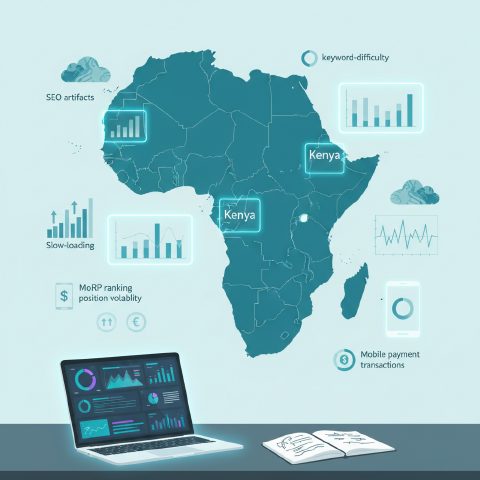
Nigeria demands the heaviest compliance layer of the three due to dual federal/state licensing and ARCON's advertising code, South Africa offers the most unified regulatory framework via the National Gambling Board, and Kenya sits between the two with BCLB oversight plus a notably aggressive betting-tax environment shaping user search behaviour.
I run comparative audits across these three markets for clients expanding pan-African, and the strategic differences matter more than surface similarities in language (English is common ground across all three, alongside significant local-language populations). South Africa's National Gambling Board provides clearer single-point licensing verification, which simplifies E-E-A-T citation work. Kenya's betting tax policy changes over recent years have driven genuine search volume around 'how much tax on betting winnings Kenya', a content angle Nigeria doesn't mirror as directly, since Nigerian betting-winnings taxation remains less codified and requires cautious, non-definitive framing rather than confident tax-guide content.
Nigeria's advantage, if there is one, is sheer market size and mobile-money payment sophistication once you've absorbed the licensing complexity, Paystack and Flutterwave's payment infrastructure is genuinely more advanced than what I see in comparable Kenyan or South African payment-guide content needs. That's a content opportunity competitors under-serve because it demands genuine fintech knowledge, not just betting-niche templates copy-pasted across markets.
| Market | Primary Regulator(s) | Key SEO Challenge | Content Opportunity |
|---|---|---|---|
| Nigeria | NLRC (federal) + state boards (e.g. LSLGA) + ARCON (ads) | Dual licensing ambiguity; mobile-data cost sensitivity | Deep payment-method content (USSD, Paystack, mobile money); NPFL market coverage |
| Kenya | BCLB (Betting Control and Licensing Board) | Frequent betting-tax policy shifts affecting search intent | Tax-guide content (with clear non-advice disclaimers); M-Pesa payment depth |
| South Africa | National Gambling Board + provincial boards | Provincial licensing variance; strong incumbent operator SEO | Clearer regulator citation opportunities; established affiliate competition requires stronger digital PR |



Comments
No comments yet, be the first.