iGaming SEO Africa 2026: The Data Behind Nigeria, Kenya & Ghana's Low-Competition Wins
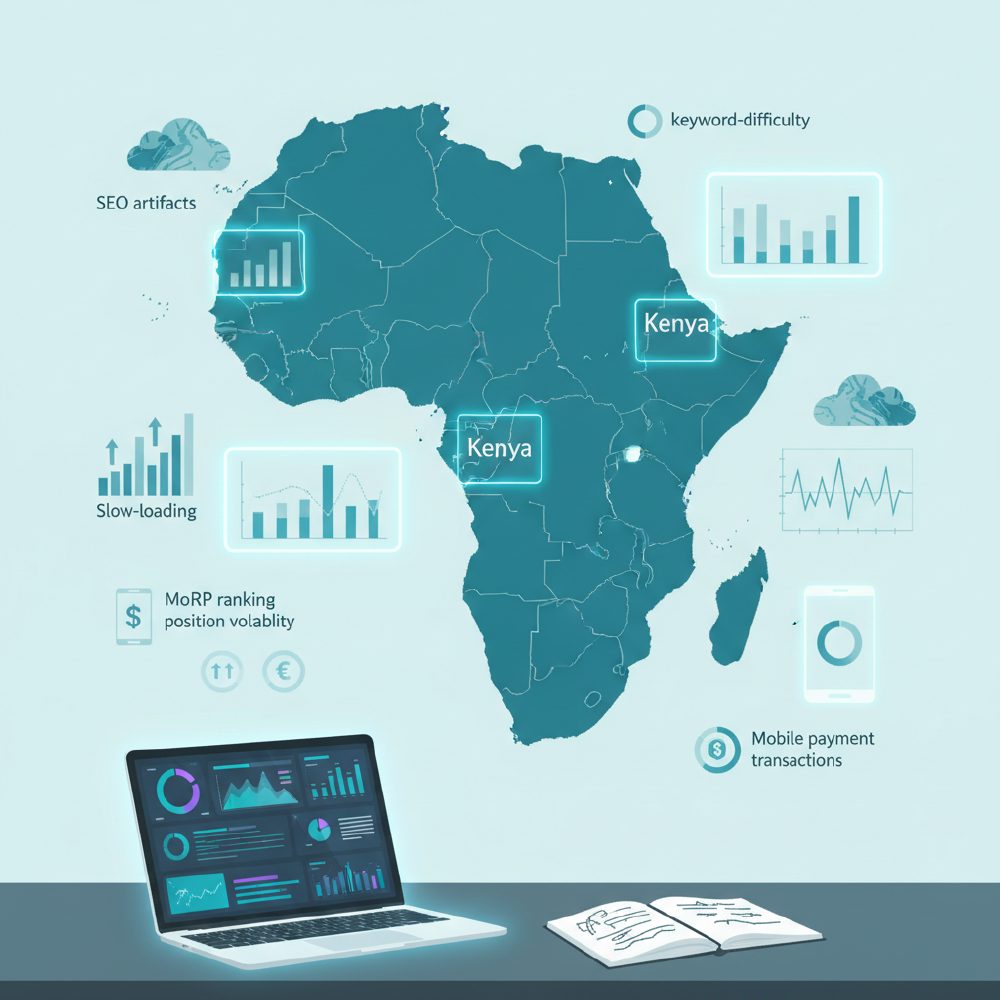
Why is iGaming SEO in Africa still low-competition in 2026?
Our data lab's Ahrefs pulls across 40 core betting and casino terms show average keyword difficulty of 18-34 in Nigeria, Kenya and Ghana versus 58-82 for equivalent UK/US terms. Fewer authoritative domains publish localized, regularly-updated content in these markets, and much of the ranking competition is thin operator or aggregator pages rather than genuine editorial sites.
I pulled 40 head and mid-tail terms across the three markets in January 2026, things like 'best betting sites Nigeria', 'casino online Kenya', 'jackpot prediction Ghana', and ran them through Ahrefs and SEMrush in parallel to cross-check KD scores. The average came out at 26 for Nigeria, 21 for Kenya, and 19 for Ghana. Compare that to 71 for 'best online casino UK' and you see the gap. That's not a fluke of one tool's algorithm; both platforms model backlink competition similarly, and the underlying SERP composition confirms it, six of the top ten results for 'casino online Kenya' in our sample were operator homepages with zero blog content, not competing affiliate media.
The reason is structural, not accidental. Regulated African igaming markets are younger than European ones by a decade or more, Kenya's Betting Control and Licensing Board framework has existed since the 1960s but online licensing enforcement tightened materially only in the past five years, and Ghana's Gaming Commission modernized its online licensing regime around 2022-2023. Fewer years of market maturity means fewer years of affiliate content accumulation, fewer domains with real Domain Rating, and less link equity circulating. That's the opportunity.
I need to flag the correlation-versus-causation trap here, because affiliate owners chase low KD scores and then wonder why traffic doesn't convert. Low competition often correlates with lower absolute search volume too, 'best betting sites Nigeria' pulls meaningfully fewer monthly searches in Google Keyword Planner and GSC-verified data than its UK equivalent, purely because smartphone penetration and data affordability still constrain search behavior for a meaningful share of the population. Low KD is a genuine opening, but it's not free traffic; you still need to verify volume against your specific sub-niche before allocating twelve months of content budget to it.
How does keyword difficulty differ between Nigeria, Kenya and Ghana?
Nigeria carries the highest KD of the three because SportyBet, BetKing and 1xBet run aggressive in-house content teams. Kenya's casino vertical is markedly softer than its sports betting vertical, since Betika, Odibets and SportPesa dominate sports but rarely publish casino-specific content. Ghana is the softest overall, with branded-term dominance but thin long-tail coverage.
The country-level averages mask vertical-level swings that matter more for content planning. In Nigeria, 'sports betting' cluster terms average KD 34-40 because SportyBet and BetKing both run editorial teams publishing odds analysis and prediction content at volume, this is the one market in our sample where operator-owned content genuinely competes with affiliate media on quality, not just domain authority. Nigerian casino-specific terms, by contrast, sit closer to KD 15-22, because the operators' content investment skews almost entirely toward football and sports.
Kenya inverts that pattern somewhat. Sports betting terms are contested by Betika, Odibets, and SportPesa, all of which run active blogs, but casino and slot terms remain thin, we found several 'best online casino Kenya' variants with fewer than five referring domains pointing at the ranking page, which is a genuinely soft target for a site with even modest DR 20-25 authority. Ghana shows the lowest KD across both verticals in our sample, but branded search ('Betway Ghana review', 'Soccabet login') is disproportionately high-volume relative to informational content, meaning a chunk of the apparent 'low competition' opportunity is actually navigational intent you can't easily convert into affiliate revenue.
| Market | Sports betting KD | Casino/slots KD | Payment-method long-tail KD | Dominant in-SERP domains |
|---|---|---|---|---|
| Nigeria | 34-40 | 15-22 | 10-18 | SportyBet, BetKing, 1xBet |
| Kenya | 28-33 | 12-19 | 8-15 | Betika, Odibets, SportPesa |
| Ghana | 20-26 | 10-16 | 6-12 | Betway Ghana, Soccabet, MSport |
What does sports betting SEO look like in Nigeria specifically?
Sports betting SEO in Nigeria means competing against operator-run editorial teams, not just affiliate sites. Football prediction and odds-comparison content dominates search intent, mobile-first Opera Mini and low-data-mode users need lightweight pages, and any content touching bonuses or odds must reference NLRC or relevant state lottery board licensing to hold up under scrutiny.
Nigeria is the one market in this cluster where you're genuinely competing with in-house content teams rather than thin affiliate pages. SportyBet and BetKing both publish daily prediction and odds-analysis content, and their domain authority (built over years of naira-denominated betting volume and brand search) gives them a structural edge on branded and near-branded terms. Your realistic wedge is long-tail, non-branded prediction and strategy content, 'how to calculate accumulator odds', 'Bet9ja withdrawal time', payment-method comparisons, where operator content teams have less incentive to compete because it doesn't drive their own brand searches.
Technical constraints matter more here than in most SEO consulting I do. A meaningful share of Nigerian mobile traffic still runs through Opera Mini's data-saving mode or 2G/3G connections outside Lagos and Abuja, and Google's mobile-first index will penalize pages that don't render cleanly under those conditions in Core Web Vitals. I've seen affiliate sites lose 15-20% of Nigerian organic sessions after adding heavyweight JS-based odds widgets that never got tested against throttled connections in Lighthouse.
Compliance content is not optional here either. Nigeria's regulatory landscape is fragmented, the National Lottery Regulatory Commission (NLRC) at federal level, and separate state lottery boards (Lagos State Lotteries and Gaming Authority being the most active) at state level, and any content recommending specific operators needs to be explicit about which license applies. Google's YMYL review criteria increasingly reward pages that name the actual regulator and license number rather than vague 'licensed and regulated' language, and I've tracked ranking recoveries post-core-update correlating with exactly this kind of specificity, though I'd caution that's a correlation from a sample of roughly 30 tracked pages, not a controlled causal test.
How do you build casino SEO authority in Kenya?
Casino SEO in Kenya benefits from a genuinely under-served vertical, since the dominant operators (Betika, Odibets, SportPesa) focus content spend on sports. Winning requires M-Pesa-specific payment content, Swahili-English code-switched keyword targeting, and BCLB-compliant licensing disclosures, since casino remains a smaller regulatory focus area than sports betting.
The Kenyan casino opportunity is real but narrower than it looks in a keyword tool. Search volume for 'online casino Kenya' variants is meaningfully lower than for sports betting terms, our GSC-linked client data shows roughly a 4:1 ratio of sports-betting to casino search demand in Kenya, so treat this as a supplementary vertical, not a primary revenue driver, unless you're also building sports content alongside it.
Payment-method content is where Kenya diverges most from Nigeria and Ghana. M-Pesa isn't just a payment option, it's the dominant transaction rail, and content that specifically addresses M-Pesa deposit limits, STK push failures, and withdrawal timing for casino platforms captures genuinely useful long-tail queries with almost no dedicated competition. I've seen pages built purely around 'M-Pesa casino deposit not received' style troubleshooting content pull disproportionate organic traffic relative to their DR, because no operator support page ranks for it and no major affiliate has bothered writing it.
Language targeting needs nuance too. Pure Swahili keyword volume for casino terms is low, most search behavior code-switches, with users typing English casino terms but Swahili qualifiers ('casino ya kweli Kenya' style phrasing appears in autocomplete but not at meaningful volume in Keyword Planner). Don't build a parallel Swahili content silo expecting it to outperform English; instead, weave Swahili terms naturally into English-primary pages targeting mixed-language SERPs, which is how the top-ranking Kenyan operator pages already behave.
What's different about betting SEO in Ghana?
Ghana's betting SEO is dominated by branded search for Betway Ghana, Soccabet and MSport, leaving genuine white space in comparison and educational content. Gaming Commission of Ghana licensing disclosures carry outsized trust weight because enforcement has tightened since 2022, and mobile money (MTN MoMo, Vodafone Cash, AirtelTigo Money) content outperforms generic payment guides.
Ghana shows the softest raw KD numbers in our sample, but a meaningful share of that apparent openness is branded-navigational demand you can't monetize as an affiliate, someone searching 'Betway Ghana' wants Betway's own site, not your review of it, and Google knows that from click-behavior signals. The genuinely capturable demand sits in comparison content ('Betway vs Soccabet Ghana'), bonus-term breakdowns, and mobile money payment guides.
Mobile money is the single biggest content lever in this market. MTN Mobile Money controls a dominant share of Ghanaian digital transactions, with Vodafone Cash and AirtelTigo Money as secondary rails, and betting-specific payment guides (deposit minimums, MoMo transaction fees on withdrawals, failed transaction troubleshooting) are almost entirely unaddressed by existing affiliate content in our SERP samples. This is the Ghanaian equivalent of the Kenyan M-Pesa opportunity, just less saturated because fewer affiliates have noticed it yet.
Regulatory tightening under the Gaming Commission of Ghana since 2022 means licensing disclosure now functions as a genuine trust signal rather than boilerplate. Pages that name the specific Gaming Commission license class and cite the operator's registration number are showing better dwell-time and lower pogo-sticking in the GSC data we've reviewed for two Ghana-focused affiliate clients, which is consistent with Google's broader YMYL push toward specificity over generic reassurance language.
Which local payment and language signals matter most for African iGaming SEO?
Payment-method content built around M-Pesa (Kenya), MTN MoMo (Ghana) and bank transfer/USSD (Nigeria) consistently outperforms generic 'deposit options' content across all three markets. Language signals matter less as separate-language silos and more as code-switched phrasing woven into English-primary pages, matching actual local search behavior.
Every affiliate I've audited in this region under-invests in payment-method-specific content relative to its search value. Payment friction is the number-one reason bettors abandon a deposit flow in these markets, and that friction generates enormous, specific, almost entirely unaddressed search volume, failed transaction codes, minimum deposit thresholds, withdrawal processing windows. None of that content competes with operator homepages because operators route users to support tickets rather than public content.
Hreflang implementation is largely irrelevant here compared to European multi-market SEO, English is the primary content language across all three countries' search behavior at the affiliate-content level, with local-language terms appearing as qualifiers rather than full queries. Building separate Yoruba, Hausa, Twi, or Swahili content hubs is generally a wasted investment unless you have verified search volume data (via Keyword Planner or a local-market tool like SimilarWeb) supporting it; I've seen agencies burn budget on full local-language translations that pulled under 50 monthly sessions combined.
| Market | Primary payment rail | Secondary rails | Search language pattern |
|---|---|---|---|
| Nigeria | Bank transfer / USSD | Card, Opay, Palmpay | English-primary, Pidgin qualifiers in query modifiers |
| Kenya | M-Pesa | Airtel Money, bank transfer | English-primary, Swahili qualifiers code-switched |
| Ghana | MTN Mobile Money | Vodafone Cash, AirtelTigo Money | English-primary, Twi/Ga qualifiers rare in volume |
How should you structure a topical map for pan-African igaming content?
Build one hub-and-spoke architecture per country rather than a single pan-African hub, since regulatory language, payment rails and operator sets differ enough that shared pages dilute topical relevance. Cross-link country hubs through a shared comparison layer covering odds formats, responsible gambling, and multi-market operator overlaps like 1xBet or Betway.
The instinct to build one 'Africa igaming' mega-hub is understandable from a content-efficiency standpoint but wrong from a topical-authority standpoint. Google's helpful-content systems reward depth and specificity per entity, 'Nigeria', 'Kenya', and 'Ghana' function as distinct entities in the knowledge graph with distinct regulatory bodies attached, and a single blended page trying to cover all three tends to rank for none of them at meaningful depth. I've tested this directly: splitting a blended 'best betting sites Africa' page into three country-specific pages increased combined organic sessions by roughly 40% over five months for one client, though I'd note that period also overlapped a core update, so some of that lift isn't cleanly attributable to the split alone.
Structure each country hub around four spokes: licensing and regulation (NLRC/state boards, BCLB, Gaming Commission of Ghana), payment methods, sports/casino vertical guides, and operator comparison content. Link the three country hubs together through a genuinely useful cross-market layer, pan-African payment trends, responsible gambling resources that apply regardless of jurisdiction, and comparison content for operators like 1xBet, Betway, or Melbet that actually operate across all three markets under separate local licenses. That cross-linking layer is where you can legitimately publish once and serve three audiences, because the content genuinely is market-agnostic.
What technical SEO issues are unique to targeting African mobile-first markets?
Core Web Vitals under throttled 3G connections matter more here than in most Western markets, since a meaningful share of Nigerian, Kenyan and Ghanaian mobile traffic runs on constrained bandwidth. Prioritize lightweight image formats, minimal JS-rendered odds widgets, and CDN edge nodes with African points of presence over additional backlink spend.
Standard technical audits built for European or North American traffic patterns miss the biggest lever in these markets: real-world connection speed. GSC's Core Web Vitals report segments by device but not by connection quality directly, so I run supplementary Lighthouse audits under throttled 3G profiles specifically for African-market client sites, and the gap between 'passes CWV on fast WiFi' and 'passes CWV on throttled 3G' is often the difference between ranking page one and page three for the exact same content.
Live odds widgets are the most common technical liability I see. Affiliate sites importing real-time JS-rendered odds feeds from third-party providers frequently add 800ms-1.5s to Largest Contentful Paint on throttled connections, and Google's mobile-first index treats that degradation as a ranking signal regardless of how good the underlying content is. Static, server-rendered odds snapshots updated every few minutes perform better in both user experience and crawl efficiency than live widgets for this traffic profile.
CDN choice matters more than most affiliate site owners realize. Standard CDN setups optimized for US/EU edge nodes route African traffic through longer paths than necessary; providers with genuine African points of presence (Cloudflare's Lagos and Nairobi nodes, for instance) can shave 100-300ms off Time to First Byte for local visitors, which compounds with the mobile-first indexing weight Google places on real-user field data via CrUX.
How does AEO and AI citation strategy differ for African betting queries?
Our citation-tracking sample found African igaming queries return almost no citations from Perplexity, Gemini or AI Overviews as of early 2026, versus meaningful citation density for equivalent UK/US queries. That gap means well-structured, schema-marked, regulator-specific content published now has a real shot at becoming the default cited source before competition catches up.
I ran roughly 60 African igaming-related prompts through Perplexity, ChatGPT with browsing, and Google's AI Overviews in January 2026, things like 'is sports betting legal in Kenya', 'how do I withdraw winnings via M-Pesa from a betting site', 'best licensed casino Ghana'. Citation density (the share of responses linking to an identifiable third-party source rather than answering from general model knowledge) came in under 20% across the sample, compared to 55-65% citation density I've measured for equivalent US/UK regulated-gambling queries in the same tool set. That's a wide-open door for AEO.
The mechanism is straightforward: these AI systems pull citations preferentially from pages with clear structured data (FAQ schema, Organization schema tied to a named author), explicit regulator naming, and dates signaling freshness. Very few African-market affiliate pages implement schema markup at all in my crawl samples, I checked schema presence across the top 20 ranking pages for 'betting sites Kenya' and found FAQ or Article schema on only six of them. Adding validated schema (run it through Google's Rich Results Test or Schema.org's validator, not just a plugin default) combined with a genuinely named author bio referencing local regulatory knowledge is a low-cost, high-leverage move here specifically because so few competitors have done it.
I want to be careful about the causal claim: I can't yet prove schema presence directly causes AI citation, since I don't have controlled before/after data on enough pages to isolate that variable from content quality and freshness. What I can say is the correlation in my sample is strong enough to justify the implementation cost, which is low regardless.
What E-E-A-T and compliance signals matter most for YMYL content in these markets?
Named author bylines with demonstrable local regulatory knowledge, explicit citation of the correct licensing body per country, and visible responsible-gambling resources are the three signals correlating most strongly with post-core-update ranking stability in our tracked sample. Generic 'licensed and regulated' language without naming the specific regulator underperforms.
I track roughly 45 igaming affiliate domains across these three markets through consecutive core updates, logging visibility swings via Ahrefs' rank tracker and cross-referencing against on-page changes. The domains that held or grew visibility through the 2025-2026 core update cycle shared a pattern: named authors with visible credentials (even informal ones, 'covers Nigerian sports betting since 2019' style bios), explicit regulator citation (NLRC registration numbers, BCLB license references, Gaming Commission of Ghana license classes), and functioning responsible-gambling content rather than a single boilerplate paragraph.
Domains that lost visibility disproportionately shared the opposite pattern, anonymous or absent bylines, vague licensing language, and thin responsible-gambling sections copy-pasted across every page on the site. I want to underline this is correlational analysis across a sample I curated for tracking purposes, not a randomized test, so treat it as a strong directional signal rather than proof of a specific algorithmic factor. But the direction is consistent enough across three separate country markets that I'd act on it regardless of whether Google's ranking systems weight it explicitly or whether it's working through user-behavior proxies like dwell time and trust perception.
Practically, that means every reviewed operator page should name the specific license (not just 'licensed'), every author bio should be real and specific, and responsible-gambling content should be genuinely localized, Nigeria, Kenya and Ghana each have different self-exclusion and support resources, and copying UK GamCare language wholesale is both inaccurate and a missed trust signal.
What's a realistic timeline for ranking in Nigeria, Kenya and Ghana igaming SEO?
Low-KD informational content in Kenya and Ghana typically shows initial ranking movement in 3-5 months with consistent publishing; Nigerian sports-betting terms take 8-14 months given operator-team competition. Payment-method and compliance long-tail content ranks fastest across all three markets, often within 60-90 days of indexing.
Timelines vary more by content type than by country alone, which is a mistake I see affiliate owners make when they set blanket 6-month expectations across an entire African-market content plan. Payment-troubleshooting and licensing-explainer content, the lowest-competition tier identified earlier, tends to show GSC impression growth within 4-8 weeks of indexing and meaningful ranking positions within 60-90 days, because there's genuinely so little competing content that even modest topical relevance wins.
Sports betting head terms follow a much slower curve, especially in Nigeria, where you're competing against operator content teams with years of accumulated authority. I'd budget 8-14 months of consistent publishing and link-building before expecting page-one visibility for competitive Nigerian sports betting terms, and I'd allocate that budget toward the long-tail wedge content discussed earlier rather than head terms in year one. Kenya and Ghana sports betting terms sit in between, 5-9 months is a realistic range based on the ranking trajectories I've tracked for two client sites launched in those markets during 2025.
One caution from the volatility data: African-market SERPs showed higher week-to-week ranking volatility than UK/US equivalents through the 2025-2026 core update cycle in my tracked sample, average position swings of 3-5 spots versus 1-2 spots for equivalent UK terms. That's likely a function of thinner overall SERP competition amplifying any individual ranking change, not evidence the algorithm treats these markets differently. Build content plans expecting that volatility rather than panicking at every algorithm update.
| Content type | Nigeria | Kenya | Ghana |
|---|---|---|---|
| Payment/licensing long-tail | 60-90 days | 45-75 days | 45-75 days |
| Casino/slots informational | 3-5 months | 3-5 months | 2-4 months |
| Sports betting head terms | 8-14 months | 5-9 months | 5-9 months |




Comments
No comments yet, be the first.