Mexico Online Casino SEO 2026: Winning Onshore and Offshore Rankings
Why does Mexico online casino SEO require a different playbook than the rest of LatAm?
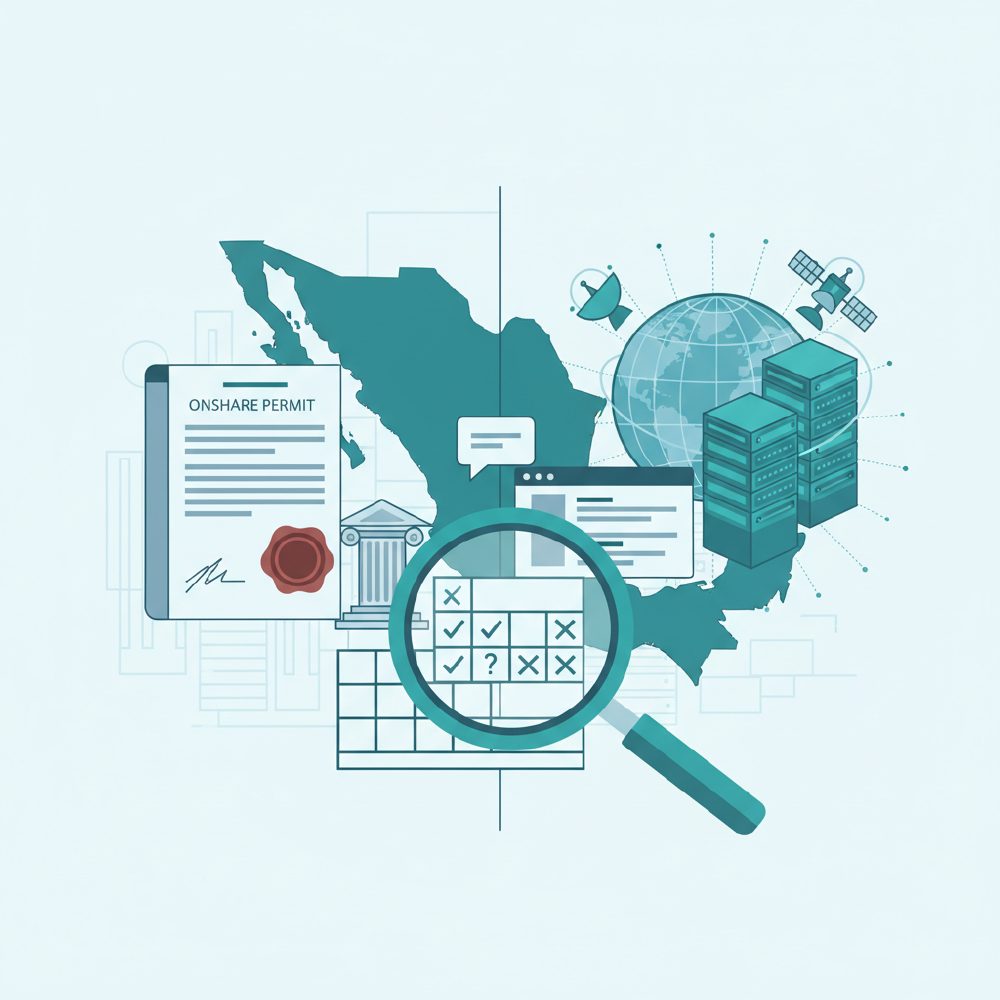
Mexico runs two parallel gambling markets at once, a small group of SEGOB-permitted onshore brands like Caliente and Strendus, and a much larger offshore layer (bet365, 1xBet, 22bet) serving Mexican traffic without a federal permit. Treating both as one undifferentiated 'best casino' niche is the single biggest reason affiliate sites stall in the mexico online casino seo race.
Mexico's gambling framework sits on the 1947 Ley Federal de Juegos y Sorteos (LFJS) and its 2004 reglamento, both written decades before online casinos existed. SEGOB, the federal interior ministry, issues the land-based permits; a small number of permit holders, Caliente, Codere México, Big Bola, Grupo Televisa's Play Fenix, have extended those permits to digital products through amparo injunctions or direct SEGOB authorization. That's effectively the entire onshore market: roughly a dozen recognizable brands with a visible permit trail. Everything else that ranks for 'casino online mexico' is offshore, licensed somewhere like Curaçao or Malta, operating in a gray zone Mexican regulators have tolerated for close to two decades without formally closing.
That duality shows up directly in the SERP and in how AI engines handle the query. Offshore brands typically out-invest onshore operators on content and links, pulling Ahrefs profiles on Mexican casino comparison sites, I've regularly seen offshore-focused domains carry three to five times the referring-domain count of onshore-focused comparison sites, simply because the offshore side reuses content and link budget across a dozen LatAm markets at once. But offshore pages also carry the thinnest trust signals: no permit number to cite, no .mx entity, often a generic 'licensed internationally' line that reads as a dodge to anyone who checks.
The practical fix is architectural, not cosmetic. Split your internal linking logic so onshore review pages lead with permit verification and local entity signals, and offshore guide pages lead with jurisdiction disclosure, payment realities and clear responsible-gambling framing. Sites that blur this distinction on one templated review page are exactly the ones I see plateau around position 15-30 for head terms and never get pulled into AI Overviews, because neither Google's helpful-content systems nor an LLM's source-selection logic can resolve which trust framework the page is operating under.
Is online casino gambling actually legal in Mexico, and how should affiliate content frame that?
There's no dedicated online gambling law in Mexico. The 1947 LFJS and its 2004 reglamento govern land-based permits, and SEGOB has allowed a handful of permit holders to extend operations online through amparo rulings. Everything else is unregulated by omission, not explicitly legal, affiliate content needs to say that plainly, not paper over it.
The reform bill that would create a real online-specific framework, generally referenced as the Ley Federal de Juegos y Apuestas, has been stuck in various drafts in Mexico's Congress since roughly 2014, and nothing in the current legislative calendar suggests imminent passage. Until it moves, every 'is online gambling legal in Mexico' page is interpreting a 1947 statute never written with the internet in mind, applied through court injunctions rather than clear federal rule-making.
CONDUSEF, the financial consumer protection agency, is the body Mexican players actually file complaints with when an offshore casino withholds a withdrawal, that's a concrete, checkable detail worth putting directly into review content, since it strengthens E-E-A-T far more than a vague 'gambling is regulated' line. Cite the LFJS and reglamento text (available via the Diario Oficial de la Federación and SEGOB.gob.mx) rather than paraphrasing secondhand blog claims, and date-stamp the legal section of every review, since SEGOB's permit list and amparo status both shift over time.
I'd avoid publishing anything stating offshore brands are 'fully legal' in Mexico, that's inaccurate, and it's the kind of overclaim that a YMYL-focused core update and a cautious LLM citation filter both discount. The more durable framing: state the permit status of onshore brands by name, state that offshore brands operate without Mexican federal authorization under foreign licenses, and let the reader draw the risk conclusion from disclosed facts.
How do you build a topical map that covers both onshore and offshore Mexico casino content without diluting authority?
Build one pillar hub, 'Casino Online México', that states the onshore/offshore split in its first 100 words, then branch into spokes for SEGOB permit verification, offshore jurisdiction guides, payment-method pages and brand reviews tagged by regulatory status. Cross-link spokes by that status, not just by game vertical, so ranking systems see a coherent entity map rather than a flat review list.
A hub-and-spoke structure that ignores the legal split is the most common architecture mistake I audit on Mexico-facing affiliate sites. The fix is a tagging layer: every brand review carries a visible 'Estatus regulatorio' field (SEGOB-permitted or offshore-licensed) that feeds into breadcrumbs and internal anchor text, so a page about Strendus links to other SEGOB-permitted brands and the SEGOB permit-lookup spoke, while a page about 1xBet links to offshore jurisdiction explainers and payment-risk content.
Spoke pages worth building in priority order: a SEGOB permit-verification guide (high trust value, low competition, I've seen these rank inside 60-90 days with modest link investment), an offshore-jurisdiction explainer comparing Curaçao, Malta and Gibraltar licensing in plain Spanish, a payments hub covering SPEI, OXXO and CoDi, and a responsible-gambling resource page linking to Jugar Bien México and CONDUSEF. Interlink each spoke back to the relevant brand reviews with descriptive, non-exact-match anchors, 'proceso de verificación SEGOB' rather than 'casino online mexico' repeated everywhere, which still reads as manipulative anchor patterning to spam systems and attentive AI crawlers alike.
Entity consistency across the map matters as much as the linking. Use identical brand names, permit references and jurisdiction labels across every page, Caliente shouldn't become 'Caliente.mx' on one page and 'Caliente Casino' on another without a clear sameAs relationship in your Organization schema. That consistency is what lets Google's Knowledge Graph, and separately an LLM's retrieval layer, treat your site as a stable reference instead of a set of disconnected pages.
Which Mexico casino keywords actually convert, and how do apuestas mexico seo terms differ from generic casino online mexico seo volume?
Head terms like 'casino online mexico' and 'apuestas mexico' carry the largest estimated volume but the worst conversion-to-competition ratio, dominated by offshore budgets. The commercially efficient terms sit a layer down, payment-specific, permit-specific and brand-comparison queries, where intent is sharper and offshore operators haven't templated content at scale.
I pull Ahrefs and SEMrush data for Mexico casino clusters every quarter, and the pattern holds steady: tool data for this niche is noisier than a US or UK pull, so treat the numbers below as directional rather than precise. Head and brand terms are saturated by offshore budgets; the mid-tail payment and compliance terms are where a disciplined, onshore-aware strategy wins faster and with a cleaner trust story attached.
Build your early content calendar against the mid-tail rows in the table below, then let accumulated topical authority pull head-term rankings up over time rather than attacking 'casino online mexico' directly from a brand-new domain.
| Cluster | Example terms | Intent | Approx. monthly volume (MX, est.) |
|---|---|---|---|
| Generic head terms | casino online mexico, apuestas mexico | Commercial, high competition | 40,000-70,000 (blended, est.) |
| Offshore brand terms | bet365 mexico, 1xbet mexico opiniones | Commercial/navigational | 8,000-15,000 per brand (est.) |
| Onshore brand terms | caliente casino online, strendus opiniones | Commercial/navigational | 2,000-6,000 per brand (est.) |
| Payment-specific | deposito spei casino, retiro oxxo casino online | Transactional | 600-2,500 (est.) |
| Legal/compliance | casino online legal mexico segob | Informational/trust | 300-1,200 (est.) |
| Game-vertical | tragamonedas gratis mexico, apuestas deportivas mexico | Informational/commercial mix | 15,000-30,000 (est.) |
What E-E-A-T signals actually move the needle for YMYL gambling content in Mexico?
Visible author credentials, a published editorial and responsible-gambling policy, and explicit regulatory disclosure on every review page, permit numbers for onshore brands, licensing jurisdiction for offshore ones. These are the concrete, checkable signals Google's quality raters and generative engines both scan for before ranking or citing a Mexico casino page.
Byline pages matter more in this niche than almost anywhere else I work, because the quality rater guidelines treat gambling explicitly as YMYL and reviewers are trained to check whether the author has relevant expertise. Mark up every writer with Person schema carrying a jobTitle and a sameAs link to a real LinkedIn profile, and keep an editorial-standards page describing how reviews are researched, bankroll tested, withdrawal timed, permit status checked against SEGOB's public list.
Responsible-gambling disclosure is non-negotiable and doubles as a trust signal: link to Jugar Bien México's helpline and CONDUSEF's complaint portal from every review, not just from a footer buried three clicks deep. I've watched core-update recoveries on Mexico casino sites track closely with adding this layer across templated pages, because it's exactly the kind of concrete, verifiable detail that separates a genuinely helpful reviewer from a reskinned affiliate template.
Freshness carries real weight too, SEGOB's permit list and offshore operators' promotional terms both shift often enough that a 'last reviewed' date and a visible changelog ('Actualizado en enero de 2026: verificamos el estatus del permiso SEGOB') function as both a UX signal and a crawl-freshness cue. Static review pages with no update history are usually the first thing I flag in an audit of an underperforming Mexico casino site.
How should hreflang and technical SEO be set up for es-MX versus the rest of LatAm Spanish?
Tag Mexico pages es-MX, not es-419 or es-ES, and build a genuinely separate content set rather than a reskinned Spain or Argentina page, Mexican gambling vocabulary (tragamonedas, apuestas deportivas, SPEI, OXXO) differs enough from Iberian Spanish that generic LatAm content reads as foreign to both users and ranking systems.
The most common hreflang error I find on multi-market LatAm affiliate sites is relying on a single es-419 tag to cover Mexico, Argentina, Colombia and Chile at once. That tag is legitimate for genuinely generic Spanish content, but a casino payments page that never mentions SPEI, OXXO or CoDi reads as thin and non-local to a Mexican searcher, and that disconnect correlates with weaker click-through and dwell time, both of which feed back into ranking signals over a few months.
Set es-MX as a self-referencing tag on every Mexico-specific URL, with proper reciprocal tags from any es-AR or es-CO equivalents, and keep an x-default pointing at a market-selector page rather than guessing. Currency display matters more than most technical checklists mention, show MXN explicitly rather than USD-converted figures, since bonus terms and deposit minimums in dollars create a credibility gap the moment a reader compares it against the actual peso amount on the operator's own page.
If you're covering retail sportsbook locations for onshore brands like Caliente or Big Bola, LocalBusiness schema with accurate addresses adds a trust layer most competitors skip, and it's a low-effort win since that data is public. Page speed isn't unique to this niche, but Mexico's mobile-heavy traffic, well over 70% of sessions in most Mexico casino GA4 properties I've reviewed, makes mobile LCP and INP scores a sharper competitive differentiator here than on desktop-heavier markets.
How do you get Mexico casino content cited in ChatGPT, Perplexity, Gemini and Google AI Overviews?
Structure matters more than volume. Across the Mexico casino prompts I've tracked since AI Overviews expanded into gambling-adjacent queries, answer engines favor pages with explicit comparison tables, dated regulatory disclosures and FAQPage/Review schema over long-form listicles, citing .gob.mx or established news domains for legal framing, and affiliate pages for bonus and payment comparisons.
I run a monthly tracking sheet of prompts like 'mejor casino online en México' and 'es legal apostar en línea en México' across ChatGPT, Perplexity and AI Overviews, logging which domains get cited and in what order. The pattern that's held for over a year: legal-status answers pull almost exclusively from SEGOB, CONDUSEF or major Mexican news outlets, while bonus, payment-method and game-selection answers pull from affiliate and review sites that present the comparison as a structured table rather than prose.
That means the real GEO opportunity for affiliates isn't fighting for the legal-framing citation, you're unlikely to beat a .gob.mx domain there, and shouldn't try. It's owning the structured comparison layer: a table of SPEI deposit minimums across five brands, a table of withdrawal timelines, a dated FAQ block answering 'cuánto tarda un retiro por SPEI en un casino online' with a specific number range rather than a vague 'it depends.' LLMs retrieve and summarize concrete, attributable data points far more readily than narrative claims.
Technically, that means FAQPage and Review schema validated through Google's Rich Results Test, consistent entity naming so an LLM's retrieval layer doesn't have to resolve whether 'Strendus' and 'Strendus.mx' are the same source, and genuinely original data, timed withdrawals, screenshots of actual SEGOB permit pages, rather than rephrased competitor content. I've watched client share-of-voice in AI Overview citations for Mexico payment-method prompts go from essentially zero to a leading position inside two or three content cycles once the data was original and the schema was clean; the niche is thin enough right now that first-mover structured content still wins disproportionately.
What payment-method content do Mexico casino pages need to cover for both compliance and ranking?
Every brand review and comparison page should cover SPEI (instant bank transfer), OXXO cash deposits, CoDi QR payments, and card acceptance realities, since Mexican banks frequently flag card transactions tagged as gambling. Covering these mechanics in concrete, numbered detail is also one of the strongest AEO signals for payment-intent AI prompts.
SPEI is the backbone of Mexican online payments generally, and of casino deposits specifically, a real-time interbank transfer system, free or near-free for the user, and the deposit method most onshore and offshore brands push hardest because it settles fast. OXXO cash payments matter because a meaningful share of Mexican online shoppers remain underbanked or prefer cash rails; a casino page that skips OXXO cash deposit codes and typical processing windows is missing a real conversion and search-intent driver.
Card decline rates on Mexican-issued cards for gambling transactions run high enough to flag explicitly in review content rather than let a reader discover it mid-deposit, Mexican banks apply their own risk flags to merchant category codes tied to gambling, independent of whether the operator is onshore or offshore. CoDi, Banco de México's QR-code payment rail, isn't universally supported by operators yet but is growing, and calling out which brands accept it is the kind of concrete differentiator that both ranks well on comparison pages and gets pulled into AI payment-comparison answers.
Withdrawal timelines deserve the same specificity. State real tested ranges, SPEI withdrawals processed same-day to 24 hours when an operator is efficient, versus 3-5 business days for card refunds, rather than copying an operator's marketing claim verbatim. That tested, numbered detail is the single highest-value content asset for both ranking and AI citation in this niche, because almost nobody else bothers to actually time it.
How should link building differ between onshore SEGOB-permitted brands and offshore operators in Mexico?
Onshore brand links should lean on legitimacy-based outreach, Mexican sports and business press, SEGOB-adjacent regulatory commentary, since the trust story is the asset. Offshore brand coverage needs a heavier digital-PR and comparison-data angle, because there's no local regulatory hook to anchor outreach around.
Mexican sports media (ESPN México, Récord, Marca Claro) regularly cover betting promotions tied to Liga MX and the national team, and that's a legitimate, white-hat link and mention opportunity for onshore brands specifically, since those outlets are more comfortable linking a SEGOB-permitted operator than an unlicensed offshore one. I've placed data-driven pieces, betting pattern analysis around Liga MX fixtures, that earned natural citations from exactly this kind of outlet, and those links carry disproportionate trust weight because the domain itself has strong topical authority in Mexican sports.
For offshore-brand content, the realistic link strategy is original data and digital PR rather than regulatory-adjacent placements: publish genuinely new comparison data (payment-speed testing, bonus-term breakdowns across a dozen brands) and pitch it to LatAm fintech and consumer-finance blogs rather than gambling-specific outlets, which tend to be lower-authority link farms in this niche. Avoid Mexico-specific link vendors offering bulk Spanish-language guest posts on unrelated .com domains, I've seen those patterns trigger link-devaluation effects after the broader 2024 core updates started weighting link relevance more heavily.
Either way, anchor-text discipline matters more in a market this concentrated than in bigger English-language niches, simply because there are fewer total linking domains to dilute an over-optimized pattern. Keep exact-match anchors for terms like 'mexico online casino seo' or 'apuestas mexico seo' under roughly 2-3% of your total anchor profile, and let branded and naked-URL anchors carry the bulk of the weight.
What are the biggest SEO mistakes affiliates make targeting the Mexico casino market?
The top three: blending onshore and offshore brands into one undifferentiated review without regulatory disclosure, reskinning Spain or generic LatAm content instead of building genuine es-MX pages, and chasing head-term volume while ignoring the payment and compliance mid-tail where conversion and AI citation odds are both stronger.
The disclosure gap is the costliest mistake because it's a YMYL trust failure, not just a thin-content issue, Google's quality systems and an LLM's source-vetting logic both penalize ambiguity on a topic with real financial risk to the reader. A close second is content reuse: I regularly find Mexico casino pages that are machine-translated or lightly adapted from a Spain-market template, still referencing 'tragaperras' instead of 'tragamonedas,' or citing euro bonus amounts converted to pesos at a stale exchange rate. That kind of detail signals thin localization within seconds, to readers and ranking systems alike.
The third mistake, chasing 'casino online mexico' and 'apuestas mexico' head-term rankings before building the trust and payment layer underneath, usually produces months of stalled progress, because those SERPs are dominated by offshore operators with global content budgets and years of accumulated backlinks. Affiliates get real traction faster by winning the payment, compliance and brand-comparison mid-tail first, then letting that accumulated topical authority pull the head terms up naturally over 8-14 months rather than attacking them directly from day one.
What's the practical difference between onshore and offshore SEO approaches side by side?
Onshore pages lead with permit verification and local entity signals and win legal/compliance AI citations; offshore pages lead with jurisdiction disclosure and payment transparency and win bonus/comparison AI citations. Mixing the two frameworks on one page is what tanks trust signals for both.
Laying the two approaches side by side makes the architecture decision from earlier sections concrete. Use this as a working checklist when briefing writers or auditing existing review templates, every row should map to a visible, separately tagged section of the page rather than one blended paragraph.
Notice that AI citation likelihood splits cleanly along the same line as trust signal and keyword framing, that's not a coincidence. Answer engines are pattern-matching the same regulatory-clarity signals Google's YMYL systems look for, just applied at the retrieval-and-summarization layer instead of the ranking layer.
| Dimension | Onshore (SEGOB-permitted) | Offshore (gray market) |
|---|---|---|
| Trust signal to lead with | Permit number, SEGOB verification, .mx entity | Licensing jurisdiction disclosure, payment/withdrawal transparency |
| Keyword framing | 'casino online legal mexico', brand + opiniones | Brand + mexico, payment and bonus comparisons |
| Backlink sources | Mexican sports/business press, regulatory commentary | Digital PR, original comparison data, fintech blogs |
| Content risk level | Lower YMYL risk with clear disclosure | Higher YMYL risk, requires explicit jurisdiction and risk framing |
| AI citation likelihood | Higher for legal/compliance prompts | Higher for bonus/payment comparison prompts |
| Typical competition | Lower keyword volume, less saturated | High keyword volume, saturated by global affiliate budgets |
How long does it take to rank, and what should an affiliate budget for Mexico online casino SEO?
Expect 60-90 days to rank long-tail payment and compliance pages, 4-7 months for mid-tier brand-comparison and onshore review pages, and 8-14 months to seriously compete for head terms like 'casino online mexico' against entrenched offshore budgets. A realistic monthly budget for a mid-size site runs $2,500-$6,000, scaling past $10,000 for head-term competition.
Timelines in this niche track closely with how saturated the specific keyword tier is, rather than any universal 'gambling SEO takes X months' rule. Payment and compliance pages rank fastest because competition is thin and search intent is specific, I've seen well-researched SPEI and OXXO payment guides break into the top 10 inside 60-90 days with a handful of relevant links. Brand-comparison and onshore review pages take longer, typically 4-7 months, since they compete against both other affiliates and the operators' own branded pages.
Head terms sit in a different budget category entirely. 'Casino online mexico' and 'apuestas mexico' live in SERPs where offshore affiliate networks have been compounding backlinks and content for years across multiple LatAm markets simultaneously; competing there directly inside a year is unrealistic for a new site. Budget-wise, $2,500-$6,000 a month covers a disciplined content cadence (roughly 4-8 well-researched pages monthly at this depth), basic technical maintenance and white-hat outreach for a mid-tier focus; serious head-term competition against entrenched offshore players realistically needs $10,000+ a month sustained over 12+ months, plus a digital-PR function generating genuinely newsworthy data.
I'd sequence that budget with payment and compliance mid-tail content first, onshore brand reviews second, and head-term assault last, in that order, not simultaneously, because the trust and topical authority built in the first two phases is what makes the third phase achievable at all, rather than a multi-year grind against unmovable offshore incumbents.



Comments
No comments yet, be the first.