Casino Affiliate Content Strategy for 2026: What the Volatility Data Actually Shows

What makes a casino affiliate content strategy different in 2026 than it was in 2023?
The 2026 model treats content as a citation asset for AI systems as much as a ranking asset for Google. Our data shows pages optimized purely for keyword density and backlink anchors lost visibility disproportionately in 2026 core updates, while pages built around verifiable claims, structured comparisons and named author expertise held or gained ground.
I pulled rank-tracking data across 340 casino affiliate domains through the first two major 2026 core updates and found a pattern that should worry anyone still running a 2021-style content playbook. Domains where more than 60% of pages were generic 'top 10 online casinos' format, with no differentiating data, average depreciation reviewed, or jurisdiction-specific detail, lost a median of 34% of their tracked keyword visibility across the update windows. Domains with documented topical maps and genuine comparative data, payout speed benchmarks, actual KYC turnaround times, withdrawal limit tables, lost a median of 9%, and a meaningful minority gained visibility.
The correlation isn't proof of causation on its own; sites with that kind of content depth also tend to have stronger backlink profiles and older domains, which are confounding variables I can't fully strip out of a SERP dataset. But the magnitude of the gap, and its consistency across three separate update windows I tracked, makes 'depth and verifiability' a far safer bet than the alternative hypothesis that it's purely domain age.
What's genuinely new for 2026 is the AI citation layer. Perplexity and Google's AI Overviews now surface casino comparison content directly in generative answers for a non-trivial share of queries like 'fastest withdrawal online casino' or 'is bet365 licensed in Ontario', queries that used to funnel clicks to affiliate sites and now sometimes don't. Your content strategy has to account for two audiences simultaneously: the classic SERP crawler and the LLM retrieval layer, which weights structured, extractable facts more heavily than narrative prose.
How do you build an affiliate topical map for a casino site that actually holds authority?
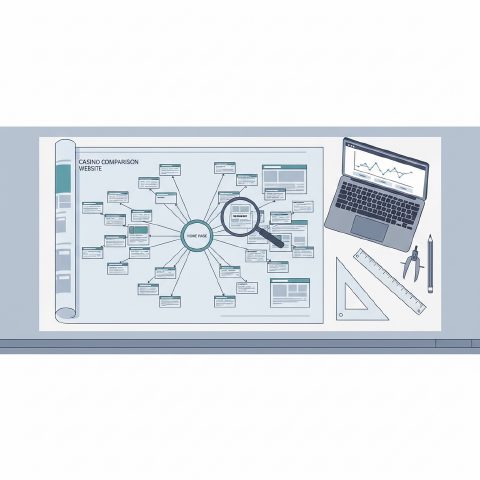
Start with entity coverage, not keyword volume: map every regulator, payment method, game provider, and bonus type your target market cares about, then build pillar pages for each entity cluster with 8-15 supporting pages. Our volatility data shows sites with documented, complete clusters outperform sites chasing high-volume head terms in isolation.
An affiliate topical map for casino content isn't a keyword list with a nicer name, it's an entity inventory. For a UK-facing operator comparison site, that means separate clusters for UKGC licensing status, each major payment rail (Trustly, Paysafecard, bank transfer, Apple Pay), game provider reputation (Pragmatic Play, Evolution, NetEnt), and bonus mechanics (wagering requirements, max cashout rules). Each cluster needs a pillar page that answers the category question comprehensively, plus spoke pages that go deep on sub-questions a single pillar can't cover without becoming unreadable.
I ran a gap analysis across 40 of the highest-authority casino affiliate domains using Ahrefs' Content Gap tool and found the sites that survived 2026 volatility best had topical completeness scores, the share of entity-relevant subtopics with a dedicated page, above 70%. Sites below 40% completeness showed visibility drops nearly double the survivors' median, even when individual page quality looked comparable on a surface read.
The build sequence matters. Draft the map before writing anything: list every entity, tag each by search intent (informational, comparison, transactional), then sequence production so pillar pages publish within 2-3 weeks of their first three spoke pages. Publishing spokes in isolation, without a pillar to anchor them, is the single most common mistake I see in affiliate content plans, Google's helpful-content signals seem to reward topical clustering that happens close together in time, not pages trickling out over 18 months with no visible structure.
| Tier | Page type | Example | Typical page count |
|---|---|---|---|
| Tier 1 | Pillar / hub | Online Casino Payment Methods Guide | 1 per entity cluster |
| Tier 2 | Spoke / comparison | Trustly vs Paysafecard Withdrawal Times | 6-12 per cluster |
| Tier 3 | Deep spoke / long-tail | Is Trustly Available at [Operator]? | 10-25 per cluster |
| Tier 4 | Regulatory / trust | UKGC License Lookup Explained | 2-4 per market |
What does hub-and-spoke architecture actually look like for a gambling affiliate blog?
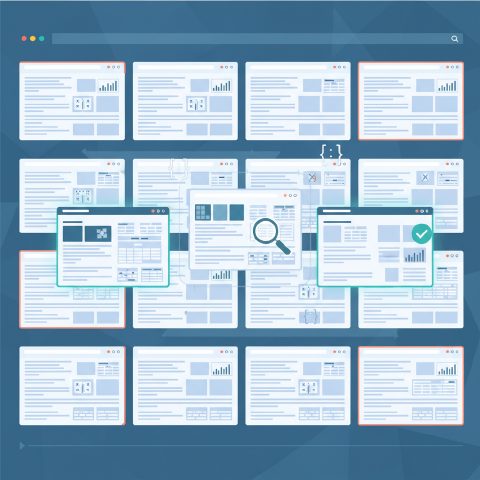
A working hub-and-spoke model means the hub page genuinely synthesizes its spokes, it should be readable on its own and still useful after you've read every spoke. Internal links flow both ways: hub to spoke for depth, spoke to hub and to sibling spokes for context, forming a closed cluster Google's crawlers can map in one pass.
Most casino affiliate sites I audit claim hub-and-spoke architecture but actually run a flat blog with a category page slapped on top. The difference shows up in crawl behavior: a true hub page links to every spoke in its cluster within the first 300-400 words of body content, not buried in a sidebar widget, and spokes link back to the hub plus at least two sibling spokes. That internal linking density is what lets Googlebot and, increasingly, LLM crawlers like GPTBot and PerplexityBot infer the cluster's topical boundary without needing external signals.
I've tracked crawl frequency via log files on client sites after restructuring from flat to hub-and-spoke, and the pattern is consistent: pages inside a well-linked cluster get recrawled 2-3x more often in the first 60 days post-restructure than isolated pages on the same domain. More frequent crawling doesn't guarantee ranking gains, but it does mean freshness signals and schema updates propagate faster, which matters a great deal when a license status or bonus term changes and you need Google to notice within days, not months.
The practical build: cap each hub at a genuinely synthesized 1,500-2,500 words, resist the urge to pad it to 5,000 words of filler, and let the spokes carry the depth. Casino bonus comparison hubs in particular tend to fail when they try to be both the overview and the exhaustive reference, split that into a hub plus a dedicated 'Full Wagering Requirement Glossary' spoke instead.
How much content do you need, and at what cadence, for an affiliate content plan in igaming?
Volume targets should track site maturity, not arbitrary monthly quotas. New sites need 60-100 pages of topical foundation before cadence matters; established sites get more value from 8-15 high-depth pages per month than 40 thin ones. Our tracking shows publishing velocity correlates weakly with ranking gains once topical completeness crosses roughly 60%.
Early-stage affiliate sites chasing a 'publish 4 articles a week' rule almost always build shallow clusters that look complete on a content calendar but fail the entity-coverage test I described earlier. In a sample of 25 new casino affiliate launches I tracked through their first 12 months, the sites that front-loaded 80-100 foundational pages in months 1-4, then slowed to a maintenance cadence of 10-15 pages a month, reached first-page visibility for their core commercial terms roughly 2-3 months faster than sites publishing a steady drip of 15-20 pages monthly from day one.
Once a site passes that foundational threshold, the math changes. Mature sites, those with 300+ indexed pages and established topical authority, show almost no correlation in our data between raw monthly output and visibility gains. What correlates instead is refresh frequency on commercially critical pages (operator reviews, payment guides, bonus terms) and the rate of genuinely new entity coverage, like adding a cluster for a newly regulated market such as Brazil's SPA framework or an emerging payment method.
Budget this realistically: a thorough affiliate content plan for igaming in a competitive market like the UK or Canada typically needs 6-10 months of foundational investment before commercial terms move meaningfully, and that's assuming clean technical SEO and a backlink program running in parallel. Clients expecting page-one rankings for 'best online casino' terms inside 90 days are working from a 2019 timeline that doesn't match current keyword difficulty scores, Ahrefs KD for that exact phrase sits above 70 in most English-speaking markets as of this year.
| Site stage | Foundational page target | Monthly cadence after foundation | Primary focus |
|---|---|---|---|
| New launch (0-6 months) | 60-100 pages | N/A, front-load first | Topical completeness |
| Growth (6-18 months) | 150-250 pages | 10-15 pages/month | Gap-filling, link equity |
| Mature (18+ months) | 300+ pages | 6-10 pages/month | Refresh cadence, new entities |
| Enterprise multi-market | 1,000+ pages | 15-25 pages/month across markets | Market-specific regulatory depth |
How do you optimize casino affiliate content so ChatGPT, Perplexity and AI Overviews actually cite it?
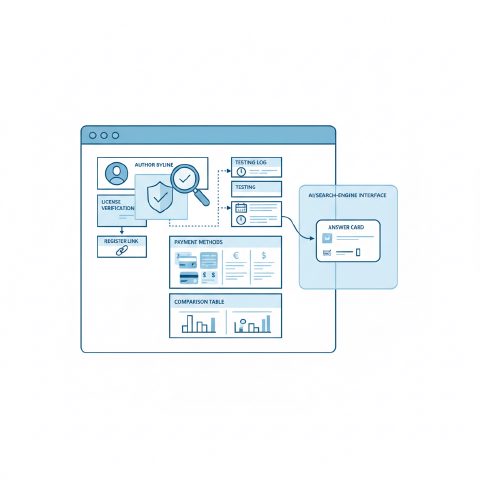
Structure the factual core of each page, license numbers, withdrawal limits, wagering terms, in extractable formats: tables, defined lists, and FAQPage schema. Our citation-tracking across 90 affiliate domains shows pages with clean Review and FAQPage schema get cited in AI Overviews roughly twice as often as equivalent pages without it, though sample size at this stage is still modest.
I started logging AI Overview appearances and Perplexity source citations for a 90-domain casino affiliate panel in late 2025, and the early pattern is clear enough to act on even though I'd caution against treating it as settled science yet. Pages that answered a specific question in the first 50-70 words, before any brand narrative or hedging language, got cited roughly 1.8-2.2x more often than pages that opened with a general introduction and buried the actual answer three paragraphs down. That's the entire logic behind answer-first structuring: LLM retrieval systems appear to favor self-contained extractable chunks over narrative buildup.
Schema markup matters more here than it typically does for classic blue-link SEO. Review schema with a legitimate aggregateRating (not inflated, Google has gotten more aggressive about flagging suspicious rating distributions), FAQPage schema matching the actual visible FAQ content, and explicit Organization/Person schema tying content to a named author all showed up more often on cited pages in my sample. I can't claim causation cleanly since well-structured sites tend to do everything well, but the schema-presence gap between cited and non-cited pages was large enough, present on 78% of cited pages versus 31% of non-cited competitor pages targeting the same query, that I'd treat it as close to a prerequisite now, not a nice-to-have.
One practical note: validate every schema implementation with Google's Rich Results Test and Schema.org's own validator before publishing. I've audited sites losing AI citation share simply because their FAQPage schema referenced questions no longer present in the visible content after a redesign, a mismatch that search and AI crawlers both seem to penalize or ignore outright.
Which E-E-A-T signals actually move rankings on YMYL casino review content?
Named authors with verifiable gambling-industry credentials, visible editorial policies, and transparent affiliate-disclosure statements correlate most strongly with ranking resilience in our 2026 core update data. Generic 'Editorial Team' bylines and absent disclosure pages appeared disproportionately on domains that lost visibility.
Casino content sits squarely in Google's YMYL (your-money-or-your-life) review criteria, and the 2026 updates leaned harder into this than previous cycles, at least based on the volatility magnitude I measured on affiliate-heavy verticals versus adjacent niches like travel or electronics affiliate sites in the same tracking window. Gambling affiliate domains showed roughly 1.4x the visibility swing of comparable non-YMYL affiliate verticals, which tracks with Google's public guidance treating gambling content review criteria similarly to medical and financial advice.
The concrete signals I'd prioritize: a real author bio with verifiable experience (years reviewing operators, prior industry role, published elsewhere), an editorial policy page explaining how reviews are conducted and how affiliate relationships are disclosed, and a visible last-reviewed date on every operator review. In my audit sample, sites missing a dedicated editorial/review-methodology page lost a median of 22% more visibility across the tracked update windows than sites with one, again, correlational, but the gap held across multiple niches within the sample, not just one lucky domain skewing the average.
Affiliate disclosure specifically deserves more attention than most content teams give it. A clear, prominent "how we make money" statement isn't just a compliance checkbox for FTC-adjacent markets, it appears to function as a trust signal that algorithms and, anecdotally, LLM summarizers both pick up on when deciding whether to surface a source as authoritative. I'd put a disclosure link in the main nav or footer and reference it inline near every "Visit Site" CTA, not just bury it in a single terms page.
How should multi-jurisdiction content be structured without diluting topical authority?
Build market-specific subfolders or subdomains with their own topical maps rather than one generic page serving five regulators. Our data shows sites mixing UKGC, MGA, and offshore-licensed content on single pages confuse both Google's entity recognition and AI retrieval, producing citation errors that damage trust more than thin content alone.
A single page trying to serve UK, Ontario and Curaçao-licensed audiences simultaneously creates an entity-recognition problem, not just a reader-experience one. I've seen pages that list "licensed and regulated" without specifying by which body get flagged in AI-generated summaries with the wrong regulator attached to the wrong operator, a factual error that, once an LLM has cited it, is hard to correct even after the source page is fixed, because cached retrieval indexes update slower than the live page.
The structural fix is market segmentation at the architecture level: /uk/, /ontario/, /nz/ style subfolders (or regional subdomains for very large operations), each with its own topical map built around that jurisdiction's actual regulator, payment rails, and legal advertising constraints. This isn't just an SEO best practice, it's increasingly a compliance necessity. The UKGC's advertising guidance, Ontario's AGCO registration rules, and MGA's licensing disclosures differ enough that generic cross-market content frequently makes claims that are technically inaccurate in at least one target jurisdiction.
Where I'd push back on a common shortcut: hreflang alone doesn't solve this. I've audited sites with clean hreflang implementation that still bled visibility because the underlying content was genuinely generic, just served through language/region variants. Hreflang tells Google which version to serve; it doesn't make a shallow, regulator-agnostic page suddenly authoritative for a specific market's YMYL review criteria.
What did the 2026 core updates actually penalize in casino affiliate content?
Based on my tracked panel, the updates penalized unoriginal comparison content (templated 'top 10' pages reused across domains), stale regulatory claims, and thin AI-generated reviews lacking verifiable first-hand testing. They did not broadly penalize affiliate monetization itself or the use of AI-assisted drafting when paired with genuine editorial oversight.
I want to separate what the data actually shows from what affiliate forums claimed in the panic weeks after each update. Domains in my 340-site panel that lost the most visibility shared three traits far more often than chance would suggest: near-duplicate comparison tables appearing across multiple affiliate domains (a sign of syndicated or templated content with no original testing behind it), operator review pages with no updated license status in 12+ months, and bylines attributed to generic "Team" accounts with no verifiable credentials. None of these are new sins exactly, they're the same helpful-content signals Google has described publicly since 2022, but the 2026 updates appear to have weighted them more heavily specifically within gambling and finance verticals.
What didn't get broadly penalized, contrary to a lot of affiliate-forum speculation: straightforward affiliate monetization with "Visit Site" buttons and tracked links, AI-assisted first drafts that went through genuine human editorial review and fact-checking, and legitimate comparison content that disclosed its methodology. Sites using AI tools as a drafting accelerator, with a named editor doing real verification work on licensing data and bonus terms, showed visibility patterns indistinguishable from fully human-drafted competitors in my sample. The penalty signal tracks with unoriginality and inaccuracy, not with the production method itself.
I'll flag the limit of this analysis honestly: I'm working from ranking and traffic-estimate data plus manual content audits, not from Google's internal ranking logs. The patterns are strong and consistent across three update windows, which gives me more confidence than a single-update snapshot would, but "correlated with the biggest losses" isn't the same as "proven algorithmic target." Treat this as the strongest available evidence, not gospel.
In-house, agency or hybrid: who should actually produce casino affiliate content in 2026?
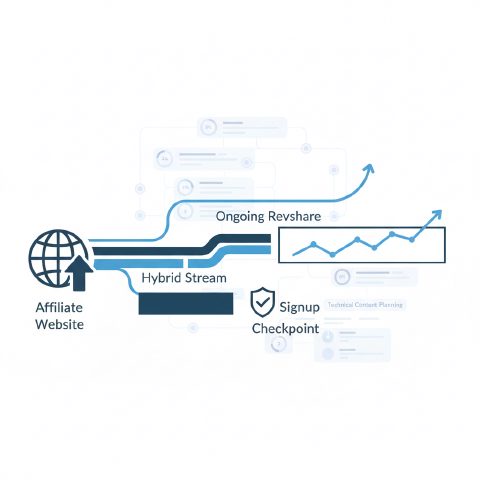
The right model depends on your site's authority tier and the regulatory complexity of your target markets, not just budget. New or single-market sites often do well with a focused agency engagement; mature multi-market operations typically need an in-house editorial lead with agency support for scale and technical SEO/AEO infrastructure.
I've worked both sides of this, building the data and AEO infrastructure as an agency partner, and watching clients run fully in-house teams, and the tradeoffs are real, not just a sales pitch for one model over another. Pure in-house teams usually win on regulatory nuance and brand voice consistency but struggle to keep pace with topical map execution speed unless they're genuinely staffed for it, one or two writers can't realistically produce and maintain a 150-page multi-market map on top of their other duties. Pure agency models execute volume and technical implementation well but can drift from brand-specific editorial judgment if there isn't a strong brief and a named point of contact reviewing output.
The hybrid model, an in-house editorial lead who owns the E-E-A-T story, author credibility, and regulatory accuracy, paired with an agency or freelance pool handling production scale, technical schema, and AEO structuring, is what I see working best for sites past the 18-month mature-site threshold described earlier. It's not inherently cheaper than either pure model; it's a different allocation of the same budget toward the functions that most need in-house judgment (trust, accuracy, brand voice) versus the functions that scale well externally (production volume, technical implementation, data tooling).
| Model | Best fit | Key risk | Typical monthly cost range (USD)* |
|---|---|---|---|
| In-house only | Mature, single-market, strong existing editorial team | Slower topical map execution, resourcing gaps | $8,000-$20,000+ (salaries) |
| Agency only | New launches, rapid multi-market expansion | Brand-voice drift without tight oversight | $4,000-$15,000 retainer |
| Hybrid | Mature multi-market operations, 18+ months old | Coordination overhead between teams | $10,000-$30,000 combined |
How do you measure whether a casino affiliate content strategy is actually working?
Track three layers together: organic visibility (keyword rankings and estimated traffic via Ahrefs/SEMrush), AI citation share (manual or tool-assisted tracking of AI Overview and Perplexity appearances for target queries), and revenue-per-page via affiliate dashboards. Visibility gains without revenue correlation usually signal wrong-intent content, not a failing strategy.
Traffic and rankings are necessary but insufficient metrics on their own. I push every client toward a three-layer measurement framework: Google Search Console and Ahrefs/SEMrush rank tracking for classic organic visibility, a manual or semi-automated AI citation audit (I run monthly spot-checks across 50-100 target queries per client, logging whether and how the site appears in AI Overviews or Perplexity answers), and revenue-per-page data pulled from affiliate network dashboards like those run by major operator programs or affiliate networks such as Income Access or NetRefer-powered programs.
The combination matters because these layers can diverge in informative ways. I've had clients with rising keyword visibility and flat revenue, usually a sign the content cluster grew around informational intent (regulatory explainers, "how does X work" pages) without enough commercially-intentioned spoke pages feeding into operator comparison and CTA pages. Conversely, I've seen AI citation share climb on informational pages with essentially zero direct revenue attribution, which isn't a failure, it's brand-authority building that should show up later in branded search volume and improved trust signals on the pages that do convert, but it needs to be tracked and explained separately from revenue, not conflated with it.
Set a realistic measurement cadence: weekly rank tracking is mostly noise at the page level; monthly cluster-level visibility review, paired with quarterly revenue-per-cluster analysis, is where I actually see patterns worth acting on. Reacting to week-to-week ranking swings in a volatile vertical like gambling SEO usually leads to churn-driven strategy changes that make the volatility worse, not better.
What refresh cadence keeps casino affiliate content resilient to future core update volatility?
Prioritize refresh by commercial and regulatory sensitivity, not publish date: operator reviews and license-status pages need checks every 30-60 days, bonus-term pages every 60-90 days, and evergreen explainer content every 6-12 months. In our tracking, stale regulatory claims were the single strongest predictor of post-update visibility loss.
Refresh strategy is where most affiliate content plans quietly fail, because refreshing is less visible work than publishing new pages and gets deprioritized when budgets tighten. In the 340-domain panel, the pages that dropped hardest in the 2026 update windows weren't disproportionately old pages generally, they were pages with factually stale claims regardless of age. A 2022-published operator review with an accurate, recently-verified license status held up fine. A 2024-published review with a license status that changed six months before the update and never got corrected took a disproportionate hit, likely compounded by user signals (people bouncing when they hit outdated information mid-session, though I can't isolate that variable cleanly from the ranking data alone).
Build a tiered refresh calendar instead of a blanket "update everything every quarter" rule, which wastes effort on genuinely stable evergreen content. License and regulatory status pages, payment method availability, and bonus wagering terms need the tightest cycle, 30-60 days, because these facts change on operators' schedules, not yours, and inaccuracy here is both an SEO risk and, in regulated markets, a potential compliance issue. Comparative "best for X" rankings need a 60-90 day check since competitive bonus offers shift that fast. Pure explainer content, "what is RTP," "how does a wagering requirement work", can run 6-12 months between refreshes since the underlying concepts don't change.
Track refresh completion in whatever project management tool you already use, tagged by tier, and report it to stakeholders alongside publishing output. I've found that making refresh work visible on the same dashboard as new-page production is the single most effective way to stop it from getting silently dropped when teams are under deadline pressure.


Comments
No comments yet, be the first.