Casino Affiliate Link Building in 2026: Building Authority That Survives Core Updates

What makes link building for casino affiliate sites different from other niches?
Casino affiliate link building runs into a tiny addressable market. Most publishers run AdSense, Mediavine, or Ezoic, all of which restrict gambling advertising, so they refuse gambling content outright to protect their core ad revenue. That leaves maybe 3,000-5,000 genuinely relevant, compliant domains worldwide, and every serious affiliate and operator is chasing the same inventory.
Compare that to SaaS or e-commerce, where thousands of guest-post-friendly blogs and resource pages will take a contextual link for $150-$400 with a two-week turnaround. Gambling doesn't have that depth. The publishers who will accept iGaming content sit in sports, finance, lifestyle, and entertainment verticals, and the ones worth having already get pitched daily by competing affiliates and operators. I've seen outreach lists shrink from 400 prospects to 60 genuinely usable ones after a proper relevance and traffic filter.
Regulatory exposure compounds the scarcity. The UKGC's licence conditions, MGA advertising codes, and US state regulators like the NJ DGE and PA PGCB all scrutinize affiliate marketing practices, so reputable publishers in regulated markets run extra compliance checks before accepting a gambling link, age-gating language, responsible gambling disclaimers, geo-targeting disclosures. That stretches outreach cycles from the 2-3 weeks you'd see in SaaS to 6-10 weeks in iGaming.
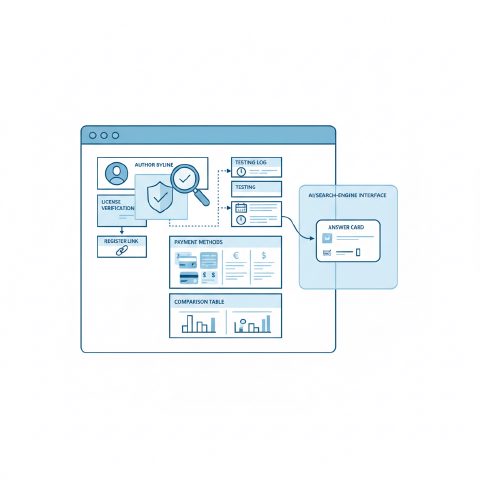
YMYL classification raises the bar further. Google treats 'best online casino' content as money-or-life content because it touches real financial risk, so link signals only move rankings when paired with visible trust signals, real author bylines, licensing disclosures, responsible gambling messaging. I've watched sites add 40+ referring domains in a quarter and see zero ranking movement because the on-page E-E-A-T wasn't there to let Google act on those links.
How many backlinks and what link velocity does a casino affiliate site need to rank in 2026?
Target referring domain counts scale with competition tier: long-tail terms need roughly 15-30 relevant referring domains, mid-competition terms like 'best slots sites' need 60-120, and national terms like 'online casino' or 'casino bonus' typically need 200+ from DR40+ sites. Velocity should stay proportional, 3-8 new domains monthly for most campaigns.
I pull these benchmarks by running Ahrefs' 'Linked Domains' report against the top 10 ranking URLs for a target keyword, then cross-checking with SEMrush's backlink gap tool to see what the sites below position 10 are missing. The gap is rarely subtle in iGaming, the top 3 national casino affiliates typically sit on 300-600+ referring domains built over 4-6 years, while position 11-20 sites often have under 100.
Velocity matters as much as the total count. A site jumping from 20 to 80 referring domains in a single month reads as unnatural, especially post the 2022 Link Spam Update, and tends to trigger either a manual review flag or simply gets discounted algorithmically until the profile 'ages.' Sustainable campaigns I've run add 4-8 new domains a month for mid-competition terms, which is enough to outpace stagnant competitors without looking manufactured.
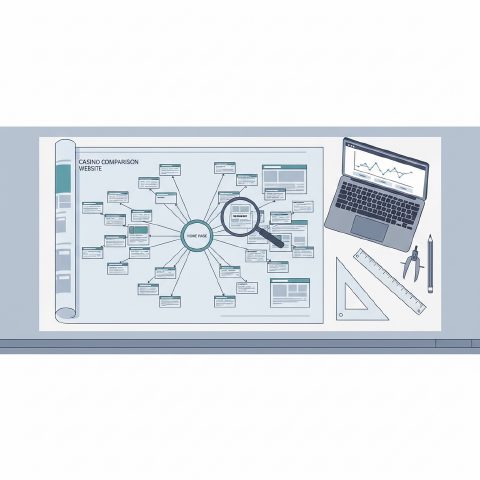
Strong internal linking, hub-and-spoke architecture from a 'best casino sites' pillar page down to individual operator reviews and game guides, reduces how many external links you actually need, because it concentrates existing link equity on your priority pages instead of spreading it thin across the whole site.
| Competition tier | Example query type | Referring domains needed | Realistic monthly velocity | Typical timeline to page 1 |
|---|---|---|---|---|
| Long-tail / local | "best casino bonus [state]" | 15-30 | 2-4 new domains/mo | 3-5 months |
| Mid-competition | "best slots sites 2026" | 60-120 | 4-6 new domains/mo | 6-9 months |
| High-competition national | "online casino", "casino bonus" | 200+ from DR40+ sites | 6-10 new domains/mo | 12-18 months |
| Hyper-competitive brand terms | "[major operator] review" | 300+ from DR50+ sites | 8-12 new domains/mo | 18-24+ months |
Which link building strategies actually move rankings for casino affiliate sites right now?
Four tactics consistently work: digital PR built on original data, niche edits into already-ranking content on genuinely relevant sites, resource-page and broken link building in adjacent verticals, and unlinked brand mention reclamation. Mass guest posting on low-relevance 'write for us' sites produces little ranking movement and wastes budget.
Digital PR built on linkable data assets outperforms everything else per dollar spent. State-by-state gambling spend trackers, player behavior surveys, and slot RTP transparency reports give journalists a reason to cite you that has nothing to do with promoting gambling, it's data journalism. Pitch through Qwoted and Connectively (HARO's successor platforms) plus direct outreach to reporters covering finance, entertainment, or state politics who've written about gambling legalization before.
Niche edits, placing a contextual link into existing, already-ranking content rather than commissioning a new post, cost less and pass equity faster because the host page already has traffic and trust. The catch is vetting: a publisher selling niche edits across dozens of unrelated niches on the same page is running a link farm with extra steps, not editorial placement.
Resource page and broken link building works well in adjacent spaces, responsible gambling charities, finance blogs covering gambling regulation, entertainment sites with 'best casino games to play' roundups. Combine it with unlinked brand mention reclamation: run your brand name through Ahrefs Content Explorer or Google Alerts, find sites that mentioned you without a link, and ask for the citation to be made clickable. It's a 20-30% conversion tactic that costs nothing but time.
How much does casino affiliate link building cost in 2026?
Expect $300-$1,500 per placement on a genuinely relevant DR30-60 gambling-adjacent site, $150-$400 for niche edits on existing content, and $2,000-$8,000 per month for a digital PR program generating 3-6 organic placements. Full-service agency retainers for managed link campaigns typically run $3,000-$12,000 monthly depending on scope and market.
These ranges are market estimates based on current outreach quotes, not fixed rate cards, relevance, domain authority, and traffic all move the price. A DR60 finance site with 50K monthly organic visits charges closer to the top of the guest post range; a DR25 niche gambling blog with declining traffic should cost far less, if it's worth buying at all.
Paid directories and gambling-specific link packages sold cheap, $20-$80 per link, are almost always PBN or link-farm inventory. They look efficient on a spreadsheet and carry the highest deindexation risk on the list, which is why I exclude them from every client budget regardless of short-term ranking temptation.
Digital PR has a higher upfront cost but compounding returns: a single well-pitched data study can earn 15-40 organic links across months as other publishers cite the original research, which brings the effective cost per link down well below any paid placement once it gains traction.
| Tactic | Typical cost range | Durability | Risk level |
|---|---|---|---|
| Guest post on relevant DR30-60 site | $300-$1,500 per post | High if content stays live 2+ years | Low |
| Niche edit / curated link | $150-$400 per link | Medium, removable by publisher later | Low-Medium |
| Digital PR / data study campaign | $2,000-$8,000/month | High, earns multiple organic links | Low |
| Paid gambling directory listing | $50-$300/listing | Low, minimal ranking value | Medium |
| PBN or private link network | $20-$80 per link | Very low, deindexation risk | High, policy violation |
What link building tactics should casino affiliates avoid in 2026?
Avoid PBNs, link wheels, reciprocal exchanges disguised as resource pages, and bulk-bought directory listings. All of these violate Google's link spam policies, and the 2024 site reputation abuse policy specifically targets the parasite SEO patterns common in casino affiliate content, hosting review content on a borrowed high-authority subdomain to inherit its ranking power.
PBNs still get sold to casino affiliates as 'premium private networks,' but the footprint is usually obvious once you check hosting IPs, WHOIS history, and content thinness in Ahrefs. Manual actions from Google's spam team tend to hit the entire network at once, not one domain at a time, which means a single careless outreach vendor can wipe out months of work across every client using that network.
The site reputation abuse policy Google rolled out in 2024 directly addresses a pattern many gambling affiliates relied on for years: publishing third-party gambling review content on a news site's subdomain or dedicated section to borrow its domain authority. Several high-profile cases saw that content deindexed or demoted within weeks of the policy taking effect, regardless of how well-written it was.
Reciprocal link exchanges and directory stuffing are lower risk individually but add up to an unnatural outbound/inbound pattern that's trivial for Google's systems to detect at scale, especially in a small niche where the same 200 affiliate domains keep linking to each other. If more than 15-20% of your referring domains also link back to you, that ratio needs attention.
How do you vet a publisher before buying a placement or guest post on a gambling-related site?
Check the site's organic traffic trend in Ahrefs or SEMrush, its outbound link ratio, genuine topical relevance, and whether it already ranks for its own money terms. A site selling links across 40 unrelated niches on the same page, or with declining traffic and zero own rankings, has no link equity worth passing regardless of its Domain Rating.
Domain Rating alone is the most misused metric in casino affiliate link buying. A DR50 site with collapsing organic traffic and 300 dofollow outbound links per page is a link farm wearing a high score, and the placement will do nothing for your rankings. I always pull the traffic graph first, stable or growing over the last six months is the minimum bar before I even look at anchor text options.
Topical relevance has to be genuine, not performative. A finance blog that occasionally covers gambling regulation is relevant; a 'general lifestyle' site that happens to have a gambling category stuffed with 200 sponsored posts is not. I check how many gambling-adjacent articles the site has published organically, without being paid, before deciding it's a real fit.
Finally, check whether the publisher itself ranks for anything. If a site has zero visible organic rankings in Ahrefs for its own brand or core topics, it has no SEO equity to transfer, no matter what its metrics claim. That single check eliminates a surprising number of vendor-pitched 'opportunities.'
| Check | Minimum bar | Tool |
|---|---|---|
| Organic traffic trend | Stable or growing over 6 months | Ahrefs Site Explorer / SEMrush |
| Referring domains to the site | 50+ unique RDs from diverse sources | Ahrefs |
| Outbound link ratio | Fewer than 50 dofollow outbound links per page | Manual page audit |
| Topical relevance | Genuine, organically published gambling/finance/lifestyle coverage | Manual review |
| Own keyword rankings | Ranks top 20 for at least some of its own terms | Ahrefs / GSC where accessible |
| Editorial disclosure | Sponsored or affiliate content clearly marked where required | Manual review |
What does a realistic 90-day casino affiliate link building campaign look like?
A 90-day sprint runs in three four-week phases: audit and prospecting, content production and outreach, placement and reporting. Working a genuinely vetted prospect list, expect 15-25 outreach contacts weekly, a 3-8% positive reply rate, and 8-15 live placements by day 90, far lower volume than mass-blasted directory outreach, but far higher ranking impact per link.
Weeks 1-4 go entirely into audit and prospecting: pulling the backlink profiles of your top 5 competitors in Ahrefs, filtering for sites that pass the vetting checklist above, and building linkable assets (a data study, a survey, an original resource) that give you something worth pitching beyond 'can we have a link.' Skipping this phase is the single biggest reason outreach campaigns underperform.
Weeks 5-8 are outreach and content production in parallel. For digital PR angles, this means finalizing the study and pitching it to 30-50 relevant journalists and bloggers simultaneously; for niche edits and guest posts, it means personalized outreach referencing the publisher's actual content, not templated mail-merge blasts that get ignored or flagged as spam.
Weeks 9-12 focus on closing placements, confirming the links are live and indexed (checking via Google Search Console's URL inspection tool, not just trusting the publisher), and reporting against the original KPIs, referring domains gained, keyword movement in your rank tracker, and organic traffic delta on the target pages.
How does digital PR work for casino affiliates without crossing editorial or ad-policy lines?
Digital PR works by building data-driven, newsworthy assets, player spending surveys, slot RTP audits, state legalization trackers, that journalists cite for their data value, not a gambling promotion angle. Distribute through Qwoted, Connectively, and direct pitches to finance, entertainment, or politics reporters who've covered gambling regulation before.
The strongest linkable assets I've built for casino affiliates don't read as gambling marketing at all. A survey of self-reported spending habits among 1,000+ online casino players (sample size should be disclosed and methodology kept transparent) becomes a story about consumer finance trends, not a casino promotion, which is exactly why finance and lifestyle publishers will cite it where they'd never link to a 'best casino' listicle.
State-by-state legalization trackers work similarly well in the US market, where PA, NJ, MI, and other states have genuinely newsworthy regulatory movement. Journalists covering state politics need a data source, and an affiliate that maintains an updated, well-sourced tracker becomes the default citation, provided it's kept current and methodologically honest.
Pitching itself matters more than the asset. I send personalized pitches referencing a journalist's last three articles, not a templated press release, and I never attach the pitch to a specific casino brand promotion, that's what gets flagged and ignored by editorial teams protecting their ad-policy compliance.
How do you measure ROI on casino affiliate link building?
Track referring domain growth against keyword rank movement in GSC and Ahrefs Rank Tracker, calculate cost per acquired referring domain, and map ranking gains to revenue using your affiliate network's keyword-tagged tracking links. Judge the campaign against FTD revenue those keywords historically generate, not link count in isolation.
I build a simple quarterly model for every client: total link spend divided by referring domains gained gives cost per domain, then I cross-reference which target pages those domains pointed to against ranking movement in that same window. A $6,000 quarterly spend that lifts 12 keywords from page 2 to top 5 needs to be judged against what those specific keywords historically convert at, not against vanity metrics like total backlinks acquired.
Revenue attribution in iGaming affiliate SEO runs through the operator network's tracking links (sub-IDs, campaign tags), so I pull FTD (first-time depositor) and revenue data segmented by landing page, then overlay it with the organic traffic and ranking timeline for that page. If a page's organic sessions grew 40% in the quarter following a link campaign and FTDs from that page grew proportionally, that's a defensible ROI case to show a client or stakeholder.
The honest caveat: link building ROI in iGaming has a longer lag than most verticals, 3-6 months between placement and measurable ranking shift is normal, and anyone promising faster results consistently is either overstating or using tactics that won't hold through the next core update.
How do Google's core updates and spam policies affect casino affiliate backlink profiles?
Google's 2024 site reputation abuse policy and the ongoing link spam updates specifically target parasite SEO and PBN patterns common in gambling affiliate link building, so manipulative profiles now carry real deindexation risk. Profiles built on genuinely relevant editorial links paired with strong on-page E-E-A-T have proven resilient through the March 2024 and later core updates.
I've tracked client sites through every major update since 2022, and the pattern is consistent: sites that relied heavily on PBNs or borrowed-authority subdomains saw sudden, sharp traffic drops, often 50-80% within a single update rollout, while sites with genuinely earned editorial links and visible trust signals saw either gains or mild, recoverable dips.
The helpful content system folding into core updates in March 2024 raised the bar further by evaluating whether content was created primarily for people or primarily to rank. Thin affiliate pages padded with keyword variations and backed by manipulative links got hit hardest, because the link signals had nothing credible to amplify.
My standing recommendation hasn't changed through four major update cycles: build the link profile you'd be comfortable disclosing to Google's spam team directly, invest the saved risk-budget into on-page E-E-A-T, and treat every placement as a long-term asset rather than a short-term ranking lever. That's the only approach I've seen survive repeatedly, not just once.


Comments
No comments yet, be the first.