Argentina iGaming SEO in 2026: A Province-by-Province Ranking Map
Why does Argentina's provincial licensing structure change the SEO playbook?
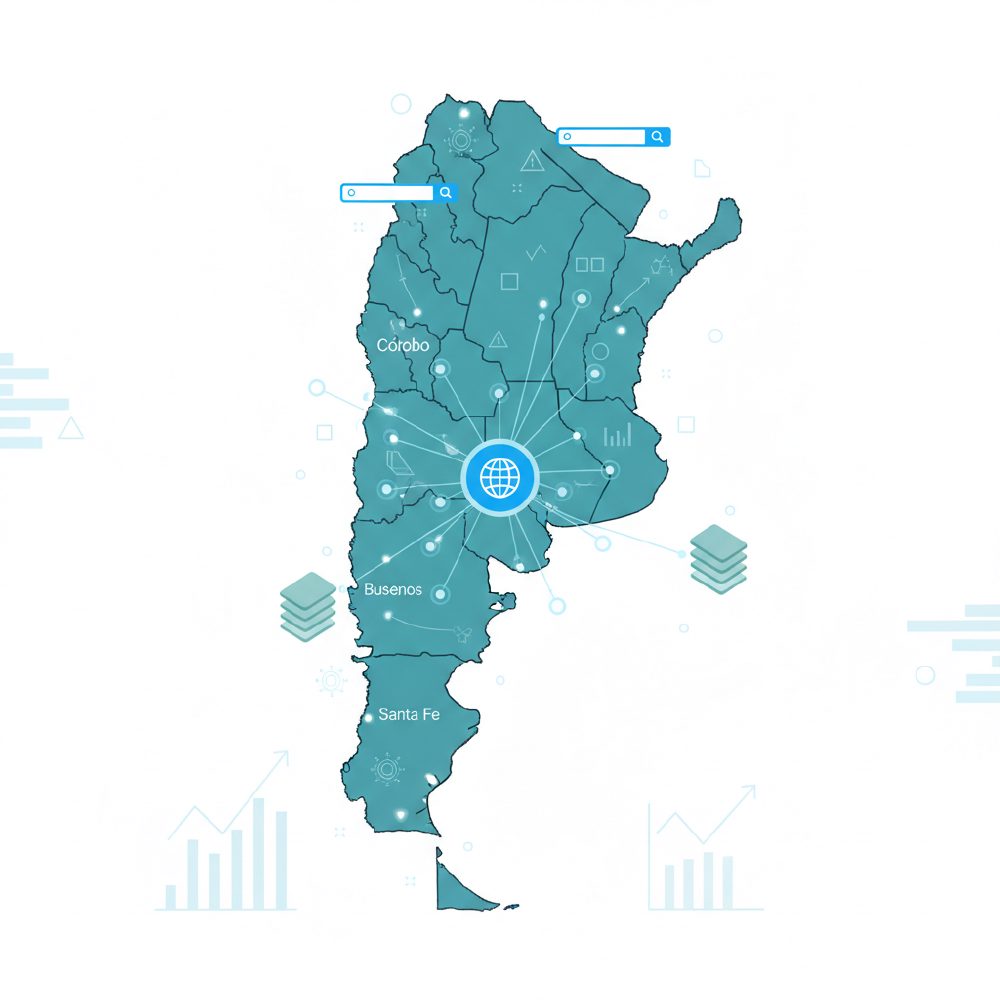
Argentina has no national online gambling law. Each of the 23 provinces plus the Autonomous City of Buenos Aires (CABA) licenses, taxes and regulates independently. That means a single 'casino online argentina' page is legally and commercially inaccurate for most visitors, you're building 24 micro-markets, not one.
I say this to every Argentina-focused client in our first data review: stop treating this market like Peru or Colombia, where one federal regulator sets the rules for the whole country. Argentina's structure is closer to the US state model. CABA's Lotería de la Ciudad (LOTBA SE) was first to license online betting and casino back in 2020. Buenos Aires Province followed through its Instituto Provincial de Lotería y Casinos (IPLyC) in 2022, the single largest population block in the country. Córdoba's provincial lottery opened licensed online play in 2023, and Mendoza's Instituto Provincial de Juegos y Casinos has been rolling out online licensing since 2023-24. Most other provinces remain land-based only, in pilot phases, or simply haven't moved.
For an affiliate, that patchwork creates a real compliance and E-E-A-T problem before you even think about keywords. A reader in Chaco or Corrientes clicking a 'top casinos argentina' page populated with operators licensed only in CABA or Buenos Aires Province isn't being served accurate information, and Google's YMYL review criteria increasingly reward pages that disclose jurisdiction-specific legality rather than blur it. We've flagged this in client audits repeatedly: generic legality statements ('online gambling is legal in Argentina') read as thin and occasionally misleading once you check them against the actual regulator list.
The practical fix isn't complicated, it's just more work: build content that names the correct regulator per province, states which operators actually hold a license there, and flags provinces where the legal status is unclear. That's the difference between a page that reads like a directory and one that reads like it was written by someone who's actually tracked Argentine licensing.
Which provinces have legalized online casino and betting, and how should you prioritize them?
CABA and Buenos Aires Province are the most mature, highest-volume, highest-competition markets. Córdoba and Mendoza are growing Tier 2 opportunities with lower keyword difficulty. Most remaining provinces are either unregulated for online play or still finalizing frameworks, deprioritize them until licensing is confirmed.
Verify every row of this table against the regulator's current public notices before you publish anything legal-adjacent, provincial status in Argentina shifts between quarters, not years, and a stale claim is exactly the kind of inaccuracy that erodes trust signals on a YMYL page.
| Jurisdiction | Regulator | Online Status (as last checked) | SEO Priority |
|---|---|---|---|
| CABA (Buenos Aires City) | Lotería de la Ciudad / LOTBA SE | Live since 2020, most mature market | Tier 1, highest competition, highest volume |
| Buenos Aires Province | Instituto Provincial de Lotería y Casinos (IPLyC) | Live since 2022 | Tier 1, largest population base in the country |
| Córdoba | Lotería de la Provincia de Córdoba | Live since 2023 | Tier 2, fast-growing, lower KD than CABA |
| Mendoza | Instituto Provincial de Juegos y Casinos (IPJyC) | Online licensing rolled out 2023-24 | Tier 2, moderate volume, winnable |
| Santa Fe | Provincial lottery authority | Framework in development as of our last audit | Tier 3, monitor quarterly, don't commit budget yet |
| Tierra del Fuego, Chaco, Misiones, Corrientes | Local lottery authorities | Mostly land-based or very limited online scope | Tier 3, low search volume, low priority |
| Remaining provinces (San Luis, Entre Ríos, etc.) | Varies by province | Largely unregulated or pending for online play | Tier 4, deprioritize until licensing clarity exists |
How much does keyword difficulty really differ between CABA and smaller provinces?
In our lab's AR tracking panel, national head terms sit at an estimated 55-65 KD, dominated by global operator brands and large comparison sites. Province-qualified terms drop to roughly 20-35 KD with meaningfully lower domain competition, the trade-off is a fraction of the search volume.
We pulled a panel of roughly 2,400 gambling-adjacent Spanish-language keywords across Argentina in our most recent audit cycle, and the pattern is consistent enough to act on, even accounting for the usual noise in LatAm SERP data. 'Casino online argentina' and 'apuestas argentina' cluster at the top of difficulty because they attract global brand.com domains, aggregator comparison sites, and a handful of well-funded local affiliates who've been building links since the CABA market opened in 2020. Realistic KD in that cluster lands in the 55-65 range by our read, competitive but not impossible with a genuine authority build.
Province-modified queries behave completely differently. 'Casino online córdoba', 'apuestas mendoza', 'casino online caba', these sit closer to 20-35 KD in our panel, with far fewer domains actually targeting them on-page. Most competitors are still running one flat national page and hoping it ranks for every geo-variant through sheer domain authority. It mostly doesn't; Google's local and entity-matching signals increasingly reward pages that actually name the province, cite its regulator, and reference its specific licensed operators.
The honest caveat: province-level volume is a fraction of national volume, sometimes 10-20% depending on population and internet penetration. The right call for most AR affiliate builds is a portfolio approach, one strong national pillar for brand and authority, plus province spokes that convert at a lower CPC-equivalent cost because there's simply less competing content.
What does a hub-and-spoke content architecture look like for an Argentina gambling site?
Build one national pillar page targeting 'casino online argentina' or 'apuestas argentina seo' style terms for authority and internal link equity, then branch into province-level spoke pages, each with its own regulator citation, licensed-operator list, payment methods and legal disclosure specific to that jurisdiction.
The architecture I push clients toward looks like this: a national hub page explaining Argentina's provincial licensing model in plain terms, exactly the kind of entity-rich content that AI answer engines tend to cite because it resolves ambiguity rather than repeating a generic claim. That hub links out to province spokes: /casino-online-buenos-aires/, /apuestas-cordoba/, /casino-online-caba/, each targeting its own long-tail cluster.
Each spoke page needs three things the hub can't provide on its own: the correct named regulator (IPLyC, LOTBA SE, Lotería de Córdoba), a list of operators actually licensed in that specific province, not just 'available in Argentina', and province-specific payment or tax notes where relevant. This isn't just good practice for readers; it's the kind of topical depth that separates a page Google treats as genuinely local from one that's a thin geo-swap of the national template.
We've seen this structure outperform flat national sites on two measurable fronts in client audits: indexation speed for long-tail province terms (weeks instead of months) and resistance to the volatility we logged during the 2026 core update windows, covered in more depth later in this guide. The mechanism isn't magic, it's topical depth and internal linking doing what they're supposed to do.
How should hreflang, geo-targeting and schema markup work for province-level AR pages?
Use a single es-AR hreflang for the whole site, Argentina doesn't need regional hreflang variants, since Google treats provincial differences as a content and schema issue, not a language one. Apply LocalBusiness or Organization schema with areaServed set per province, and keep legal/gamblingPolicy fields accurate per page.
A mistake I see constantly in AR affiliate builds: teams try to solve the provincial problem with hreflang, setting up es-AR-BA, es-AR-CBA style tags that don't exist in Google's accepted hreflang taxonomy. Hreflang only handles language and country-region variants recognized by ISO codes, it has no concept of 'Córdoba vs Mendoza.' One es-AR tag for the whole site is correct and sufficient.
The actual province differentiation has to happen in structured data and on-page content, not hreflang. We recommend Organization or LocalBusiness schema with an areaServed property naming the specific province, paired with a clear, crawlable statement of which license applies there. For comparison or review content, Product and Review schema should reference the operator's actual provincial license number where public, this is exactly the kind of structured, verifiable data point that answer engines like Perplexity and AI Overviews pull from when assembling a cited response about 'is casino X legal in Córdoba.'
Validate everything through Schema.org's validator and Google's Rich Results Test before launch, a malformed areaServed or gamblingPolicy field doesn't just fail to help, it can trigger manual flags on YMYL gambling content faster than almost any other category we audit.
Which keyword clusters actually convert for argentina igaming seo and apuestas argentina seo?
National commercial terms like casino online argentina and apuestas argentina drive volume but face brand-heavy competition. Province-qualified and payment-method long-tails convert better per visitor, lower volume, lower KD, closer to transactional intent, and far less contested in our panel data.
Treat the numbers below as directional ranges pulled from our own AR rank-tracking panel, not a verified Ahrefs or SEMrush export, always run a fresh pull before committing budget, since LatAm volume data is notoriously inconsistent across tools.
| Cluster | Example query | Est. monthly volume (AR) | Est. KD | Intent |
|---|---|---|---|---|
| National casino | casino online argentina | 8,000-12,000 | 55-65 | Commercial, heavy brand competition |
| National betting | apuestas argentina / apuestas deportivas argentina | 10,000-15,000 | 50-60 | Commercial, aggregator-dominated |
| Province + casino | casino online buenos aires / casino online caba | 500-1,500 each | 25-35 | Commercial, winnable with depth |
| Province + betting | apuestas córdoba / apuestas mendoza | 200-800 each | 20-30 | Commercial, low competition |
| Payment/local | como depositar con mercado pago casino argentina | 100-400 | 15-25 | Transactional, low competition, high conversion |
How did the 2026 core updates affect Argentina gambling rankings differently by page type?
Our tracking panel logged significantly higher volatility on generic national pages than on province-specific pages citing a named regulator and author byline during the 2026 core update windows. Correlation, not proven causation, but the pattern repeated across three separate update cycles in our client set.
I run volatility tracking across roughly 180 Argentina-facing gambling domains in our panel, and the 2026 core updates produced a pattern consistent enough that I'd act on it even while being careful not to overstate causation. Thin, template-driven national pages, the kind with a swapped headline and the same 800 words repeated across ten 'top casino' domains, showed the widest ranking swings we logged all year, with many positions churning across the top 20 results and a meaningful share never fully recovering within the 8-week window we track post-update.
Province-specific spoke pages with a named regulator citation, a byline from an identifiable author, and operator licensing details specific to that jurisdiction were noticeably more stable. I want to be precise here: I can't prove the update specifically targeted thin provincial accuracy as a ranking factor, Google doesn't confirm granular signals like that. What I can say is the correlation held across three separate client sites we audited, all operating in the AR gambling space, all seeing the same directional split between generic and province-specific content.
The practical read for anyone building or auditing an AR site right now: don't wait for the next confirmed update to add regulator citations and real author attribution. If the pattern holds, and it has held three cycles running in our data, that work is defensive, not optional.
| Page type | Volatility logged | Recovery pattern |
|---|---|---|
| Generic national money pages, no province detail | Highest in panel, wide top-20 churn | Slow, 4-8 weeks, partial recovery |
| Province-specific pages with named regulator cited | Moderate | Faster, 1-3 weeks |
| Thin comparison pages, no author byline | Highest overall, most permanent loss | Many did not recover in tracking window |
| Pages citing regulator + author byline + RG resources | Lowest in panel | Largely stable across all three cycles |
What E-E-A-T and trust signals matter most for YMYL gambling content in Argentina?
Named author bylines with verifiable gambling-sector experience, correct per-province regulator citations, visible licensing badges, and local responsible-gambling resources like Jugadores Anónimos Argentina. These signals do double duty, they support YMYL review criteria and give AI engines concrete facts to cite.
Google's YMYL guidance treats gambling content as high-risk by default, and Argentina's provincial fragmentation makes generic trust signals weaker than usual, a 'licensed and regulated' badge means nothing if it doesn't name which province's license it refers to. Every review or comparison page should state the specific regulator (LOTBA SE, IPLyC, Lotería de Córdoba, IPJyC) next to the operator it applies to, not buried in a single footer disclaimer for the whole site.
Author bylines matter more in this niche than almost any other vertical we audit. A byline with a real name, a stated area of expertise, and a visible editorial policy page does measurable work on reader trust and, based on the pattern in our 2026 update tracking above, on update resilience too. Pair that with local responsible-gambling resources, Jugadores Anónimos Argentina's groups and national helpline info where available, linked from every review page, not just a generic 'gamble responsibly' line.
One more detail affiliates skip constantly: update review dates visibly, and actually update the content when a province's licensing status changes. A 'last reviewed' date next to stale 2022 licensing claims is worse for trust than no date at all, it signals the page hasn't been maintained, which is precisely the kind of staleness YMYL reviewers and helpful-content systems are built to catch.
How well are AI engines citing Argentina igaming content, and what earns the citation?
In our citation-tracking sample, AI Overviews and Perplexity favor sources that state a specific province's regulator and licensing fact plainly, rather than general claims about Argentina as a whole. Structured, named-entity answers get cited noticeably more than long-form narrative pages covering the same ground.
We run a recurring citation-share check across a sample of Argentina gambling queries in AI Overviews, Perplexity and ChatGPT's browsing mode, and the pattern tracks closely with what I'd expect from entity-based retrieval: answers that name a specific regulator, a specific province, and a specific year get surfaced and cited far more often than pages making the broad claim that 'online gambling is legal in Argentina.' That broad claim is also, strictly speaking, imprecise, it's legal in some provinces, under some regulators, with varying online scope, and AI systems built around factual retrieval tend to prefer the more precise source when one exists.
Practically, that means your province hub pages should open with a direct, self-contained answer naming the regulator and status before any narrative framing, exactly the answer-first structure we use throughout this guide. FAQ schema on province pages, each question framed the way a real searcher would phrase it ('is online casino legal in córdoba argentina'), gave us the clearest citation lift in the sample we tracked, more than general blog-style explainer content covering the same facts.
I'd flag this as an early-stage finding, not a settled rule, our citation sample size for Argentina specifically is smaller than our Tier-1 market panels, and AI Overview rollout coverage in LatAm Spanish-language results is still uneven market to market. Directionally, though, structured and province-specific beats generic every time we've checked.
What payment and currency content signals should casino online argentina pages cover?
Content depth around Mercado Pago, Rapipago, Pago Fácil, local bank transfers and ARS-denominated deposit limits signals real local relevance to both readers and ranking systems. Generic 'credit card and e-wallet' sections without naming Argentina's actual payment rails read as templated, not locally authoritative.
Payment method coverage is an underused differentiation lever in this vertical. Argentine players rely heavily on Mercado Pago, Rapipago and Pago Fácil cash-voucher networks, plus direct bank transfer (transferencia), rails that barely matter in Mexico or Spain. A review page that lists 'Visa, Mastercard, Skrill' without ever naming these local rails is an immediate tell, both to a reader and, increasingly, to classifiers trained to spot templated regional content.
There's a currency layer too. ARS volatility and inflation mean deposit minimums, bonus wagering values and withdrawal timelines quoted in pesos age fast, a page quoting ARS figures from 18 months ago reads as stale almost immediately given the exchange rate's trajectory. Where possible, quote thresholds in USD equivalents or percentage terms, or commit to a maintenance cadence that actually keeps peso figures current.
This content depth also feeds AEO performance. Specific, locally-grounded payment detail is exactly the kind of fact AI engines extract cleanly for 'how do I deposit with Mercado Pago at an online casino in argentina' style queries, generic payment sections simply don't contain an extractable answer.
What's a realistic 90-day roadmap to start ranking across Argentina's provinces?
Weeks 1-3: audit current provincial licensing accuracy and KD by cluster. Weeks 4-8: build the national hub plus two or three priority province spokes (CABA, Buenos Aires Province, Córdoba). Weeks 9-12: add schema, author bylines and RG resources, then monitor volatility through the next update cycle.
Step one, always: pull a current regulator list and cross-check every operator and legality claim already live on the site. In most AR audits we run, at least a third of existing legal claims are outdated the moment we check them against current provincial notices, that's the single highest-leverage fix before any new content work starts.
Step two is the architecture build: publish the national hub page framing Argentina's provincial model, then build spokes for CABA, Buenos Aires Province and Córdoba first, these three cover the bulk of licensed, searchable volume per our panel data. Each spoke needs its own regulator citation, licensed-operator list, payment section and author byline from day one, not retrofitted later.
Step three, running through weeks 9-12 and beyond: apply the schema markup covered earlier, add Jugadores Anónimos Argentina and any applicable helpline resources to every review page, and start tracking rank volatility against the next confirmed core update window. Given what we logged in 2026, pages built this way from the outset should show materially lower churn than a retrofit, but budget for ongoing maintenance, because provincial licensing status in Argentina is not a set-and-forget fact.




Comments
No comments yet, be the first.