iGaming SEO Predictions 2027: The AEO Playbook I'm Building for Affiliate Survival

What's the single biggest shift behind my igaming SEO predictions for 2027?
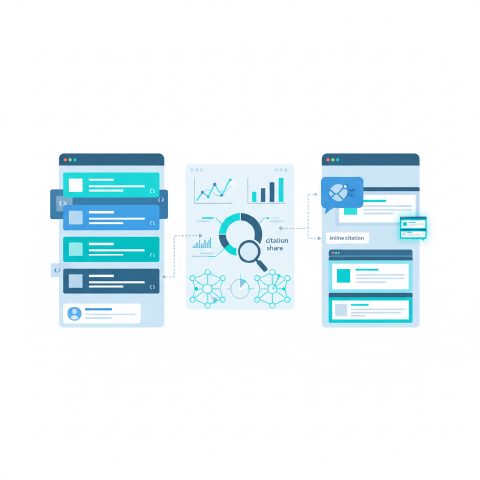
The biggest shift is that discovery moves from ranked lists to cited answers. By 2027, AI Overviews, ChatGPT and Perplexity will surface direct answers on most commercial gambling queries, so the goal changes from ranking #1 to being the source an AI engine trusts enough to quote by name.
I've been tracking AI Overview appearance rates on gambling and igaming queries since the first rollout in 2023, and the trajectory only goes one direction. Commercial queries like 'best crypto casinos' or 'fastest payout online casino' now trigger an AI-generated summary block before a single traditional result loads, in a large and growing share of the searches I sample weekly across US, UK and EU markets. That's directional, not a precise industry-wide figure, nobody has clean public data broken out by vertical, but the trend line for YMYL commercial queries is unmistakable.
What changes for affiliates is the unit of success. Ranking third on page one used to guarantee traffic. Getting summarized (without a visible citation) guarantees nothing. The sites winning in my client tracking are the ones AI engines name explicitly, 'according to [brand]', because that citation still drives a click and, more importantly, builds the entity recognition that feeds future citations. Sites optimized purely for classic SERP position, with no distinct entity signal, are becoming invisible inside AI-mediated discovery even when they still rank fine in the traditional index.
This isn't a hypothetical for 2027. It's already reshaping traffic patterns in 2025. The affiliates who treat this as a 2027 problem to solve later will spend two more years building the wrong kind of content.
How will AI Overviews and LLM answer engines change gambling SEO by 2027?
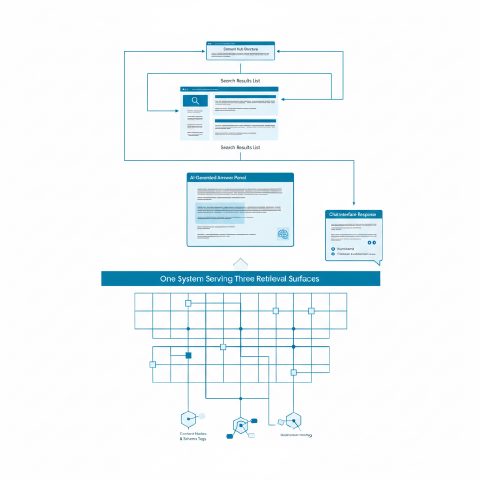
Each engine selects sources differently: Google AI Overviews leans on indexed pages with strong schema and topical depth, Perplexity favors freshness and explicit citations, ChatGPT search leans on entity authority and Bing's index, and Gemini pulls heavily from Google's own knowledge graph. Optimizing for one alone won't cover the others by 2027.
Treating 'AI search' as one target is the most common mistake I see igaming teams make. Each engine has a different retrieval logic, and gambling content sits in a particularly scrutinized YMYL bucket across all of them, which makes generic SEO advice useless here.
Google's AI Overviews draw heavily from pages already ranking well organically, cross-referenced against structured data and the site's existing helpful-content signals, so classic SEO fundamentals still gate entry. Perplexity behaves more like a live research assistant: it rewards freshly published or updated content with explicit dates, clear sourcing, and content that answers a narrow question completely in a self-contained block. ChatGPT's search mode increasingly favors entities it recognizes from training data plus live retrieval, which means Wikipedia presence, Wikidata entries and consistent brand mentions across trusted domains carry outsized weight. Gemini, tied to Google's knowledge graph, rewards the same entity consistency but filters more aggressively for licensed-market compliance signals on gambling topics specifically.
By 2027 I expect these engines to converge somewhat on citation transparency (showing sources more consistently, following pressure from publishers and regulators), but the underlying selection mechanics will stay distinct enough that a single-engine strategy leaves real citation share on the table.
| Engine | Primary selection signal | Citation behavior | iGaming-specific note |
|---|---|---|---|
| Google AI Overviews | Existing organic rank + schema | Sometimes cites, sometimes summarizes without a visible link | Heavily filters YMYL gambling queries; licensed-market pages favored |
| Perplexity | Freshness + explicit sourcing | Consistently shows numbered citations | Rewards recently updated regulatory/odds content |
| ChatGPT (search mode) | Entity recognition + live retrieval | Cites selectively, improving over 2024-2025 | Wikipedia/Wikidata presence strongly influences inclusion |
| Gemini | Google knowledge graph entity data | Similar to AI Overviews, tightly coupled | Compliance and licensing signals weigh heavily on gambling entities |
Will Google's core updates keep punishing YMYL gambling affiliate sites?
Yes, and harder. Google's YMYL review criteria already penalized thin comparison content in the March 2024 core update and the parasite-SEO crackdown that followed. By 2027, expect stricter enforcement of the site reputation abuse policy and higher demands for verifiable author expertise on any page discussing odds, payouts or licensing.
The 2023 Helpful Content Update and the March 2024 core update were the clearest signal Google has ever sent about affiliate and comparison content: pages with no demonstrable first-hand experience, generic author bylines, or content clearly generated to rank rather than inform lost visibility, some client sites in my portfolio saw 30-60% traffic drops on affected templates almost overnight. That wasn't random. It targeted exactly the pattern common in older igaming affiliate playbooks, templated 'top 10 casino' pages with no real testing behind them.
I expect the enforcement pattern to sharpen further through 2026-2027, specifically around the site reputation abuse policy Google formalized in 2024, which already penalizes third-party sponsored content hosted on trusted news domains purely to borrow domain authority. Gambling affiliates who relied on that tactic for backlink equity are the most exposed group heading into 2027.
The fix isn't cosmetic. It requires real bylines with checkable credentials, disclosed editorial policies, first-hand testing evidence (screenshots of actual withdrawal timestamps, real deposit flows, not stock imagery), and a clear separation between editorial content and paid placement. Sites that built this infrastructure before 2024 are the ones showing resilience through subsequent updates in my tracking.
How will tightening gambling regulation reshape SEO strategy by 2027?
Regulation is becoming a ranking and citation signal, not just a legal requirement. Google and AI engines increasingly treat licensed-market compliance as a trust proxy for YMYL gambling content, which means grey-market or offshore-focused sites face a widening visibility gap against operators covering regulated markets like the UK, Ontario or New Jersey.
I've watched this play out market by market. UK content that clearly reflects UKGC advertising codes and responsible gambling messaging tends to earn steadier AI Overview inclusion than content targeting offshore operators with vague licensing claims. That's not coincidence, Google's YMYL guidelines explicitly instruct quality raters to weigh regulatory legitimacy, and AI retrieval systems trained partly on those same quality signals inherit the bias.
The US state-by-state model keeps fragmenting content requirements further. Content built for New Jersey's regulated market can't simply be repurposed for Ontario's AGCO framework or a newly regulated state without real localization, betting limits, self-exclusion tools, and licensed operator lists differ enough that generic templates now read as low-effort to both human reviewers and AI systems checking factual accuracy.
By 2027 I expect this regulatory-signal effect to intensify as more jurisdictions (additional US states, EU markets like Germany's GGL framework) formalize licensing, and as AI engines get better at flagging unlicensed operator mentions as a trust risk. Affiliates still building broad, jurisdiction-agnostic 'best casino' content are optimizing for a search landscape that's disappearing.
| Market | Regulator | 2025-2027 trend | SEO/content implication |
|---|---|---|---|
| United Kingdom | UKGC | Stricter advertising codes, affiliate compliance audits | Compliant messaging and disclosure improve AI/Google trust signals |
| US (state-by-state) | State gaming boards (NJ, MI, PA, etc.) | Continued piecemeal legalization | Generic multi-state content loses to jurisdiction-specific pages |
| Canada (Ontario) | AGCO/iGO | Mature regulated framework since 2022 | Licensed-operator-only content required for compliant visibility |
| EU (e.g. Germany) | National regulators (GGL etc.) | Tightening license enforcement | Unlicensed operator coverage increasingly filtered from AI answers |
| Offshore/grey markets | Varies, often unregulated | Growing scrutiny from Google and AI systems | Widening visibility gap versus licensed-market content |
What does LLM SEO / GEO for casino brands actually require in 2027?
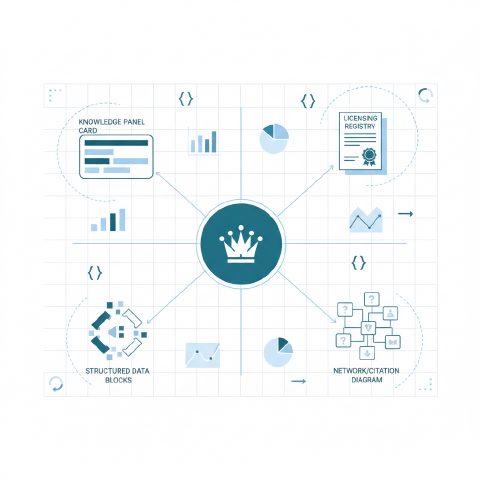
GEO for igaming means building entity clarity: consistent brand facts across Wikidata, Wikipedia, review platforms and trusted media mentions, structured data (Organization, Review, FAQPage schema), and content written in self-contained, extractable answer blocks. Backlink volume matters less than being an unambiguous, citable entity.
Entity SEO isn't new, but igaming has been slow to apply it seriously. AI engines don't retrieve content the way a classic crawler indexes it, they retrieve and synthesize based partly on how confidently they can identify who or what is speaking. A page with no clear author entity, no organization schema, and no consistent brand presence outside its own domain gives an LLM nothing solid to anchor a citation to.
The practical build looks like this: Organization and Person schema validated through Google's Rich Results Test or Schema.org validators, FAQPage markup on genuinely useful FAQ sections (not stuffed keyword lists), a Wikidata entry if the brand has enough independent notability to qualify, and digital PR that earns mentions on domains an LLM already trusts, trade press, licensed operator directories, regulator news pages. I've seen client entities go from unrecognized to consistently cited in ChatGPT answers within four to six months once these pieces were in place together, though results vary by competitive density in the specific niche.
Content structure matters just as much as backend signals. Answer-first paragraphs, clear H2 questions mirroring real search phrasing, and specific numbers over vague claims all make a passage easier for an LLM to lift cleanly into a synthesized answer with attribution intact.
Will affiliate comparison content survive AI-driven zero-click search?
Generic 'best online casino' listicles with no first-hand testing are the most exposed content format heading into 2027. Comparison content survives if it adds verifiable evidence AI engines can't easily replicate, real withdrawal timing data, disclosed testing methodology, and niche angles too specific for a generic AI summary to fully replace.
Zero-click behavior isn't new to igaming, Google's own SERP features have been eating comparison-table clicks since featured snippets scaled around 2018. What's different now is the summary quality. An AI Overview can synthesize five competing 'top 10' lists into one paragraph, which flattens the value of any comparison page that just aggregates public information without adding anything.
The content that keeps earning clicks in my client accounts adds something an LLM can't fabricate from public data alone: actual timestamped withdrawal tests across payment methods, screenshots of KYC flow friction points, disclosed conflicts of interest, or coverage of a genuinely narrow niche (crypto-only casinos in a specific unregulated-but-tolerated jurisdiction, for example) where generic training data is thin. That evidentiary layer is exactly what gets an AI engine to cite the source explicitly rather than paraphrase it anonymously.
Monetization is shifting in parallel. Affiliates who diversified into owned audiences, email lists, YouTube review channels, Discord communities, are less exposed to click volume drops than those entirely dependent on organic search referral. By 2027, I'd expect the affiliates still running pure aggregation models with no first-hand testing to see continued erosion regardless of any technical SEO fix.
How should topical authority and site architecture evolve for 2027 rankings?
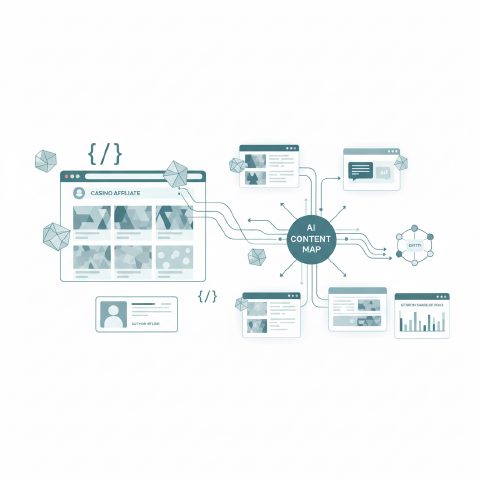
Hub-and-spoke architecture stays essential, but the hub now needs to double as an entity definition page, not just a link hub. Each spoke should answer one specific, real search question completely, with internal links reinforcing a clear topical boundary that both crawlers and LLM retrieval systems can parse unambiguously.
Topical maps built purely for internal-linking PageRank distribution miss half the point now. An LLM retrieving content doesn't just follow links, it's trying to determine what the page, and the site, is definitively an authority on. A hub page for 'live dealer casinos' that links to twenty thin spokes about individual game providers, with no depth in any of them, signals breadth without authority to both Google's helpful-content systems and AI retrieval.
The stronger pattern I'm building for clients: fewer spokes, each one exhaustive on a single real question (payout speed by payment method, specific state licensing status, verified RTP data by provider), with the hub page functioning almost like a Wikipedia-style entity summary that an AI engine could plausibly cite on its own. This also protects against cannibalization, since narrower, deeper pages compete less with each other for the same query intent.
Internal linking still matters for crawl efficiency and topical signal distribution, but by 2027 I'd weight content depth per page well above sheer page count when allocating content budget for a new topical cluster.
What technical SEO and structured data factors matter most for AI citation?
Core Web Vitals and crawlability remain baseline requirements, not differentiators. What moves the needle for AI citation specifically is comprehensive schema (Organization, Review, FAQPage), explicit crawl access for GPTBot, PerplexityBot and Google-Extended, and semantic HTML that isolates self-contained answer blocks an LLM can lift without ambiguity.
Page speed and mobile usability stopped being competitive advantages years ago, they're table stakes, and most established igaming affiliate sites already clear those bars. The technical work that actually differentiates AI visibility in 2027 sits one layer up: structured data completeness and crawler access decisions.
Every client audit I run now includes a robots.txt review specifically for AI crawlers, GPTBot, PerplexityBot, ClaudeBot, Google-Extended. Blocking them protects content from training-data scraping but also removes the site from that engine's citation pool entirely. There's a real trade-off here with no universal right answer: a brand chasing AI Overview and ChatGPT citation share generally needs to allow these crawlers, while a brand with genuinely unique proprietary data (original odds-tracking datasets, for example) might reasonably restrict access to protect competitive advantage. I walk every client through this decision explicitly rather than defaulting either way.
Schema validation matters more for gambling content than most verticals because of YMYL scrutiny, Review schema needs genuine, verifiable review data behind it, not fabricated ratings, or it risks manual action under Google's structured data guidelines.
| Signal category | Classic SEO focus (pre-2023) | AEO/GEO focus (2026-2027) |
|---|---|---|
| Authority | Backlink volume and domain rating | Entity recognition across Wikidata, Wikipedia, trusted media mentions |
| Content structure | Keyword density, long-form word count | Self-contained answer blocks, explicit Q&A structure |
| Trust | HTTPS, privacy policy, contact page | Verified author credentials, editorial policy, disclosed testing methodology |
| Technical | Core Web Vitals, mobile-first indexing | AI crawler access decisions, comprehensive validated schema |
| Success metric | SERP position, organic sessions | Citation frequency, share-of-voice across LLM prompt testing |
What new skills or roles will iGaming SEO teams need by 2027?
Teams need a hybrid AEO/GEO specialist who runs weekly prompt-testing across ChatGPT, Perplexity and Gemini, an entity/knowledge-graph manager handling Wikidata and structured data, and content writers with real regulatory literacy, not just keyword research skill, but the ability to write compliant, evidence-backed YMYL content.
The affiliate SEO org chart I'm seeing evolve at forward clients now includes a dedicated AEO/GEO tracking function that didn't exist two years ago. That role runs recurring prompt tests against a fixed query set, the same 40-60 commercial gambling questions, checked weekly or biweekly across the major AI engines, and tracks whether the brand appears, how it's framed, and whether it's cited by name. Emerging third-party tools for this (Profound, Rankscale and similar platforms) are still maturing and none of them cover every engine comprehensively yet, so a fair amount of this tracking remains manual.
Content teams need regulatory literacy layered onto traditional SEO writing skill. A writer producing a 'best payout casinos in Michigan' page now needs to understand Michigan Gaming Control Board licensing status accurately enough that the content survives both a Google quality rater review and an AI fact-check pass, factual errors on licensing status are exactly the kind of YMYL failure that triggers both manual actions and citation exclusion.
I'd also flag a growing need for someone owning digital PR specifically for entity building, not classic link building for anchor text, but targeted outreach that gets a brand mentioned accurately and consistently on domains an LLM already treats as authoritative.
What should affiliate owners and operators do right now to prepare for 2027?
Start with an E-E-A-T and schema audit now, not in 2027. Prioritize author credential visibility, structured data completeness, and first-hand testing evidence on your highest-traffic comparison pages, then begin weekly AI citation tracking across ChatGPT, Perplexity and Gemini to establish a baseline before competitors close the gap.
The clients ahead of this curve started 12-18 months before it became obvious in traffic data, and that lead time is exactly why they're seeing citation share now instead of scrambling for it. Waiting until an AI Overview visibly eats your traffic is waiting too long.
My priority order for 2026 into 2027: first, fix E-E-A-T fundamentals, real author bios with checkable credentials, an editorial policy page, disclosed affiliate relationships, because this gates entry to both core update resilience and AI trust. Second, implement complete, validated schema across your top 20% highest-traffic pages by revenue, since that's where citation opportunity concentrates. Third, set up a recurring manual prompt-testing routine across the three or four AI engines that matter for your market, using a fixed query list so you can measure change over time rather than anecdote. Fourth, run a digital PR sprint specifically targeting entity-building mentions on trade press and licensed-market resource pages, not generic guest posts for anchor text.
None of this replaces solid technical SEO or content depth, it sits on top of that foundation. Teams treating AEO as a bolt-on tactic separate from core SEO discipline are the ones I expect to lose the most ground through 2027.
- — AI Overviews and LLM answers push discovery above the traditional SERP, making explicit citation the metric that predicts traffic and revenue by 2027.
- — Site reputation abuse policy enforcement and stricter author-expertise checks expand, continuing the pattern set by the March 2024 core update.
- — Licensed-market compliance (UKGC, AGCO, US state boards) increasingly correlates with AI citation likelihood, widening the gap for grey-market content.
- — Wikidata, Wikipedia and consistent structured data across trusted domains matter more for LLM citation than raw domain rating.
- — Aggregated 'best casino' content without first-hand testing evidence gets flattened into anonymous AI summaries instead of earning attributed citations.
- — Topical hubs need to double as clear, citable entity summaries, not just internal-linking distribution points.
- — Robots.txt policy for GPTBot, PerplexityBot and Google-Extended directly determines citation eligibility per engine.
- — Recurring manual prompt-testing across ChatGPT, Perplexity and Gemini becomes a standard part of the affiliate SEO workflow by 2027.

Comments
No comments yet, be the first.