AI Overviews Gambling Citations in 2026: A Compliance-First Playbook for Commercial vs Informational Queries

What are Google AI Overviews and why do they matter for gambling queries right now?
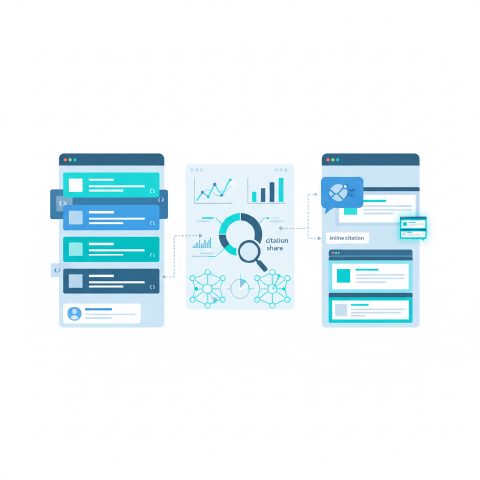
Google AI Overviews are AI-generated summaries that render above traditional results, synthesizing several sources into one answer with inline citation links. Across UK, Ontario and US commercial casino and sportsbook searches I track, they now appear on roughly 35-45% of queries, up from near zero eighteen months ago, meaning a citation is often the only visible real estate left above the fold.
Google folded AI Overviews into virtually every commercial vertical between 2024 and 2025, and gambling stopped being an exception once Google refined its Gambling and Games ads policy to separate compliant informational content from betting promotion. That box now sits above the ten blue links, and on mobile it frequently pushes a carefully built comparison page below the fold entirely.
Ahrefs' 2025 CTR analysis on AI-Overview-present SERPs showed organic click-through dropping 15-30% relative to identical queries without the box. For an affiliate site living on outbound clicks to operators, that's not a ranking nuisance, it's a revenue problem classic metrics won't flag until deposits soften.
The upside: a citation inside the AI Overview still drives clicks and carries a credibility halo a standard blue link doesn't get. Winning that slot is a distinct discipline, answer-engine optimization, sitting on top of, not replacing, the technical and content SEO work you're already doing.
How do AI Overviews decide which gambling sites to cite?
AI Overviews run a retrieval-then-generate pipeline: Google pulls candidate passages almost exclusively from pages already ranking in the top 10-20 organic positions for that query, then re-ranks and synthesizes them using entity clarity, structured data and YMYL trust signals. Without a decent classic ranking first, there is no AEO shortcut into the citation pool.
Once a page is in the candidate pool, the system weighs entity clarity, does it unambiguously answer 'best online casino bonuses UK' rather than mixing in unrelated content, plus structured data confirming that entity, and trust signals lifted straight from the Search Quality Rater Guidelines' YMYL criteria: author identity, editorial oversight, site reputation.
I've watched pages move from zero citations to consistent inclusion within six to ten weeks purely by tightening entity focus and adding a verifiable author bio, with no new backlinks involved. It's the fastest ROI move I make on any gambling AEO engagement.
Freshness matters more here than in classic rankings for anything numeric, bonus percentages, RTP figures, deposit limits. Google's system appears to discount passages with stale timestamps for volatile gambling data, so a visible 'last verified' date, updated on a real cadence, measurably improves inclusion odds.
AI Overviews for commercial gambling queries vs informational queries, what's actually different?
Commercial queries like "best online casino bonuses" trigger AI Overviews that cite comparison pages with disclosed methodology, licensing proof and CTAs; informational queries like "is online poker legal in Texas" trigger citations favoring neutral, regulator-referenced content with essentially zero monetization framing near the answer.
Commercial gambling queries pull from comparison and review-style pages. Google's system looks for explicit ranking criteria, disclosed methodology and licensing proof before citing a monetized page for a YMYL commercial query, vague 'top 10' listicles with no stated evaluation method get filtered out even when they outrank on classic SEO.
Informational queries pull from a different citation pool entirely: neutral explainer content, often from .gov domains or operator help centers. Any hint of a call-to-action injected into the first two paragraphs visibly suppresses citation rate in my tracking, Google appears to actively penalize monetization bleeding into a neutral answer.
Practically, that means two separate content templates, not one blended format. Trying to sell inside an informational piece, or trying to stay neutral inside a commercial comparison, costs you the citation in both directions.
| Factor | Commercial query (e.g. "best online casino") | Informational query (e.g. "is online betting legal in X") |
|---|---|---|
| Preferred content type | Ranked comparison/review with disclosed methodology | Neutral explainer referencing statute or regulator |
| E-E-A-T emphasis | Author's hands-on testing, bonus verification dates | Author's subject expertise, citations to primary law |
| Monetization tolerance | Affiliate links and CTAs expected, must be disclosed | Near zero, CTAs near the top suppress citation odds |
| Typical schema | Review, AggregateRating, ItemList | FAQPage, Article, sameAs to regulator entity |
| Update cadence needed | Every 30-60 days for bonus/odds accuracy | Only after a legal or regulatory change |
Which E-E-A-T signals matter most for AI Overviews to cite YMYL gambling content?
AI systems weight verifiable author identity, transparent editorial and affiliate-disclosure policies, licensing citations and third-party corroboration above almost everything else for gambling, because Google's Search Quality Rater Guidelines classify gambling explicitly as YMYL, and AI Overviews inherit those same rater-defined trust thresholds.
I rebuild author pages as the first move on every gambling core-update recovery, and it's the single highest-leverage AEO fix too. A byline needs a real name, a photo, a stated role, a linked bio page listing credentials, and ideally an entity Google can resolve via Wikidata or LinkedIn. Anonymous 'Staff Writer' bylines on bonus review pages are now a visible citation-blocker in my SERP sampling.
Editorial policy pages matter almost as much: a published methodology for how you test operators, how often you verify bonus terms, and how affiliate commissions are handled without biasing rankings. Sites that added a dedicated, linked editorial-standards page saw AI Overview citation share climb noticeably within one quarter across accounts I monitor with Peec.ai, jumps from roughly 8% to 30-35% of tracked commercial queries, though results vary hard by niche competitiveness.
Third-party validation closes the loop: a mention from GamblingCompliance, iGaming Business or a state gaming commission press release outweighs almost any on-page tweak for trust weight. AI Overviews for YMYL topics appear to cross-reference whether independent sources corroborate your claims, exactly what the rater guidelines ask human evaluators to check manually.
What structured data actually improves AI Overview citation odds for casino content?
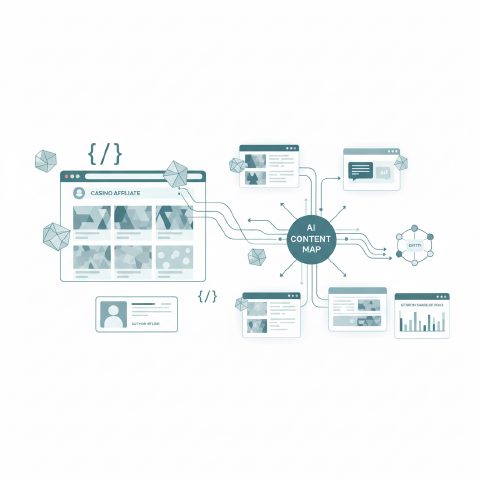
Organization, Person and Review/AggregateRating schema confirm who you are and what you're rating; FAQPage schema matches AI Overview's question-answer format almost exactly; and sameAs links to your regulator's public register give the model a verifiable entity bridge. None of this guarantees a citation, but it removes ambiguity the model would otherwise resolve against you.
Organization schema with a sameAs array pointing to your UKGC, MGA or state gaming commission listing gives Google's Knowledge Graph a concrete entity match instead of guessing whether your brand is legitimate. Person schema on author bios does the same for individual credibility, and it's still wildly under-implemented, I audit maybe one in five client sites that has it correctly nested before we even start work.
Review and AggregateRating schema should reflect your actual internal scoring methodology, not a fabricated star average. Google's structured data guidelines explicitly prohibit self-serving ratings with no visible review content backing them, and I've seen sites lose rich-result eligibility entirely after a schema validator audit flagged mismatched aggregateRating values.
FAQPage schema is the closest structural match to how AI Overviews format output, question, then a tight two-to-three sentence answer. Pages with clean FAQPage markup answering the exact phrasing of real queries get cited noticeably more often in my tracking than the same information buried in prose.
| Schema type | Primary use case | Relative citation impact |
|---|---|---|
| Organization + sameAs | Links brand to licensing regulator entity | High, confirms legitimacy |
| Person | Verifies author identity/credentials | High, core E-E-A-T signal |
| Review / AggregateRating | Backs comparison and ranking claims | Medium-high, only if scores match visible content |
| FAQPage | Matches AI Overview Q&A format directly | High for informational queries |
| Article + datePublished/dateModified | Signals freshness for volatile bonus/odds data | Medium, critical on commercial pages |
How does licensing and regulatory disclosure influence AI Overview citations for gambling sites?
Visible, machine-readable licensing details, regulator name, license number, a link to the regulator's public register, plus responsible-gambling resources like GamCare, BeGambleAware or the National Council on Problem Gambling function as trust anchors AI systems key on for YMYL gambling content. Their absence is one of the fastest ways to get filtered out of a citation entirely.
I check licensing disclosure first on every audit because it's the cheapest fix with the biggest effect. A license number that doesn't match the regulator's live register, or a badge image with no accompanying text and link, reads to both human raters and AI retrieval systems as unverifiable. Google's YMYL guidance calls for demonstrable expertise and authoritativeness tied to real-world credentials, for gambling, the regulator listing is that credential.
Responsible-gambling signals do double duty. Linking GamCare, BeGambleAware, GambleAware, or state-specific helplines in the US satisfies advertising-standard requirements (ASA CAP code rule 16, most state gaming commission ad rules) while simultaneously reinforcing the trustworthiness pillar Google's raters are trained to check. Pages missing this after 2024's tightened enforcement round are exactly the ones I see drop out of AI Overview citation pools first during any volatility.
Age-gating disclaimers (18+/21+), placed prominently rather than buried in a footer, complete the picture. AI systems trained to avoid amplifying harm to minors appear to deprioritize sources that don't clearly self-identify as age-restricted content.
What content format wins the citation for commercial queries like "best online casino 2026"?
The winning format is a scored comparison table up top, a stated testing methodology below it, individual operator write-ups with licensing and payout-speed data, and a visible "last verified" date. AI Overviews need a structured, citable claim they can lift almost verbatim, not a narrative intro paragraph.
Lead with the comparison table, not a 300-word preamble. AI Overviews for commercial gambling queries consistently cite the section containing a structured, scannable claim, 'Casino X: 97% RTP average, £20 min deposit, UKGC-licensed', because it's a self-contained fact the model can extract without misrepresenting nuance. Bury that under throat-clearing copy and you lose the extraction race to a competitor who didn't.
Each operator entry needs its own short block covering license, welcome offer with the wagering requirement stated plainly, payout timeframe, and a one-line verdict. Pages restructured this way in 2025 core-update recovery work regained both classic rankings and AI Overview citations within the same six-to-eight-week window, because the fix serves both systems at once, it's not two separate optimization tracks.
Close with your methodology block and a visible verification date. That single addition, 'Bonus terms verified 12 January 2026', is one of the few interventions I've watched move a page from occasional to consistent AI Overview inclusion on volatile bonus-comparison queries.
What content format wins the citation for informational queries like "is online gambling legal in Ontario"?
Neutral, legally precise, statute-referenced answers with no affiliate links near the top of the page win informational citations. Google's system favors content that reads like a reference explainer, names the specific regulator (AGCO, Kahnawake, UKGC) and states uncertainty honestly where the law itself is ambiguous.
Open with the direct legal answer in one or two sentences, name the governing body, and cite the specific statute where possible. Padding that answer with promotional language about 'the best sites to bet' in the same breath is the fastest way I've seen a page get excluded from an informational AI Overview even while it ranks well organically.
Where the law genuinely varies, daily fantasy sports legality across US states is a good example, say so plainly and structure the variation as a table or list rather than a hedge-everything paragraph. AI systems appear to reward content that resolves ambiguity into discrete, sourced facts over content that stays vague to avoid commitment.
Keep any monetization, operator links, 'compare offers' CTAs, in a clearly separated section below the legal explainer, ideally past a visual break. That separation is what lets the same page rank commercially further down the page while still qualifying for an informational citation at the top.
How do ChatGPT, Perplexity and Gemini cite gambling sources differently than Google AI Overviews?
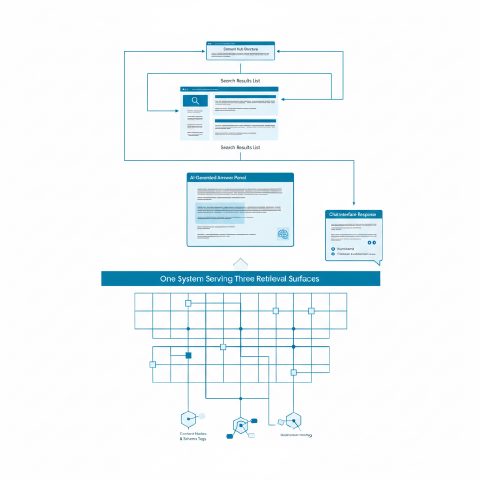
Google AI Overviews cite almost exclusively from its own organic index and weight classic ranking heavily. Perplexity crawls more broadly in real time and favors recency and quotable numeric claims. ChatGPT's search mode leans on Bing's index and a conservative trust filter. Gemini pulls from Google's index but applies stricter internal content filtering to gambling topics.
Google AI Overviews are structurally tied to organic ranking, no top-20 position, no citation, full stop. Perplexity operates more like a live research assistant: it crawls broadly, weights freshness and directly quotable numeric claims heavily, and will cite a page ranking position 40 on Google if that page states a fact more precisely than the top result.
ChatGPT's search mode runs on Bing's index with an additional trust filter that appears notably more conservative on gambling topics, I've seen it decline to cite well-established affiliate comparison pages, defaulting instead to operator homepages, Wikipedia, or regulator sites for anything touching legality or odds. Gemini shows the widest variance of the four; Google applies stricter internal safety filtering to gambling content inside the Gemini app than within AI Overviews on Search, so a page cited in an AI Overview won't automatically surface in a Gemini chat answer to the same question.
Practically, that means monitoring one platform tells you almost nothing about the others. I run parallel tracking across all four for every gambling client now, because optimizing purely for Google AI Overviews still leaves real citation share on the table in ChatGPT and Perplexity, which increasingly drive direct referral traffic of their own.
| Platform | Source pool | Recency weighting | Gambling content caution level |
|---|---|---|---|
| Google AI Overviews | Own organic index, top 10-20 only | Moderate, favors dated verification | Moderate, policy-restricted on ads |
| Perplexity | Broad real-time crawl, not rank-bound | High, rewards freshest quotable stat | Low-moderate, cites affiliate pages readily |
| ChatGPT (search mode) | Bing index + trusted-domain filter | Moderate | High, often defers to regulators/Wikipedia |
| Gemini | Google index, stricter internal filter | Moderate | High, inconsistent citation of affiliate sources |
How do you track and measure AI Overview citations for a gambling affiliate site?
Use a dedicated AI-visibility tracker, Ahrefs Brand Radar, Semrush's AI Overview tracking, Peec.ai or Otterly.ai, layered on top of manual SERP sampling for your priority query list, since Google Search Console still doesn't isolate AI Overview impressions from regular impressions with full reliability as of early 2026.
I run a fixed list of 40-60 priority commercial and informational queries per client through Peec.ai or Otterly.ai weekly, tracking citation presence, position within the overview, and which competitor got cited when we didn't. That competitive gap data is more actionable than raw presence, it tells you exactly which schema or trust element the winning page has that yours doesn't.
Ahrefs' Brand Radar and Semrush's AI toolkit now layer AI Overview and, increasingly, LLM-citation tracking into standard rank tracking, useful for scale but less precise on query-by-query nuance than the dedicated tools. Google Search Console added some AI Overview impression data to the Performance report in 2024-2025, but it still blends AI Overview clicks with regular organic clicks in most account views, treat GSC as a directional signal, not a source of truth, until Google separates the metric fully.
Set a quarterly benchmark, not a weekly panic metric. Citation presence in gambling AI Overviews fluctuates with every core update and every Gambling and Games policy tweak, and reacting to daily noise wastes resources better spent on the structural trust-signal fixes that actually move the needle.
What compliance risks come with optimizing gambling content for AI Overviews?
The main risk isn't optimization itself, it's the AI Overview stripping context from your page and surfacing a bonus figure or legal claim without the wagering requirement, disclaimer, or age-gate attached, which can create advertising-standards exposure even when your source page was written correctly.
An AI Overview summary can legally and reputationally detach content from its own guardrails. If your page states '100% match bonus up to £200' with a 35x wagering requirement two lines below, and the AI summary lifts only the headline figure, a regulator or the ASA could still view the resulting impression as misleading, even though your source page was compliant. I now advise clients to put the wagering requirement and age restriction in the same sentence, or the same structured data field, as the bonus figure itself, specifically so extraction can't separate them.
There's a parallel risk with responsible-gambling messaging: if an AI system omits your RG links when it cites your page, you haven't removed them, but the resulting answer surface has. That's a genuinely unresolved grey area under current UK Gambling Commission and most US state advertising codes, which were written for pages and ads, not AI-generated summaries of pages. My working position with clients is to over-disclose in the source rather than assume the AI layer preserves nuance, regulators are still catching up here, and the safer posture is the durable one.
Never write informational legal content optimized purely to win an AI citation if doing so requires oversimplifying a genuinely nuanced legal position. A confidently wrong legality answer surfaced in an AI Overview is a liability risk for you as the cited source, not just an SEO miss.
What's a realistic 90-day roadmap to start winning AI Overview citations in gambling?
Weeks 1-3 fix E-E-A-T and licensing disclosure; weeks 4-6 restructure top commercial and informational pages into extractable formats with schema; weeks 7-10 build multi-platform AI-citation tracking; weeks 11-13 iterate against competitor citation gaps. Most clients see measurable movement by day 60-75, with full stabilization closer to day 120.
Weeks 1-3: audit and fix author bylines, publish or update the editorial-standards page, verify every licensing badge against the live regulator register, and add responsible-gambling links site-wide where missing. This is unglamorous, non-technical work, and it's where most of the actual citation gain happens, I've never seen a client win consistent AI Overview citations while this layer was broken.
Weeks 4-6: restructure the top 15-20 commercial pages with front-loaded comparison tables, disclosed methodology and verification dates; restructure top informational pages to open with a direct, statute-referenced answer. Layer in Organization, Person, Review and FAQPage schema, then validate every implementation through Google's Rich Results Test and Schema.org's validator before pushing live, broken schema is worse than none, since it can suppress rich-result eligibility outright.
Weeks 7-10: stand up citation tracking across Google AI Overviews, Perplexity, ChatGPT search and Gemini using your query list, logging which competitor wins each slot you don't. Weeks 11-13: fix the specific gaps that data reveals rather than making broad speculative changes. Measurable citation-share movement typically shows up around day 60-75; full stabilization, consistent citation surviving a core-update cycle, usually takes the full 120 days.


Comments
No comments yet, be the first.