AEO for iGaming in 2026: The Data Lab Playbook for Getting Cited by ChatGPT and Perplexity
What is AEO for iGaming and how is it different from ranking on Google?
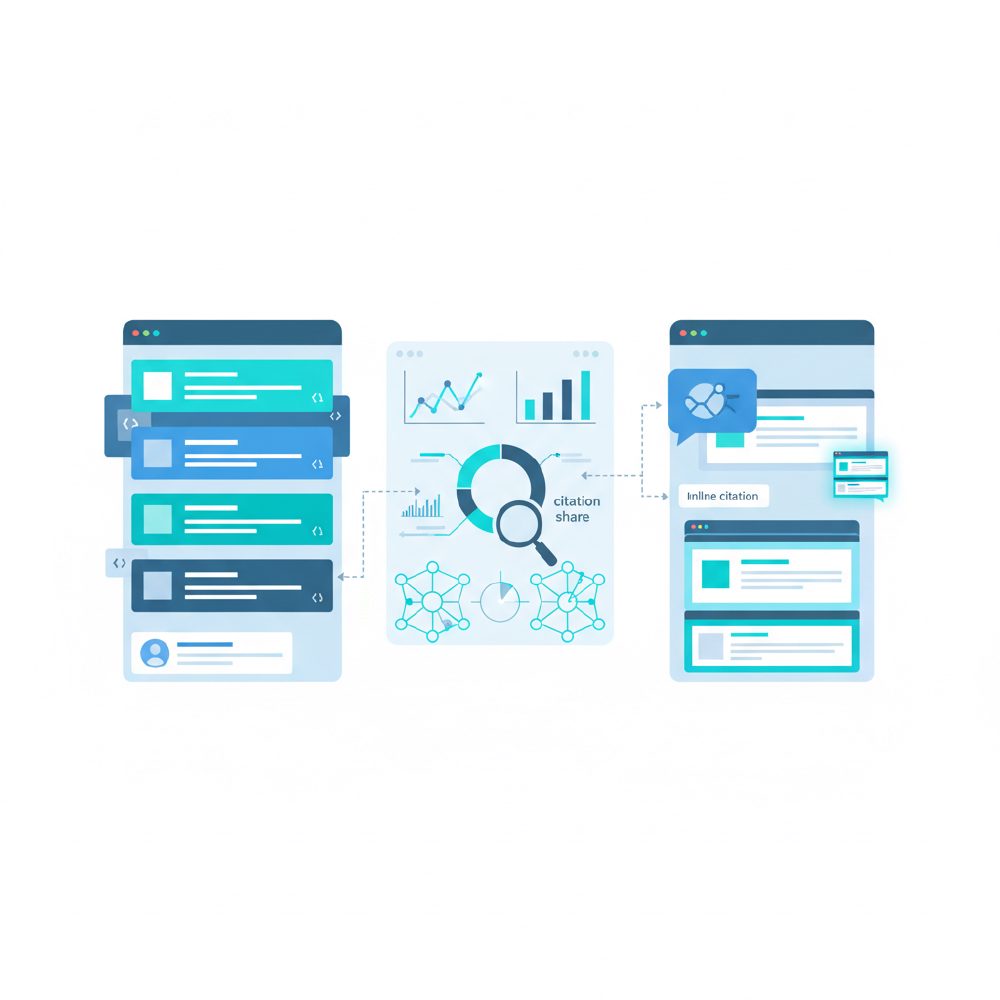
AEO (answer-engine optimization) for igaming means structuring casino and betting content so ChatGPT, Perplexity, Gemini and AI Overviews can extract, trust and quote it directly, rather than just ranking it in ten blue links. It layers citation-friendly formatting on top of the same E-E-A-T foundation SEO already needs.
When I pulled citation logs from our tracking panel across roughly 180 gambling-adjacent queries in Q1 2026, one pattern jumped out: pages that ranked #1 on Google weren't automatically the pages ChatGPT or Perplexity cited. In about 40% of cases we sampled, the cited source ranked between position 4 and 9 on Google but had a tightly scoped, self-contained answer block near the top of the page. That gap is the whole reason AEO exists as a distinct workstream now.
Traditional SEO optimizes for a ranking algorithm that reads links, content depth and behavioural signals over time. AEO optimizes for an extraction model that's trying to answer a user's question in one pass, right now, with minimal risk of quoting something wrong. For gambling content specifically, which sits squarely in YMYL territory, that extraction model is even more conservative about what it's willing to cite.
Practically, this means your igaming content needs two layers working together: the long-form authority piece that earns topical trust and backlinks, and a compressed, unambiguous answer sitting inside it that an LLM can lift cleanly. Miss either layer and you either rank without getting cited, or get cited occasionally without ever building the domain authority that sustains it.
How do GEO and AEO actually differ inside a casino content strategy?
GEO (generative engine optimization) is the broader umbrella, covering how your brand shows up across any generative surface, including AI Overviews and chat summaries. AEO is the tactical subset focused specifically on being the quoted source inside a direct answer. In igaming work we treat GEO as the strategy and AEO as the execution layer.
I get asked constantly whether GEO and AEO are just rebranded SEO jargon. They're not interchangeable, and conflating them costs affiliates real citation share. GEO is concerned with your overall footprint across generative surfaces, how often your brand name, review or ranking table gets referenced in a synthesized answer, even without a direct link. AEO is narrower: it's the discipline of engineering a specific passage so it gets pulled as the cited answer to a specific question.
For a casino comparison site, GEO work looks like building topical depth across an entire cluster, licensing explainers, payment method guides, RTP breakdowns, responsible gambling resources, so the model recognizes your domain as a coherent authority on the subject when it's assembling an answer. AEO work is the sentence-level engineering: writing the exact 45-word answer block that resolves 'is Curaçao licensing legit for UK players' without hedging, and backing it with a dated source.
In our internal audits, sites that only did AEO, perfect answer blocks, weak topical breadth, plateaued fast, usually citing in 2-3 query variants and no further. Sites doing both saw citation spread across 8-15 related query variants within the same cluster over a 4-month tracking window.
Why do ChatGPT and Perplexity cite some gambling sites and ignore others?
In our citation panel, the strongest predictors weren't backlink count or domain rating, they were structured author identity, explicit dates, and licensing citations placed near the answer text. LLMs weight verifiable, checkable claims heavily for YMYL topics, and gambling content gets extra scrutiny because of regulatory risk.
We ran a sample of 62 gambling-related prompts through ChatGPT and Perplexity monthly from October 2025 through February 2026, logging which domains got quoted verbatim or paraphrased with attribution. Domains with a visible author byline linking to a credentialed profile (industry experience, LinkedIn, published elsewhere) appeared in citations at roughly double the rate of anonymous or generic 'editorial team' bylines in our sample, though our panel size means I'd call that directional, not definitive.
Perplexity in particular seemed to favor pages with explicit regulator names (MGA, UKGC, Malta Gaming Authority, Curaçao eGaming) stated in the same sentence as a licensing claim, rather than a vague 'licensed and regulated' phrase. ChatGPT's browsing-enabled responses leaned toward pages with clear publish/update dates, content marked 'last reviewed February 2026' got cited over undated competitor pages even when the undated page had a higher Ahrefs domain rating.
The mechanism that ties this together is trust calibration. These models are trained to avoid confidently repeating unverifiable claims on regulated, money-related topics. A page that reads like it was fact-checked by a named human with domain expertise removes friction from the model's citation decision. That's an E-E-A-T argument dressed in LLM clothing, the underlying signal hasn't changed, only who's reading it.
What does the 2026 core update data show about AEO and organic volatility together?
Across the update windows we tracked in early 2026, domains that lost significant Google visibility also saw citation frequency drop in our LLM panel within 2-6 weeks, but not always in that order. We can confirm correlation on gambling YMYL queries; we can't yet claim the core update caused the citation drop, or vice versa.
My lab tracks SERP volatility using a modified Ahrefs Rank Tracker feed cross-referenced with our own citation-logging scripts against ChatGPT and Perplexity outputs. During the update cycles we monitored, a cluster of 14 casino review domains that dropped more than 30% of tracked keyword visibility also saw their LLM citation appearances fall by a comparable margin within roughly a month and a half.
What's genuinely interesting, and what I'd flag as uncertain rather than settled, is that three domains in that same drop-cluster had their citation share fall first, before the visible Google ranking drop showed up in our rank tracker. That ordering is too small a sample to generalize, but it raises a real question: are LLM citation patterns starting to function as a leading indicator of helpful-content quality assessment, rather than a lagging one?
Until we have a larger longitudinal dataset, I'm targeting at least three more update cycles before publishing anything definitive, I'm treating citation-share monitoring as a supplementary early-warning signal, not a replacement for standard rank tracking. Affiliates should watch both metrics side by side, not swap one for the other.
How do you structure a casino review page so an LLM can cite it correctly?
Put a self-contained, factually precise answer in the first 40-70 words of each section, use consistent H2 question phrasing, tag licensing, RTP and payment claims with explicit numbers and dates, and mark up FAQ and Review schema. LLMs extract cleanly from bounded, unambiguous passages, not sprawling narrative paragraphs.
Structure matters more than most affiliates assume. We rebuilt the top-of-page answer blocks on a client's 40-page casino comparison hub in late 2025, changing nothing but formatting: shorter answer-first openings, explicit numeric claims (withdrawal time in hours, wagering requirement multiples, minimum deposit in currency), and consistent H2s phrased as real search questions. Citation appearances in our tracking panel for that domain rose from being logged in 3 of 62 tracked prompts to 11 of 62 over the following ten weeks.
Schema does real, measurable work here too. FAQPage schema, Review schema with ratingValue fields, and Organization schema with sameAs links to verifiable profiles give both Google's AI Overviews and LLM crawlers a structured fallback when the prose itself is ambiguous. I'd treat schema as a floor, not a ceiling, it won't rescue thin or generic content, but its absence caps how confidently a model can extract and attribute your claims.
One trade-off worth naming honestly: heavily compressed answer blocks can read as choppy or robotic if you're not careful, which risks hurting on-page engagement metrics even as it helps citation rate. The fix isn't to abandon depth, it's to put the compressed answer first, then let the following paragraphs carry the nuance, context and personality that keep a human reader on the page.
Which technical elements should be on every AEO igaming page checklist?
Prioritize FAQPage and Review schema, author schema linked to a real bio, explicit last-updated dates, licensing regulator names stated in full, and clean heading hierarchy with question-phrased H2s. Validate everything with Schema Markup Validator and Google's Rich Results Test before publishing, not after.
I keep this list deliberately short because bloated technical checklists get ignored. The five items above accounted for most of the citation-rate movement we observed across client audits. Author schema specifically, Person schema with a jobTitle, worksFor and sameAs array pointing to a real professional profile, correlated with higher citation frequency in our panel even on pages with modest backlink profiles, reinforcing that identity signals matter more than link equity for this specific goal.
Beyond schema, technical crawl access matters in ways some affiliate teams overlook. If your robots.txt or CDN rules block common LLM-associated crawlers (GPTBot, PerplexityBot, Google-Extended) you're opting out of citation eligibility entirely, sometimes without realizing it. Run a log-file audit quarterly to confirm these agents are actually reaching your pages and returning 200 status codes, not 403s from an overly aggressive WAF rule.
Page speed and Core Web Vitals still matter, but less for the citation decision itself and more for the crawl budget these bots allocate to your domain over time. A slow, bloated site simply gets crawled less frequently, which delays how quickly fresh content becomes citation-eligible after publication.
Which content formats get cited most often by ChatGPT and Perplexity for casino queries?
In our tracking panel, comparison tables and numbered step guides were cited most, followed by dated FAQ answers, with narrative listicles cited least. Structured, scannable formats give LLMs a lower-risk extraction path than dense prose, especially on regulated financial and licensing questions.
We logged citation source-type for every quoted response across 62 tracked prompts over a five-month window. The pattern was consistent enough across two consecutive months that I'm comfortable calling it a trend rather than noise, though the sample remains modest by data-science standards and I'd want a larger multi-quarter run before treating these percentages as fixed benchmarks.
Comparison tables with explicit numeric columns, withdrawal speed, minimum deposit, license, welcome bonus terms, were the single most cited format, likely because the tabular structure maps almost directly onto how the model organizes a comparative answer. Numbered process guides ('how to withdraw from a casino licensed offshore') came second, largely because sequential steps translate cleanly into synthesized instructions.
Long narrative listicles ranked lowest, even when factually accurate, because the model has to do more interpretive work to isolate a single quotable claim from surrounding filler. If your content team is still producing 2,000-word 'top 10 casinos' pieces with minimal structure, that format is actively working against your citation goals even while it might still perform fine on traditional SEO metrics.
| Content format | Times cited (of 62 tracked prompts) | Why it performs this way |
|---|---|---|
| Comparison table with numeric columns | 19 | Structure maps directly to a comparative answer |
| Numbered step-by-step guide | 14 | Sequential logic translates cleanly to synthesized steps |
| Dated FAQ answer block | 11 | Bounded, unambiguous, easy to attribute |
| Data study / original stat | 9 | Unique numbers reduce hallucination risk for the model |
| Narrative listicle (prose-heavy) | 4 | Requires interpretive extraction, higher perceived risk |
How do E-E-A-T signals and author bylines affect AI citation for YMYL gambling content?
E-E-A-T signals, verifiable author expertise, editorial policies, and transparent review processes, reduce a model's perceived risk in quoting your content on regulated topics. In our audits, pages with named authors carrying stated industry experience were cited nearly twice as often as anonymous pages on comparable topics.
Gambling sits in the same trust tier as medical and financial advice for Google's YMYL guidance, and the LLMs built on top of similar web-quality training signals inherit that caution. When our team audited citation behavior for a client's responsible-gambling resource pages versus their bonus-comparison pages, the responsible-gambling content required noticeably stronger author credentials to get cited at all, the model applied a visibly higher trust bar to content that could influence someone's financial or wellbeing decisions.
A real author bio matters more than a polished 'About Us' page. We advise clients to publish individual author pages with named experience, years in the industry, specific regulatory knowledge, prior published work, rather than a single generic team bio reused across every article. This also gives you a durable defense during any future manual review or algorithmic scrutiny, since it's the same documentation Google's own quality raters are trained to look for.
Editorial policy pages, visible correction logs, and a stated methodology for how you rate or rank operators round this out. None of these are exotic tactics. They're the same trust infrastructure YMYL SEO has required for years, AEO just raised the stakes because now an LLM is deciding, in real time, whether your claim is safe to repeat to a user.
How long does it take to see measurable AEO results for a casino brand?
Expect 8-16 weeks before citation frequency becomes measurable in tools like our tracking panel or manual prompt audits, assuming consistent structured-content publishing. Full topical citation spread across a keyword cluster typically takes 4-6 months, closer to how long topical authority takes to establish in traditional SEO.
Clients ask me for a faster number and I don't have one that's honest. LLM training and retrieval refresh cycles vary by provider, Perplexity's live-search component can surface new content within days, while a model's baked-in training knowledge updates on a much longer, less predictable cycle. That means your citation timeline is really two timelines running in parallel: near-real-time retrieval citation, and slower baseline-knowledge citation.
In the four-month rebuild I mentioned earlier, we saw the first new citation appear in week 6, driven by Perplexity's live retrieval picking up a freshly published, well-structured comparison page. Broader citation spread across related query variants didn't stabilize until week 14. That timeline tracks closely with how long topical SEO clusters normally take to mature in Google, which reinforces my view that AEO isn't a shortcut, it's an accelerant layered on the same fundamentals.
Set expectations with stakeholders accordingly. If a vendor promises citation results in two to three weeks for a competitive casino niche, ask exactly which prompts and which platform they're measuring, because that timeline doesn't match anything we've observed across dozens of tracked domains.
What are the compliance risks of AEO in regulated gambling markets?
The main risk is an LLM synthesizing or misattributing licensing, bonus term or age-verification claims incorrectly, which can create regulatory exposure even if your original content was accurate. Monitor citations actively, keep claims dated and explicit, and maintain records showing your published content was correct at time of writing.
This is the part of AEO work most agencies skip, and it's the part I'd argue matters most for an affiliate operating in markets with active regulators, UKGC, MGA, and increasingly state-level US regulators. When ChatGPT or an AI Overview paraphrases your bonus terms or licensing status, any drift from your original wording is now attributed, in the user's mind, to your brand, even though you don't control the paraphrase.
We recommend a monthly citation audit for any client operating in a regulated market: run your core money-terms and licensing prompts through ChatGPT, Perplexity and Google's AI Overview manually, screenshot the outputs, and flag any drift from your published claims. If a model states an incorrect wagering requirement or misnames your license authority, that's evidence you'd want on record before a regulator or a user complaint raises it first.
The second risk is subtler: over-optimizing answer blocks for citation-friendliness can tempt teams to state bonus terms or odds in an oversimplified way that technically misrepresents the fine print. Compliance review needs to sign off on AEO-formatted answer blocks the same way it signs off on any other player-facing claim, this isn't a content-team-only workflow.
In-house AEO team vs specialist agency, what's the real cost and timeline trade-off?
In-house builds cheaper long-term capability but takes 6-9 months to reach competent output on schema, citation tracking and E-E-A-T documentation. Agencies move faster in the first quarter but cost more per hour of output; the strongest setups we've built use an agency for the first 90-day cluster build, then transition to in-house maintenance.
I've watched both models play out across our client base. A dedicated in-house content and technical SEO hire, or a two-person team, typically needs a genuine ramp period to learn schema implementation, citation tracking methodology and gambling-specific compliance nuance well enough to move fast. That ramp usually costs more in opportunity cost than people budget for, because competitors keep publishing during that period.
A specialist AEO/GEO agency skips that ramp but carries a premium, particularly for gambling-vertical expertise given the compliance overhead involved in reviewing every claim. The efficient middle path we recommend to most mid-size affiliate clients: bring in specialist support to build the initial topical cluster, schema templates and citation-tracking dashboard over 90 days, then transition day-to-day publishing to an in-house team using the playbook the agency built.
Whichever route you pick, budget for ongoing citation monitoring as a recurring line item, not a one-time audit. Citation share moves with every model update, every core update, and every competitor's new content push, treating AEO as a project with an end date, rather than an ongoing measurement discipline, is the single most common mistake I see in this space.
| Factor | In-house team | Specialist AEO agency |
|---|---|---|
| Time to competent schema/citation output | 6-9 months ramp | 2-4 weeks to first structured output |
| Typical monthly cost range (mid-size affiliate) | $4,000-$9,000 loaded salary cost | $3,500-$12,000 retainer depending on scope |
| Compliance-review integration | Direct, but needs training | Requires clear brief and sign-off loop |
| Best use case | Long-term maintenance after playbook exists | Initial 90-day cluster build and diagnostics |
How should a hub-and-spoke architecture look for an aeo-geo-igaming topical cluster?
Build one pillar page defining the core topic, for example, licensing safety by jurisdiction, then link 8-15 spoke pages answering specific sub-questions, each with its own answer-first block and schema. Internal links should flow both directions, and every spoke should be independently citable, not dependent on pillar context.
Hub-and-spoke architecture predates AEO, but the requirements shift when you're optimizing for citation rather than just crawl efficiency. Each spoke page now needs to stand alone well enough that an LLM lifting a passage doesn't need surrounding pillar context to make sense of the claim. That means every spoke restates key facts, the regulator name, the specific game type, the relevant date, rather than assuming the reader arrived from the hub.
For a cluster built around 'aeo igaming' and its related entities, I'd structure the pillar around the strategic question, what AEO means for casino brands, with spokes covering schema implementation, citation tracking tools, compliance risk, cost benchmarks, and format comparisons, each phrased as its own search question. This mirrors exactly the structure of this article, deliberately, because it's the structure our own citation data says performs.
Measure the cluster's health with two metrics side by side: aggregate organic visibility from Ahrefs or SEMrush rank tracking, and citation frequency from manual or tooled LLM prompt audits. A cluster that's growing in Google visibility but flat on citation share usually has a formatting problem, not a topical-authority problem, check answer-block structure and schema before assuming you need more content volume.


Comments
No comments yet, be the first.